Chain link fence installation stays one of the most practical, cost-effective ways to secure a property line. The woven galvanized or coated steel fabric puts up a real physical barrier without blocking sightlines, goes up faster than most fence types, needs almost no upkeep, and routinely lasts 20 years or more when it’s installed correctly.
That last part matters. A chain link fence is only as good as its posts and footings. We set line and terminal posts in concrete at the right depth, tension the fabric evenly, and hang gates that swing true years down the road, so the fence stays tight and square instead of sagging after the first hard freeze or the first truck that leans on it.
Chain link earns its keep on projects where security, budget, and speed all matter at once.
Tensioned steel mesh is hard to cut and climb, especially at taller heights with smaller wire gauges.
Galvanized and vinyl-coated steel resist rust and weather through Northern Virginia’s freeze-thaw seasons, commonly lasting 20+ years.
You get a real perimeter for less per foot than wood, aluminum, or ornamental steel systems.
No painting, staining, or sealing. An occasional rinse and a check on the gate hardware is about it.
Open mesh keeps clear sightlines for cameras, staff, and neighbors, useful around pools, playgrounds, and lots.
Simpler footings mean quick installs, in heights from a 4-ft backyard run to a 10-ft security line.
It’s the right call when you want a defined, secure boundary at a sensible price and don’t need full visual privacy. When privacy is the goal, slats or a windscreen close the gap.
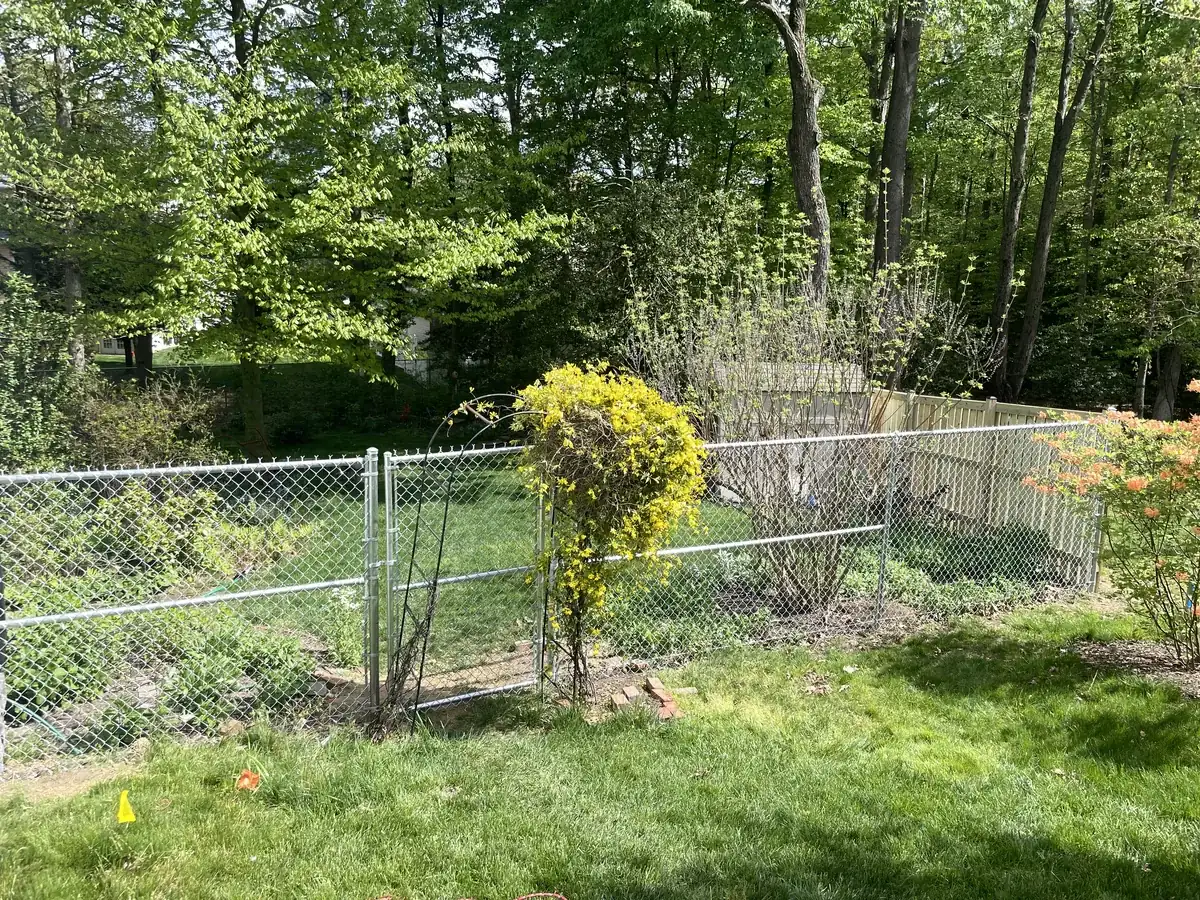
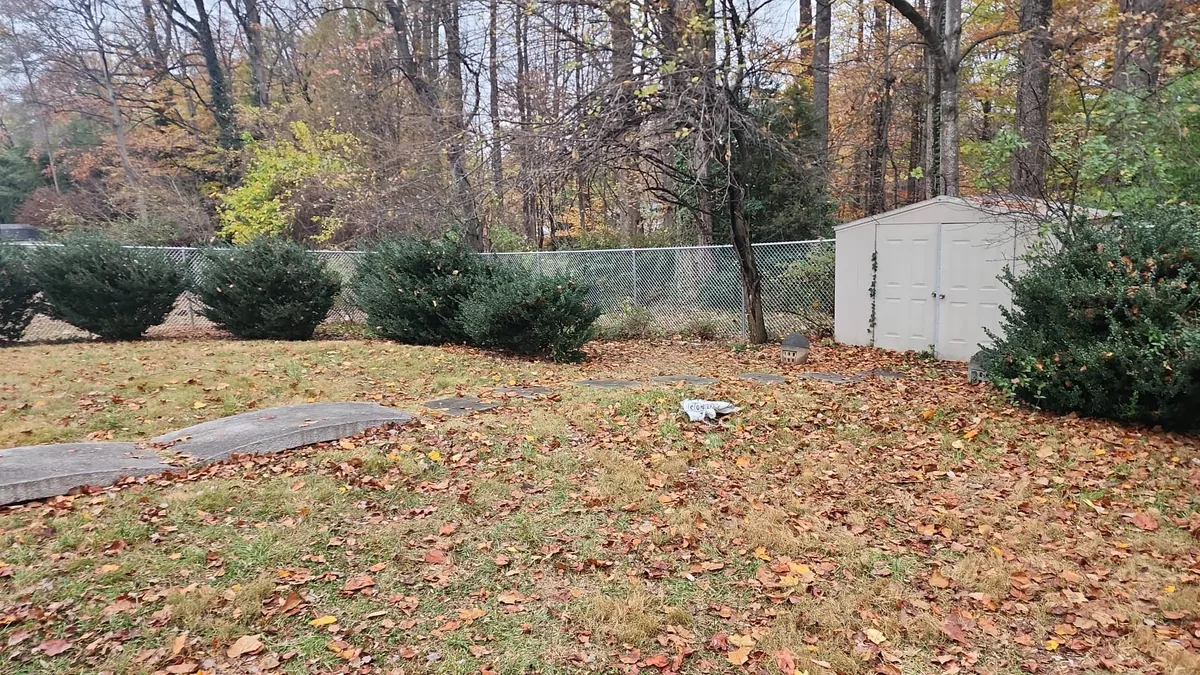
For homeowners, a residential chain link fence is the workhorse option: it defines the property, keeps kids and pets safely contained, and does it without a big-ticket budget. Because the mesh is open, it won’t wall off a small yard or cast the shade a solid fence would, and it pairs well with landscaping if you want it to disappear over time.
We know the permitting and HOA landscape in Fairfax, Loudoun, Arlington, and Prince William counties, so we can flag height limits and pool-barrier rules before the fence goes in rather than after. See our full residential fencing services for other materials and styles.
On commercial and industrial sites, a chain link perimeter is often the first line of security. It marks the boundary, slows down intruders, and works alongside cameras and access control instead of blocking them. We build commercial chain link fence lines to hold gates, signage, and toppings, and we coordinate with facility teams to keep the site running while we install.
Need a full secured perimeter with high-security gates and toppings? Our commercial fencing solutions cover heavier systems, welded wire, and access-controlled entries beyond standard chain link.
Two coatings do most of the work, and a few add-ons handle privacy and security. Here’s how we help you pick.
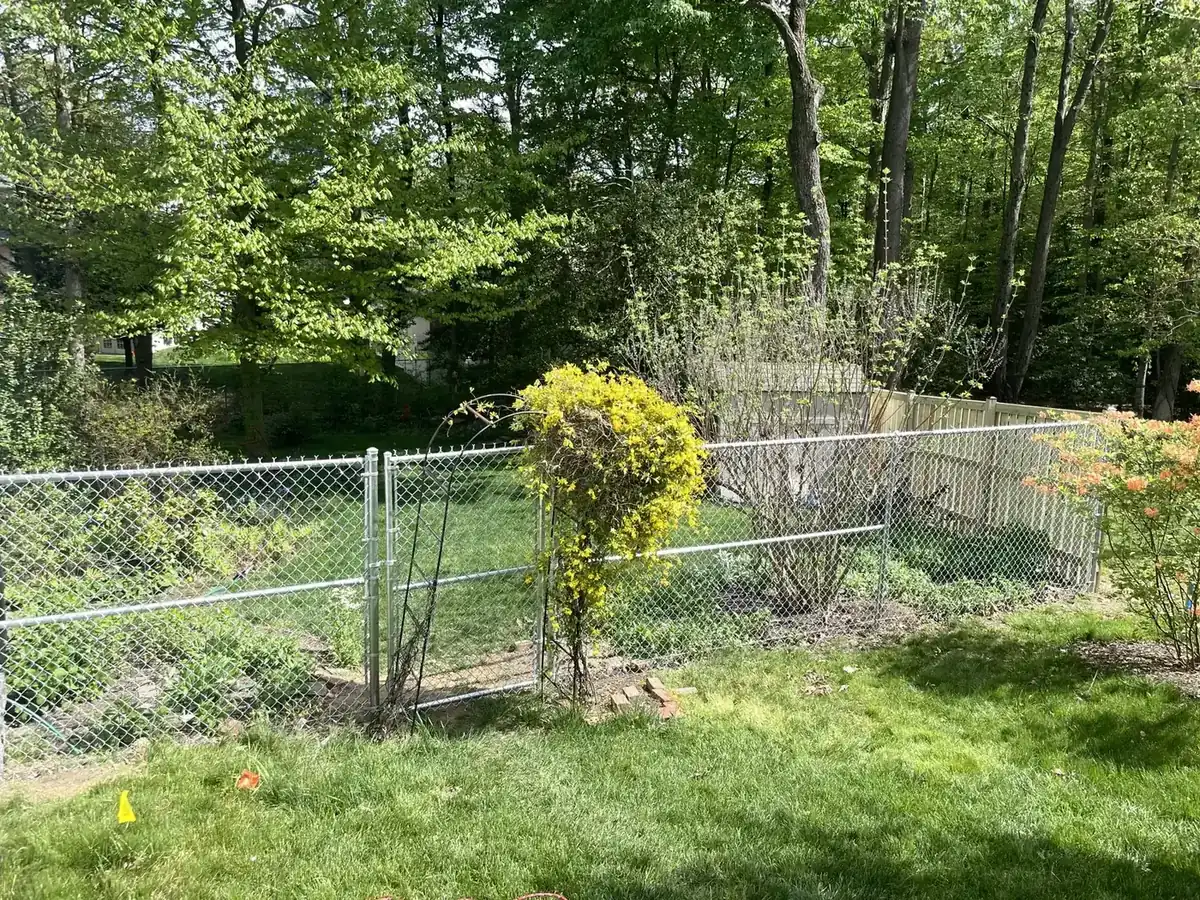
Galvanized chain link is the classic silver-gray fence. The steel wire is zinc-coated to resist corrosion, which is what lets it stand up to rain, snow, and humidity year after year. It’s the most economical option and a strong choice for utility runs, construction sites, and any project where function comes first. Hot-dipped galvanizing on the framework adds extra life on demanding commercial jobs.
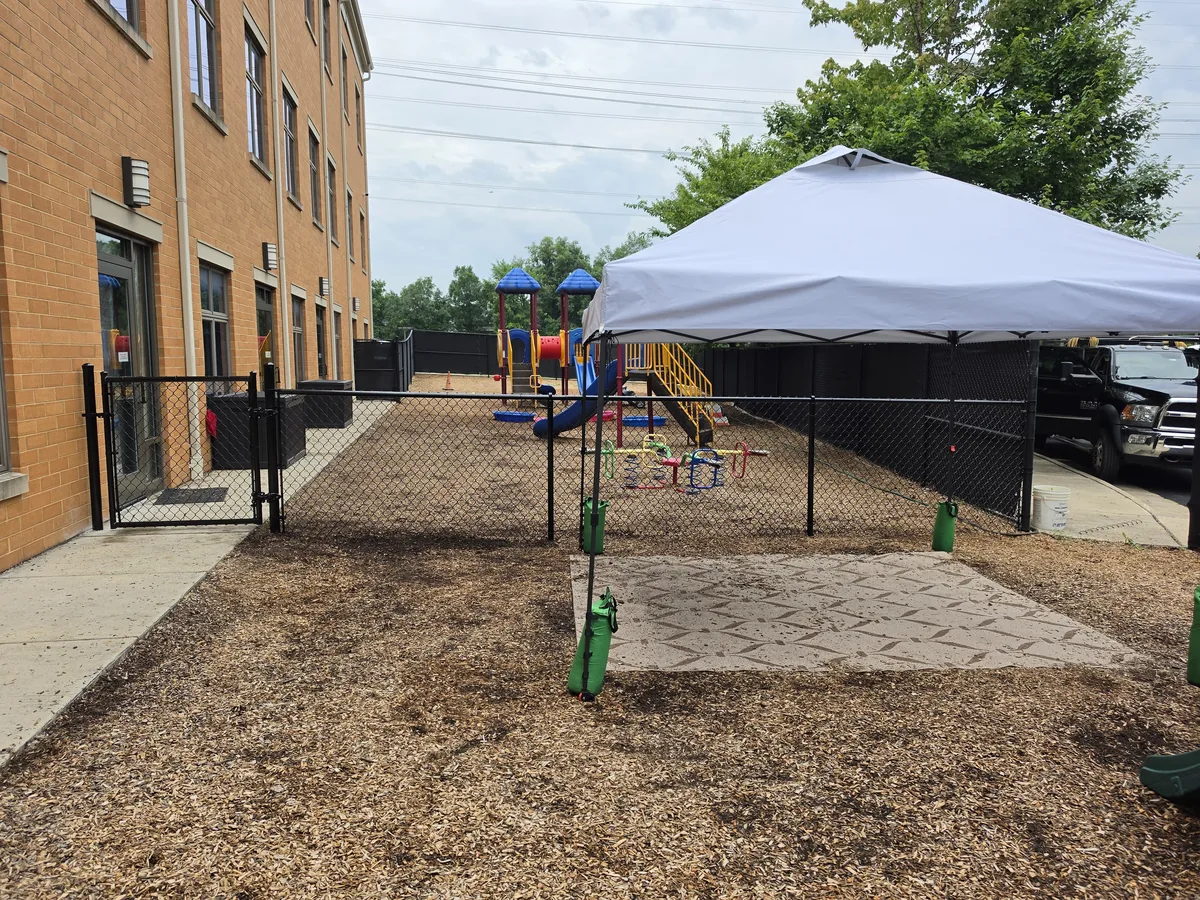
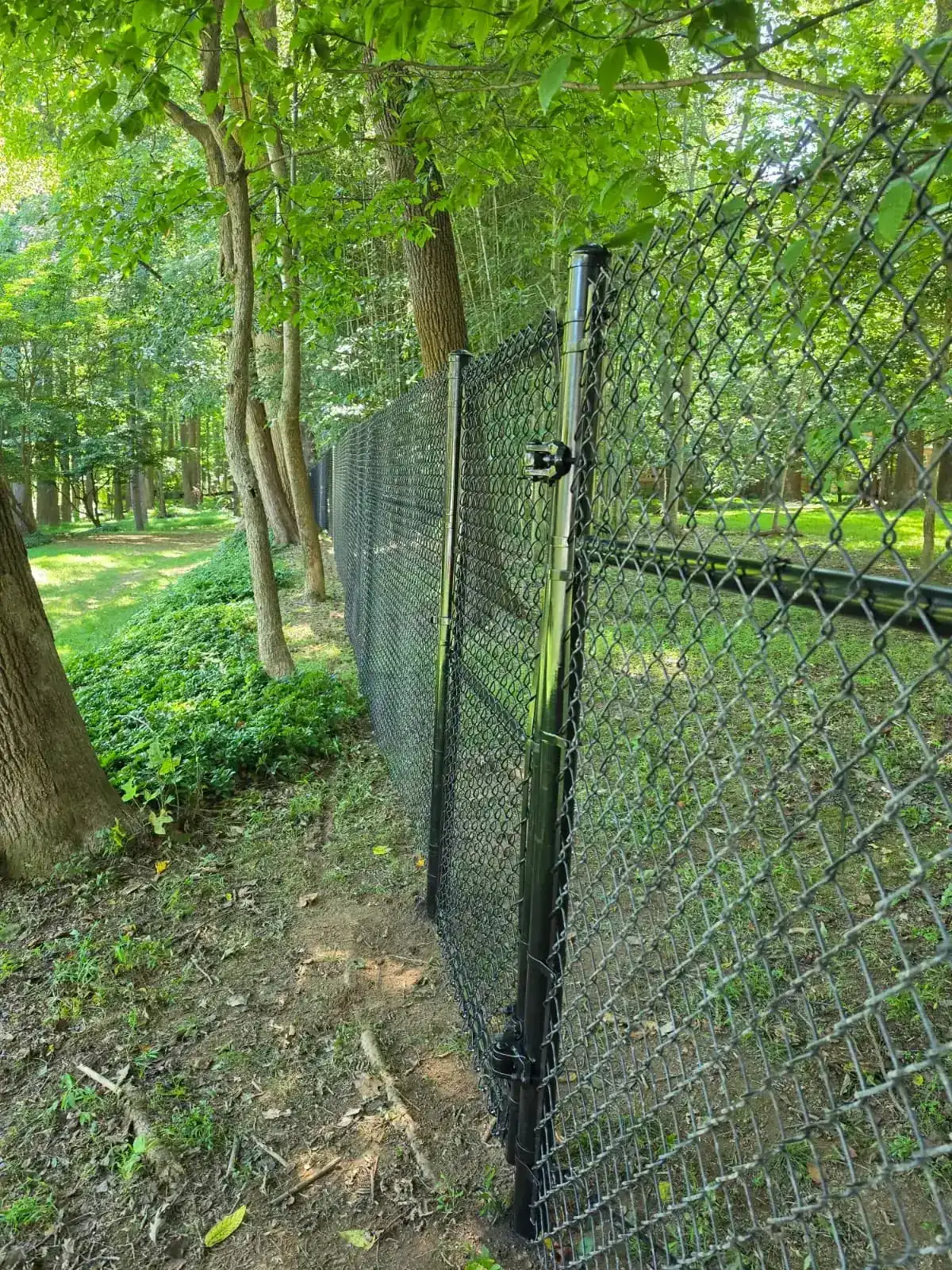
Vinyl-coated (PVC) chain link starts as galvanized wire and adds a bonded polymer coat, usually black, green, or brown. That coating looks cleaner against landscaping, disappears visually better than bare steel, and gives a second layer of corrosion protection. It’s a popular pick for backyards, schools, parks, and any commercial site where appearance counts alongside security.
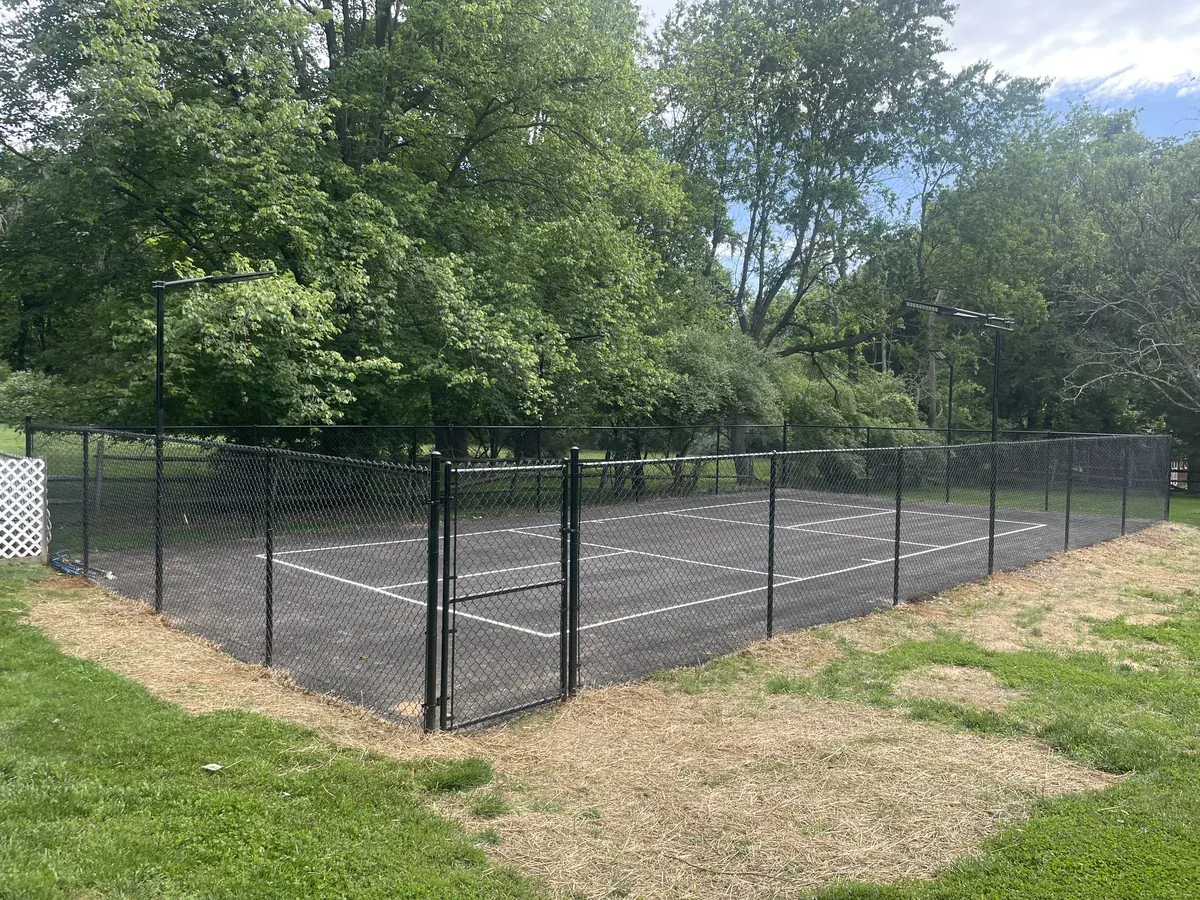
When you want the strength of chain link but less of a see-through look, we add privacy slats woven vertically through the mesh, or attach windscreen fabric to the line. Slats come in several colors and block a large share of sightlines; windscreens are common on tennis courts, ball fields, and construction perimeters.
For higher-security sites we install matching swing and cantilever gates, integrate automated gate operators where the site calls for it, and add barbed wire or barbed-tape toppings on commercial perimeters where they’re appropriate. Layouts are built to be compatible with access control systems such as keypads, card readers, and intercoms.
Two numbers shape how a chain link fence performs: how tall it is and how thick the wire is (its gauge). Lower gauge numbers mean thicker, stronger wire. Getting these right is where the security and durability come from, so we set them to the job rather than defaulting to whatever’s cheapest.
Commercial specs and some municipal projects call out an exact gauge, mesh size, and framework schedule. We build to those requirements and confirm them during the site evaluation.
We talk through what the fence needs to do, your timeline, and any HOA or code requirements.
We measure the run, check grade and terrain, and locate utilities before setting a single post.
You choose coating, height, gauge, gates, and any privacy or security add-ons with our guidance.
You get a clear written estimate with materials, gates, and labor spelled out. No surprises.
Our crew sets posts in concrete, hangs and tensions the fabric, and fits gates and hardware.
We walk the finished fence with you, check gate operation, and confirm the site is left clean.
Tell us about your site and we’ll price a chain link fence built for it. Free, with no obligation.
Every property is different, so we quote each project instead of posting a flat price. These are the factors that move the number up or down:
Posts set in concrete, fabric tensioned evenly, gates that hang true. Done to last.
Galvanized and vinyl-coated steel and gate hardware chosen to match the job’s demands.
From a backyard run to a fenced warehouse yard, we’ve done both, repeatedly, and coordinate around occupied homes and working sites.
Layout, materials, gates, toppings, and cleanup handled by one accountable crew.
Our 100+ five-star reviews reflect fences that stay tight and square years later.
As a Class A licensed fence installation contractor, Super Fabrications installs chain link fencing across Northern Virginia and the surrounding DC metro region, including Fairfax, Loudoun, Arlington, and Prince William counties, plus nearby communities in Maryland. Knowing the local permitting and HOA rules in these areas helps us keep your project on schedule and in compliance. If you’re just outside our usual area, reach out and we’ll let you know if we can help.
Tell us about your property and what you need the fence to do. We’ll evaluate the site, recommend the right height, gauge, and coating, and send you a clear, no-obligation quote.
Many residential jobs finish in one to two days once the layout is set. Larger commercial perimeters take longer depending on footage, gates, and terrain. Because concrete footings need time to cure, we schedule so posts are fully set before the fabric is tensioned.
Galvanized chain link is zinc-coated steel with the classic silver-gray look and the lowest cost. Vinyl-coated chain link adds a bonded polymer layer (usually black, green, or brown) over galvanized wire, which improves appearance and adds a second layer of corrosion protection. Both are durable; vinyl-coated is the choice when looks matter.
Yes. Chain link is one of the most common commercial and industrial perimeter fences because it’s strong, affordable, and works with cameras and access control. For higher-security sites we install heavier 9-gauge (or lower) fabric at 6 to 10 feet, with cantilever or automated gates and barbed toppings where appropriate.
It depends on the goal. Residential yards and pet containment usually run 4 to 5 feet. Pool barriers follow local code. Commercial and industrial sites typically use 6 to 8 feet, and high-security perimeters go 8 to 10 feet. We recommend a height during the site evaluation based on your needs and any code requirements.
Absolutely. We install matching walk gates, double-drive swing gates, and cantilever slide gates, and we can integrate automated operators and access control on commercial sites. Gates are built into the layout from the start so they hang square and operate smoothly.
The main factors are total footage, fence height, wire gauge, coating (galvanized vs. vinyl-coated), the number and type of gates, terrain, any commercial specs or toppings, and permit requirements. We quote each project after a site evaluation rather than posting a flat price.
A properly installed galvanized chain link fence commonly lasts 20 years or more. Vinyl-coated fabric adds an extra protective layer that can extend life further, especially in wet or coastal conditions. Solid footings and correct tensioning are what keep a fence lasting the full stretch.
Use our online quote form or give us a call to describe your property and what you need. We’ll schedule a site evaluation, confirm heights, gauges, and gates, and send you a clear written estimate at no cost.