
A business fence has a different job than a backyard fence. It slows people down, funnels them to one entrance, and keeps equipment where it belongs. Here is how we plan security fencing and automatic gates for businesses across Northern Virginia and Maryland, from a small storage yard to a full perimeter.
What makes a fence a security fence?
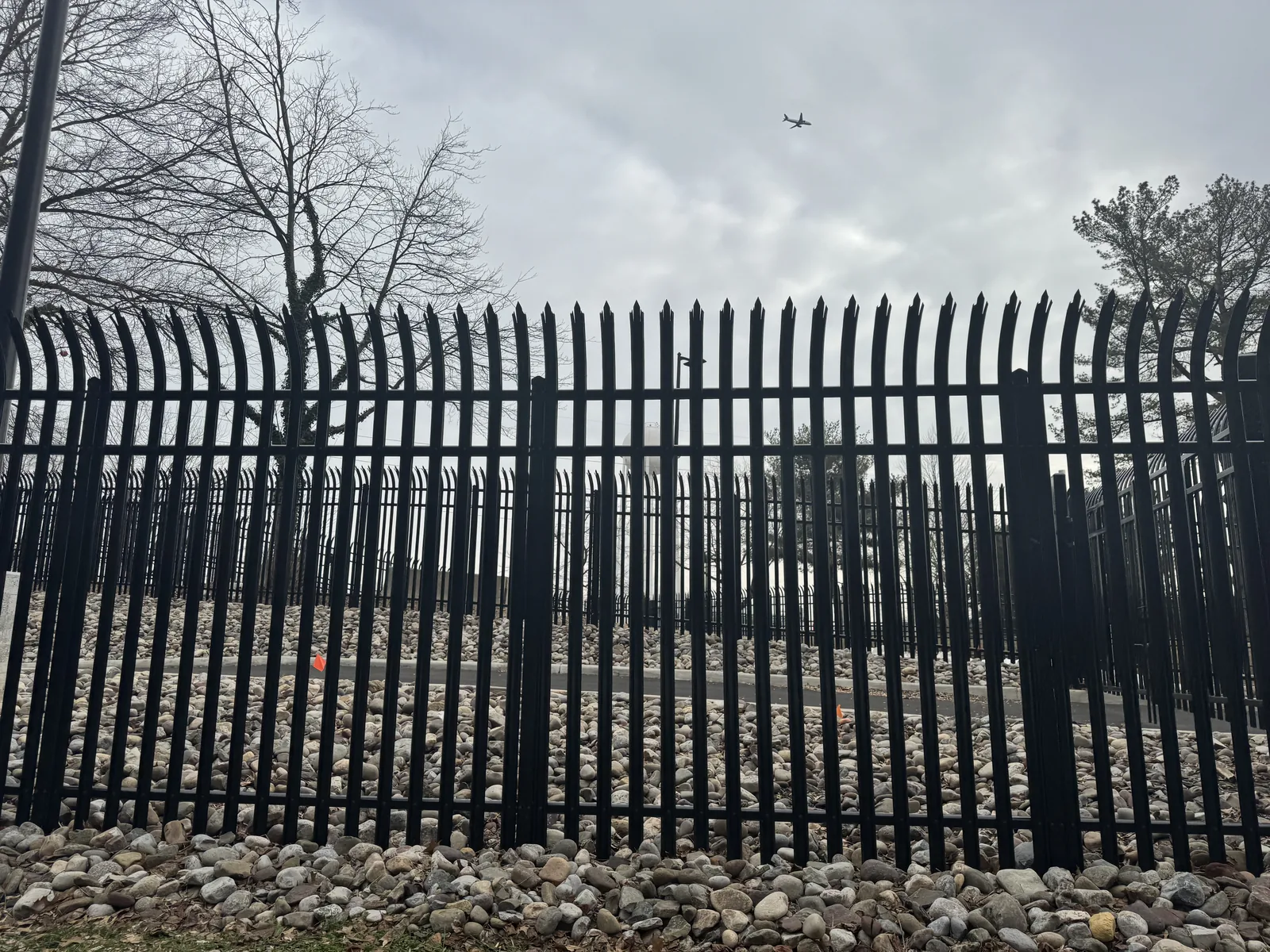
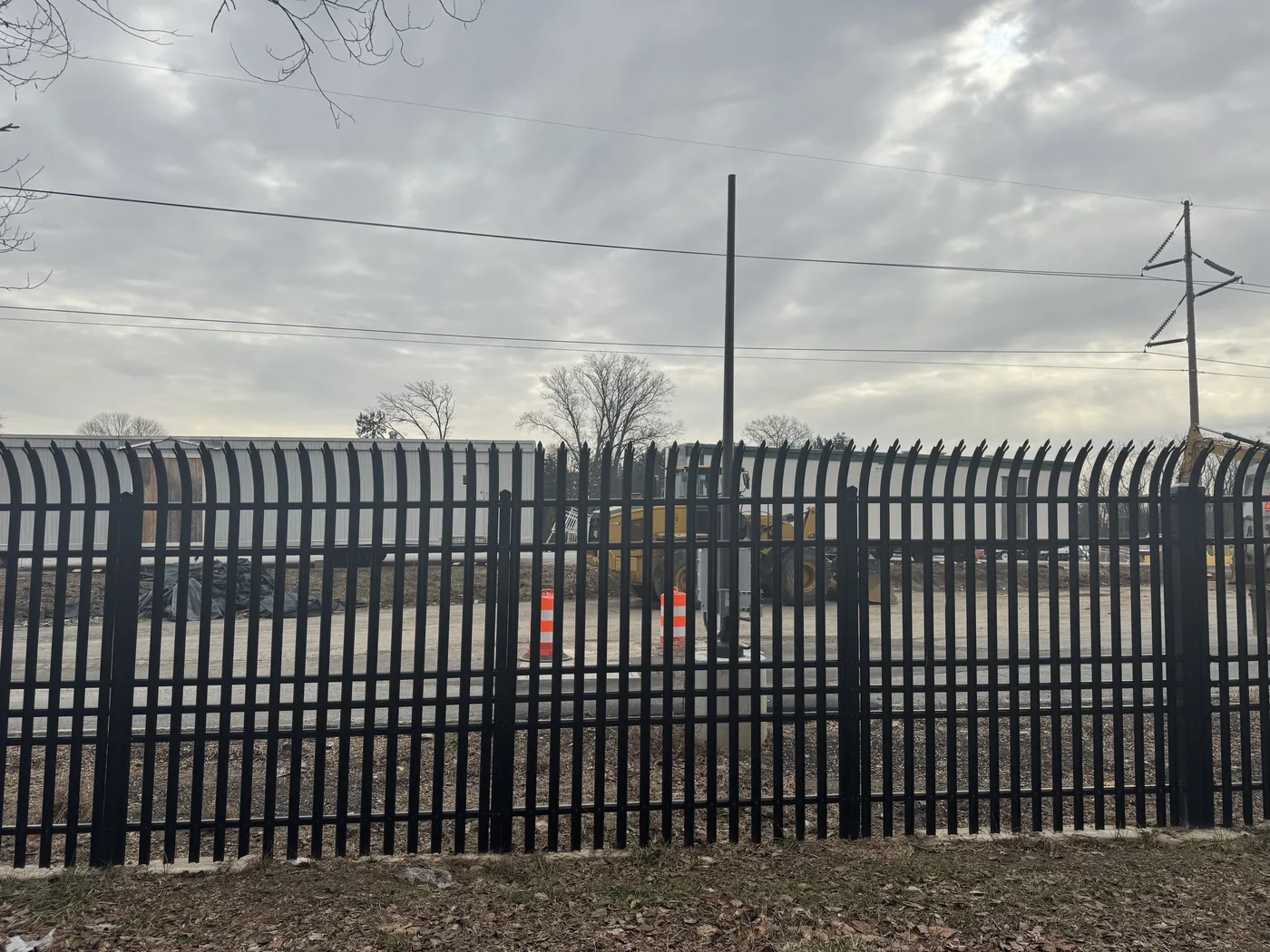
Height, profile, and material grade. Security lines run taller than decorative fence, and the picket profile matters as much as the height: tight spacing and pointed or spear tops make a fence hard to climb and hard to grip. Many owners also keep the line see-through, because cameras and neighbors are part of the security plan when sight lines stay open. Steel and commercial-grade aluminum carry that role well; we match the specification to the site rather than to a catalog page.
How tall should a security line run?
Tall enough to require effort, not just a step. Commercial security lines commonly run six feet and above; the right figure depends on what the fence protects, what it faces, and what the jurisdiction allows at that location. A line screening a dumpster can sit lower than a line protecting inventory. We settle height during the site walk, with the elevation, the sight lines, and the local rules on the table at once.
Where do cages and enclosures fit?
Most properties need a secure zone, not a fortress. A chain link or steel cage behind the building protects inventory and equipment. A dumpster enclosure keeps waste contained and out of sight. Equipment yards, propane pens, and HVAC screens all follow the same pattern: a defined footprint, a gate sized for what moves through it, and hardware built for daily use. Double gates open wide for pallet jacks and lawn crews; latches rated for daily cycles outlast the cheap ones by years. We build these as part of a perimeter or as stand-alone enclosures.
How does access control work?
The gate is where security becomes daily routine. A vehicle gate with a keypad gives staff and vendors a code instead of a key to copy — the clipboard at the guard window becomes a code entry. Remotes handle the frequent traffic, and schedules can change without re-cutting anything. For pedestrian gates, magnetic locks hold the leaf closed until the code is entered. We are a LiftMaster authorized dealer, so operators, keypads, and receivers come from one matched system instead of a mix of parts that argue with each other.
Can we upgrade an existing gate instead of starting over?
Often, yes. A sound gate frame and posts can take a new operator, new hinges, and a keypad without a full rebuild. Armin Rahbar described that kind of service call on Google: "They serviced an automatic gate, replaced hinges and installed magnetic lock, and took care of some complex electrical wiring issues." Upgrades like that turn a manual gate into a controlled one — the fence you have, plus the access control you need. We inspect travel, posts, and hinges before specifying hardware, because an operator on a failing frame just automates the failure.
What does planning look like?
We walk the site with you. That visit is free, and it is where the plan takes shape: where vehicles enter, where the cameras sit, which corners need taller line, and which gates carry the daily traffic. We mark gate swings and equipment paths during the walk, so a delivery truck never meets a gate that opens the wrong way. Permits come next where the jurisdiction requires them — some commercial zones have their own rules. Then we schedule installation around your hours, because a business cannot close for a fence. Crews work in sections so deliveries and customers keep moving.
What should a business owner decide first?
Decide what the fence is for. Keeping people out, keeping equipment in, directing traffic, screening a view — most sites want a combination, and the combination drives the design. Tell us the problem and we will draw the line that solves it. See the range on our commercial fencing page and our automatic gate installation page, then call (888) 820-6099 for a free on-site estimate.