
By Ray, owner — VA Class A contractor
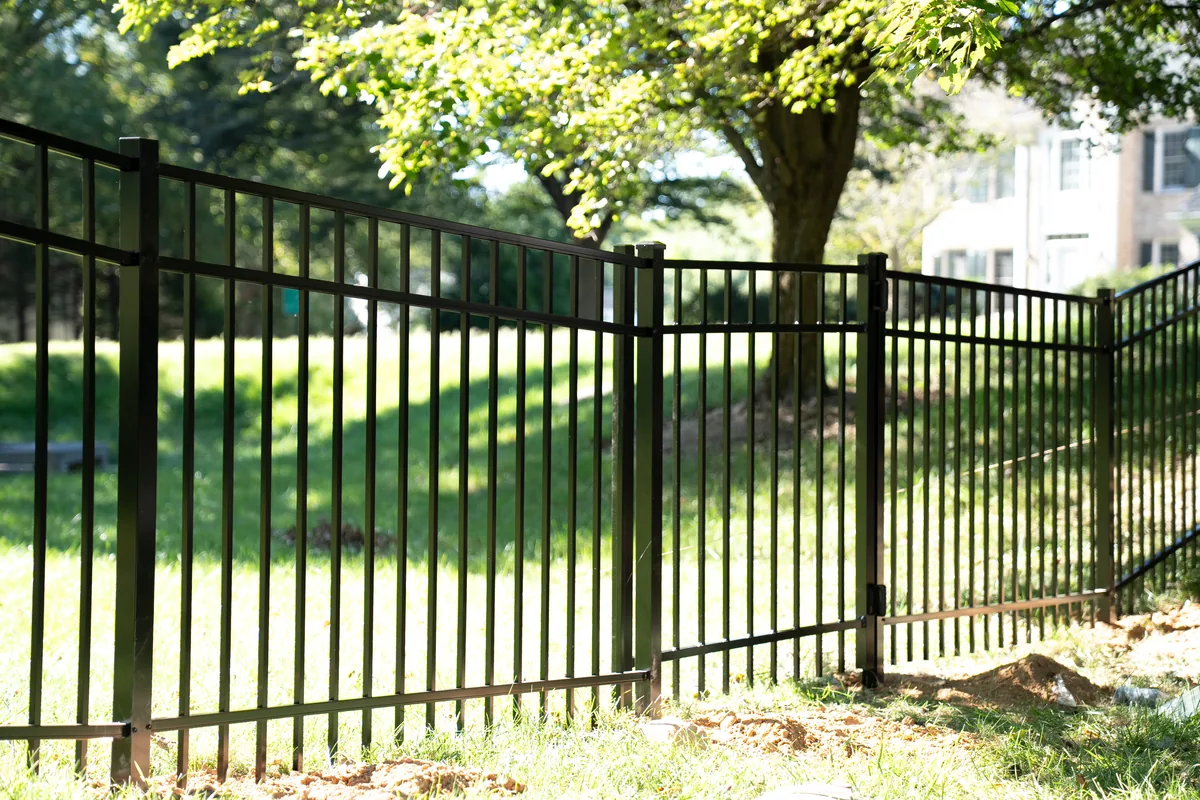
Iron is the fence people point at. Board-on-board privacy does its work quietly, but an iron line at the sidewalk changes how a property carries itself — and that is only the first of the reasons homeowners keep choosing it. Here is the honest case for iron, including the upkeep trade that its admirers should hear before the deposit.
Why does iron read differently at a property line?
Proportion and openness. Iron pickets draw a boundary with thin vertical lines and air between them, so the fence defines the property without walling it off — the garden, the facade, the mature trees all stay part of the street view. Finials, spear points, and heavier gate frames add a formality that reads as deliberate design rather than mere enclosure. On historic streets and formal fronts, that proportion is why iron has never left fashion.
What do open sightlines actually buy you?
Three practical things. Security you can see: a boundary that displays the yard and the approach to it, rather than hiding a stranger ten feet past the gate. Gardens that keep their light: an iron line screens traffic without shading the beds the way a solid run does — and it keeps your own view honest from inside the yard, since a garden that ends at an iron line still ends at the horizon, not at boards. And front-yard fit: the low, open profiles iron does so well suit the height caps most jurisdictions set for street-facing fences, where solid panels are restricted anyway. See the range on our wrought iron fence installation page.
Where does iron make the most sense on a lot?
Front boundaries and formal entries first — the places where the fence is seen as much as used. Driveway approaches and walk gates carry the presence argument furthest, especially paired to matching posts. Gardens and pool-adjacent lines are the second case, where you want a barrier that disappears optically while still enforcing a boundary. Rear lines that need true privacy are where we steer owners away from iron and toward a solid run: iron's openness, its greatest strength out front, is the wrong tool behind the house.
How long does a maintained iron fence last?
Generations, with attention. The metal itself does not age out — what ages is the coating that protects it. A fence washed occasionally, inspected for chips and scratches, and touched up where the finish wears plans in decades of service, and iron's other virtue shows up at the end of that span: damaged sections repair piece by piece. A bent or broken picket or rail is a component fix, not a panel replacement, which is part of why old iron fences so often get restored rather than hauled away.
What does the upkeep honestly look like?
Real, but seasonal and small. Walk the line once a year and look for coating wear at the spots that collect it — hardware, the joints where two members meet, and the splash zone at the bottom of each picket. Touch exposed metal promptly with the matching finish and the fence never gets ahead of you. The rhythm fits a fall checklist: inspect while the leaves are down, touch up before winter moisture finds bare metal, and the spring walkthrough becomes a formality. The homeowners who end up unhappy with iron are the ones who skip this for a decade and meet rust all at once.
How do you choose between iron and aluminum?
On upkeep honesty, since the profiles overlap more every year. Aluminum offers the same open-sightline look in a material that ignores rust entirely, which is why it dominates around pools. Iron answers with weight, thinner members at the same strength, and that repairable, restorable character — the weight is the tell at the gate, where an iron leaf hangs with a deliberate heft that reads as quality every time it swings. If you want the look with the least care, aluminum wins; if you want the material with the deepest presence, iron does. Our wrought iron design guide shows both families side by side.
Call (888) 820-6099 or send an estimate request, and we will walk your line and give you the honest comparison for your frontage.