
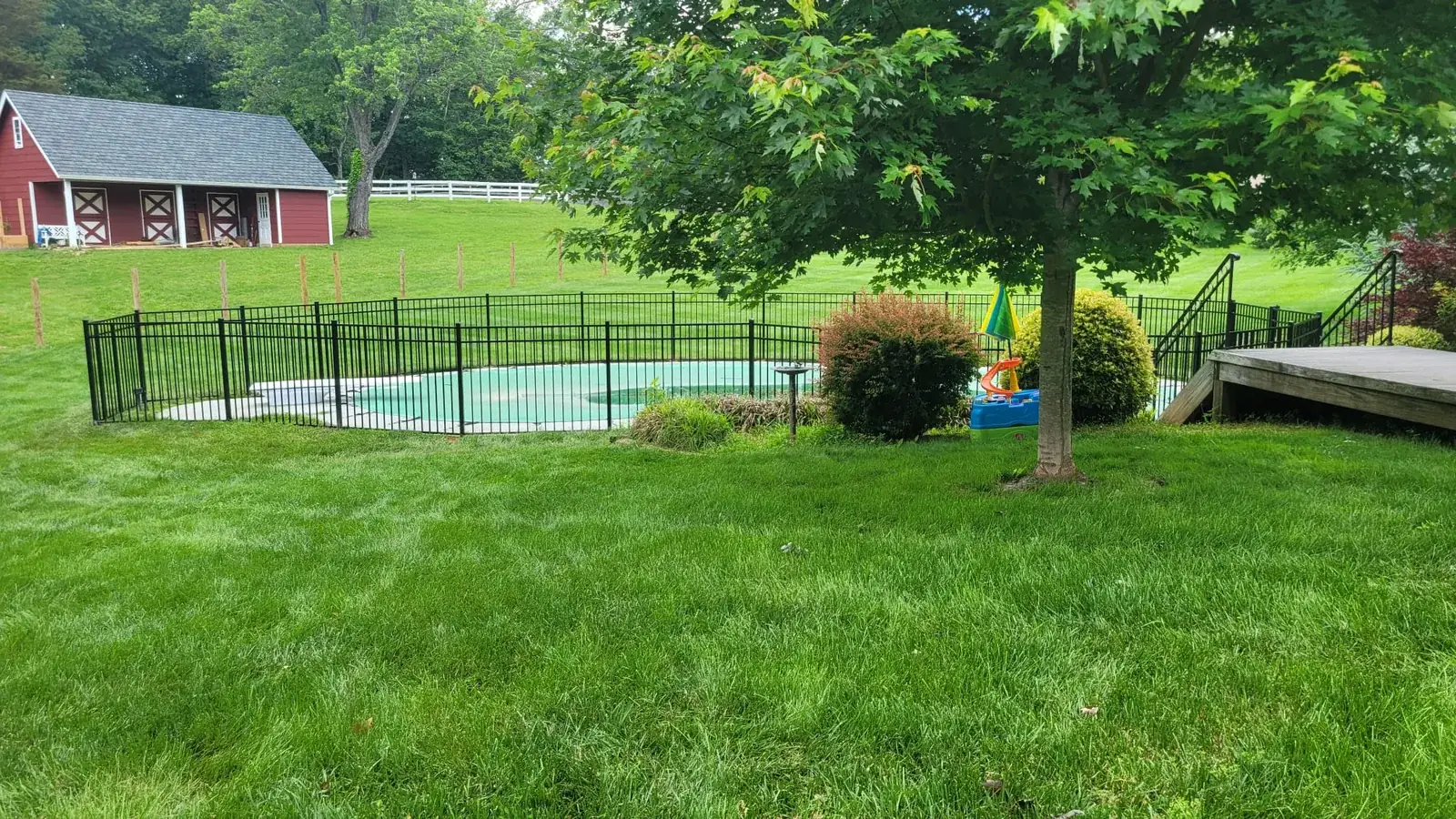
Inspection season arrives earlier than pool weather. Before it does, walk your pool fence and check it against the code — not against your neighbor's fence, which may predate the rules. Here is what Virginia and Maryland require, and what we look for when we check a pool barrier.
What does Virginia require for a pool barrier?
Two numbers carry most of the rule. The barrier stands at least 48 inches tall, measured the way an inspector measures it. And any gate into the pool area is self-closing and self-latching, with the latch on the pool side — so a child at the gate cannot reach the latch that opens it. Those requirements ride on Virginia's residential building code, and they apply to the fence, the house doors where code says so, and every opening a child could use. If your gate needs a hand to close, it fails.
What does Montgomery County add?
Montgomery County requires a 5-foot barrier around pools, a foot above the Virginia minimum. The county also requires a permit for any fence through the Department of Permitting Services — pool fence or not. Rockville and Gaithersburg run their own permit offices, so the address decides who reviews the plan. The barrier figure applies county-wide either way, permit office or not. If your pool sits on the Maryland side of our service area, build the barrier to the 5-foot height from the start rather than rebuilding to it later.
Which details fail inspections most often?
The barrier is rarely the failure. The details are:
- Gate springs weakened by seasons of use, so the gate rests open or drifts.
- A latch mounted on the outside of the gate, or too low on the pool-side face.
- Climbable steps: a chair, planter, or ladder set within reach of the top rail.
- Gaps under or between panels wider than the code allows.
- A fence that was fine at 48 inches until the yard regraded and the ground rose.
Every one of those is a small fix today and a failed inspection on opening week if it waits. The gate deserves most of the attention — it is the only part of the barrier that moves.
Does the house count as part of the barrier?
It can, and this is where pool enclosures get tricky. Many pools sit against the house, so a wall forms one side of the barrier — and doors from the house into the pool area then carry requirements of their own. A fence-only plan misses that half. When we plan a pool fence, we plan the whole enclosure: fence sides, wall sides, and every gate and door in between, matched to what your jurisdiction's code says. Door and alarm requirements get flagged on the estimate, so nothing about the enclosure is a surprise later.
Does a pool fence need a permit?
In Montgomery County, yes — every fence needs one. In Virginia, it varies by jurisdiction: some want no building permit for residential fence but still apply zoning rules to height and placement, and pool barrier requirements sit on top. Our guide to fence permits in Virginia and Maryland sorts out who to call. We check the rules for your address as part of planning, not as a surprise at inspection.
Which pool fence material holds up around water?
Around water, corrosion and sunlight do the aging. Powder-coated aluminum resists splash and chlorine spray, keeps its color, and meets barrier heights with a self-closing gate to match. Mesh removable fence suits owners who want the pool open in winter and enclosed in summer. Both can meet the 48-inch and 5-foot figures — the code cares about the barrier and the gate hardware, and we build to whichever height your jurisdiction requires.
When should you schedule the check?
Weeks before opening, not days. A failing gate needs hardware, and a short barrier needs a rebuild, and both need scheduling. In the week before the inspector arrives, run the gate twenty times, clear the climbable furniture back from the line, and look at the fence the way a child would — from the outside, looking in. We install and upgrade pool fences across Northern Virginia and Maryland — call (888) 820-6099 for a free estimate, and let the inspection find nothing to write up.