
A fence around a historic home does two jobs at once: it works for the household, and it answers to a review board. Old Town Alexandria and the older parts of Falls Church both add design review to the fence process, and the boards there have clear preferences. Learn them before the post-hole digger comes out.
Do historic districts require fence approval?
Generally, yes. Homes in historic districts — Old Town Alexandria's historic district is the region's signature example, and Falls Church protects pockets of its older fabric — typically pass a design-review step, run by a board of architectural review or an equivalent city body, before or alongside the fence permit. The permit and the design approval are separate gates, and both come before any digging.
Rules and district boundaries change, and each city runs its own process, so confirm requirements with the city's review-board staff before ordering materials. Our fence permit guide for Virginia and Maryland covers the standard process across the region.
What do review boards look for in a fence?
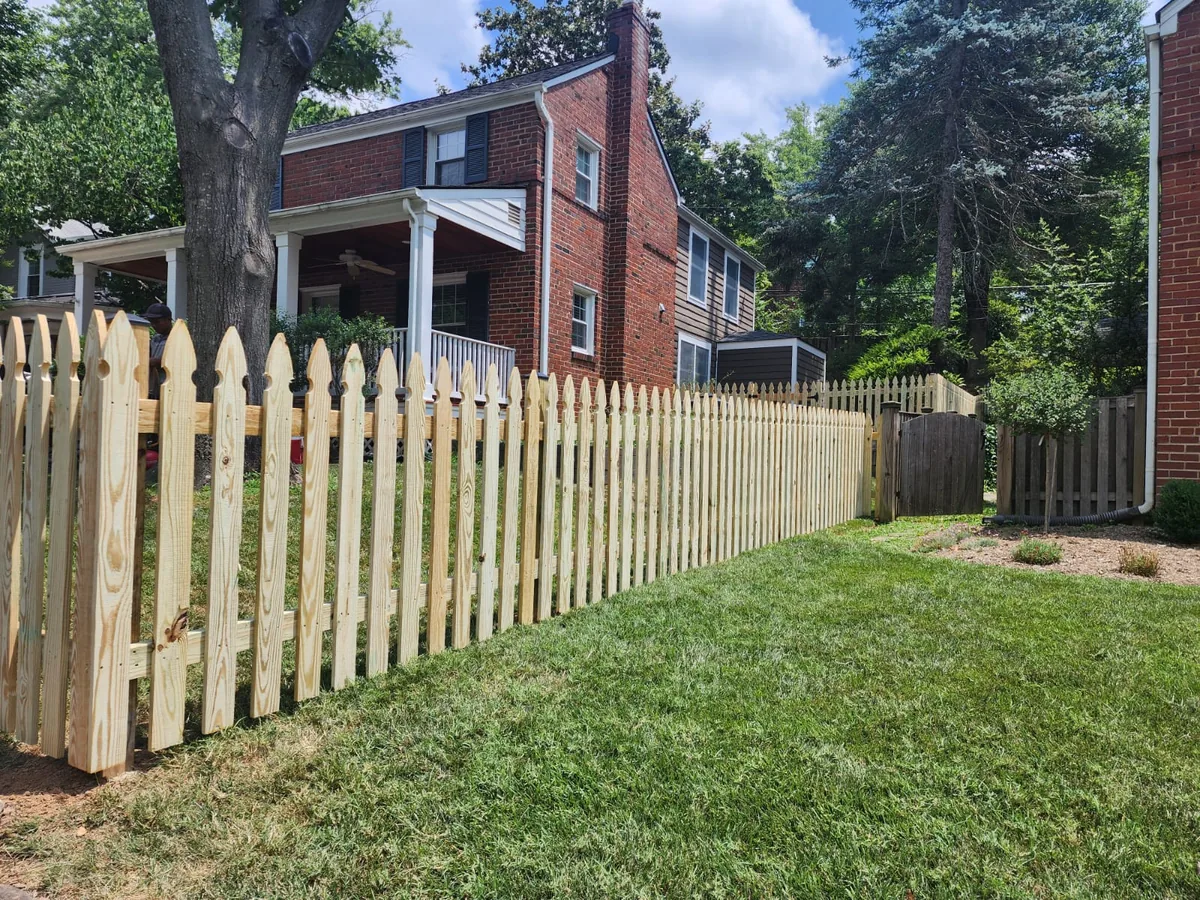
Boards in historic districts favor fences the house would have worn in its own era: low, open, and traditional. Wood picket, simple spaced-picket designs, and low ornamental iron are the steady approvals. Tall solid privacy walls, horizontal modern screens, and heavy paint schemes draw the most questions, and frequently a revision. Bring the house into it: boards warm to fences that repeat the trim, the picket rhythm, or the ironwork already on the facade. A photo of your home's own details is a better design brief than a catalog page.
Privacy is not impossible — solid sections usually live behind the house, out of the street view the board protects. The public-facing fence is the one that gets design attention.
What about the back yard in a historic district?
Review boards guard what the street sees. Rear-yard fences — where the privacy, the dog run, and the play area actually live — usually face lighter scrutiny than street-facing runs, though the permit and district rules still apply. The working pattern in Alexandria and Falls Church: modest open fence at the street, taller solid sections behind the house line, and the board's attention spent mostly on the front.
Even in the back, the era of the house still matters. A natural wood stockade suits most older lots better than a bright vinyl color, and gates with simple hardware read more period-correct than ornate ones. When in doubt, ask the board staff before the material order — a style question costs a phone call, and a revision costs a rebuild.
Does a corner lot change the review?
It can. Corner properties show two street faces, and both tend to draw board attention. Many jurisdictions also care about corner visibility — keeping sight lines open where two streets meet — which pushes corner fences toward low, open designs on both frontages. If your historic home sits on a corner, plan the two street runs together as one design decision rather than two accidents.
Should you get the permit before choosing a design?
Yes — approval first, materials second. The practical order that works: settle the style with the review board, get the approval in writing, then let the fence crew build to the approved drawings. Designing in reverse — buying eight feet of solid board and hoping — is how fences end up coming back down.
We plan historic-district projects around that sequence. The extra step takes calendar time, and it protects the character and value that district status gives the house.
What fence styles suit a historic home?
Low wood picket with a simple point or gothic top suits most Alexandria streetscapes. Low ornamental iron, or an iron-look aluminum that keeps the same profile, works where the period calls for metal, and it keeps sight lines open to the facade — boards like fences that do not hide the architecture. Keep heights modest at the street, let the back yard carry any privacy, and match the fence color to the home's trim rather than inventing a new palette.
Fencing a historic property in Alexandria or Falls Church? Our Alexandria fence company page covers how we work in the city, or request a free estimate and call (888) 820-6099. We will walk the property, sketch the options a board will welcome, and plan the permit order with you.