
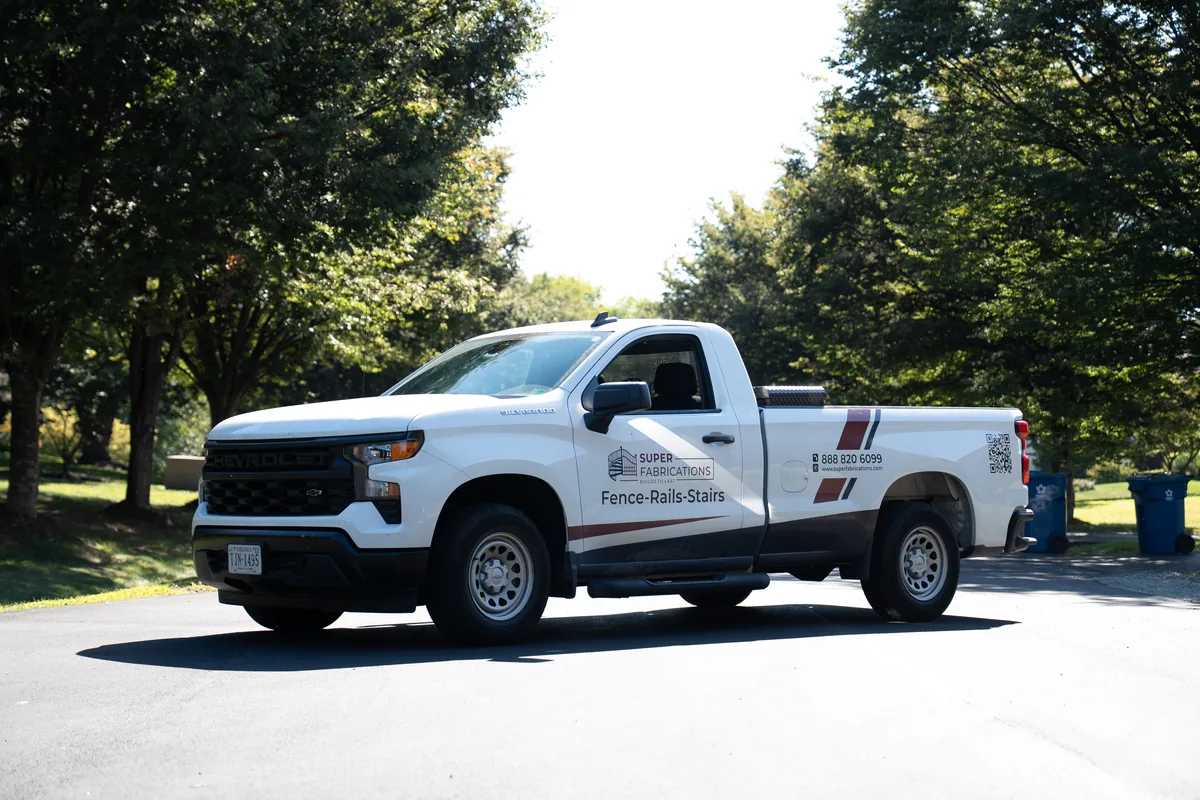
Most customers meet us twice: once at the estimate, once at the walkthrough. The steps between those two visits decide how the whole job feels. This is the sequence we follow on every fence project in Northern Virginia and Maryland, plus an honest look at what can stretch the timeline.
What happens at the estimate?
The estimate is free, and it happens on your property — not over the phone, and not from a satellite photo. Ray or a project lead walks the fence line with you. We measure footage, note slopes, check gate locations, and talk through materials where they will actually stand. A 6-foot wood shadowbox reads differently than a 4-foot black aluminum fence against the same backdrop. The goal of the visit is to narrow the choice to a decision, not to leave you with a folder of options. You leave with a written scope and a clear number. If permits or HOA review apply to your address, we say so at this first visit, before anything is ordered.
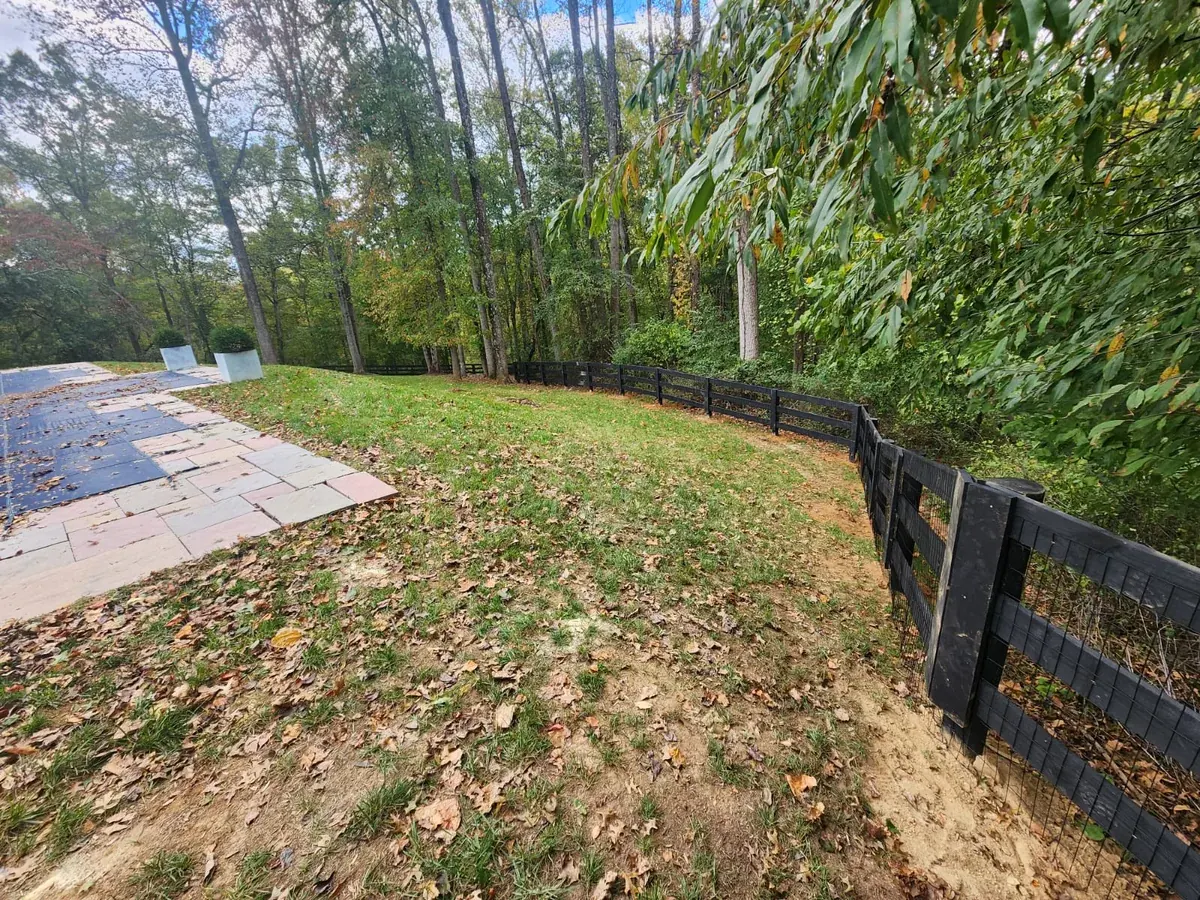
What are the eight steps?
Our process is the same whether we fence a Vienna townhouse yard or a Loudoun pasture:
- On-site design and materials.
- Permits.
- Stakes and lines.
- Materials ordered.
- Scheduled install.
- Posts set.
- Assembly.
- Walkthrough with the customer.
The order matters. Permits come before materials in jurisdictions that require them, and stakes and lines come before any post hole. Design comes first because every later step depends on it. The walkthrough comes last because a fence is not finished until you have seen it work. You always know which step your job is on, because we tell you.
How long does each step take?
The hands-on steps move quickly. Staking a line takes about an hour on most lots. Setting posts takes a day on a typical residential fence. Assembly follows soon after, and the walkthrough closes the job. What varies is the paperwork around the fence: permit review, HOA approval, and material lead times. Those sit outside our control, so we flag them at the estimate instead of discovering them in week three. A replacement on a clear line with no permit often reaches install day faster than a brand-new fence carrying a county review in front of it — same crew, different queue.
What slows a job down?
Three things, more than anything else.
Permits. Montgomery County requires a permit for any fence, so that review sits in front of the schedule. Fairfax County generally needs no building permit for residential fences, which is why many Fairfax jobs start sooner. The Town of Vienna runs its own zoning rules on top of that. Our guide to fence permits in Virginia and Maryland covers who to call in each jurisdiction.
HOA approval. Many Northern Virginia communities require architectural review before any work starts. A review board meets on its own calendar, so submit the style, height, and color as early as you can. Approval letters are worth keeping; we ask for a copy before install day.
Materials. Standard stock moves quickly. A specific vinyl color or a wide driveway gate can add lead time. We order once the design is locked, so we rarely lose time to re-ordering.
How do gates change the schedule?
A walk gate rides along with the fence schedule. An automatic driveway gate adds real steps: the operator, the keypad, power or solar, and testing under load. We plan all of that at the estimate, so gate day is not a surprise. Our automatic gate installation page explains the operator options.
What can you do to keep things moving?
Find your survey plat before the estimate, if you have one. Check your HOA handbook the same week you call us. Settle on material and color early, because a locked design lets us order. And tell us about sprinklers, drains, or buried lines you already know about — the crew would rather hear it from you than find it with an auger.
What happens at the final walkthrough?
When the last panel is set, we walk the fence with you. Gates latch. Lines run straight. Hardware works. The yard is clean. We also cover care for the first season — what to watch after heavy rain, and when a gate hinge is worth a call. Brent Fleetwood described the visit well on Google: "Fast precise and did a final walk through to make sure everything was installed correctly." He also noted that Ray "got everything permitted and had the project pushed through very fast." That is the standard we hold on every job.
Ready to see the process on your own property? Learn more about fence installation in Northern Virginia, then call (888) 820-6099 for your free estimate.