
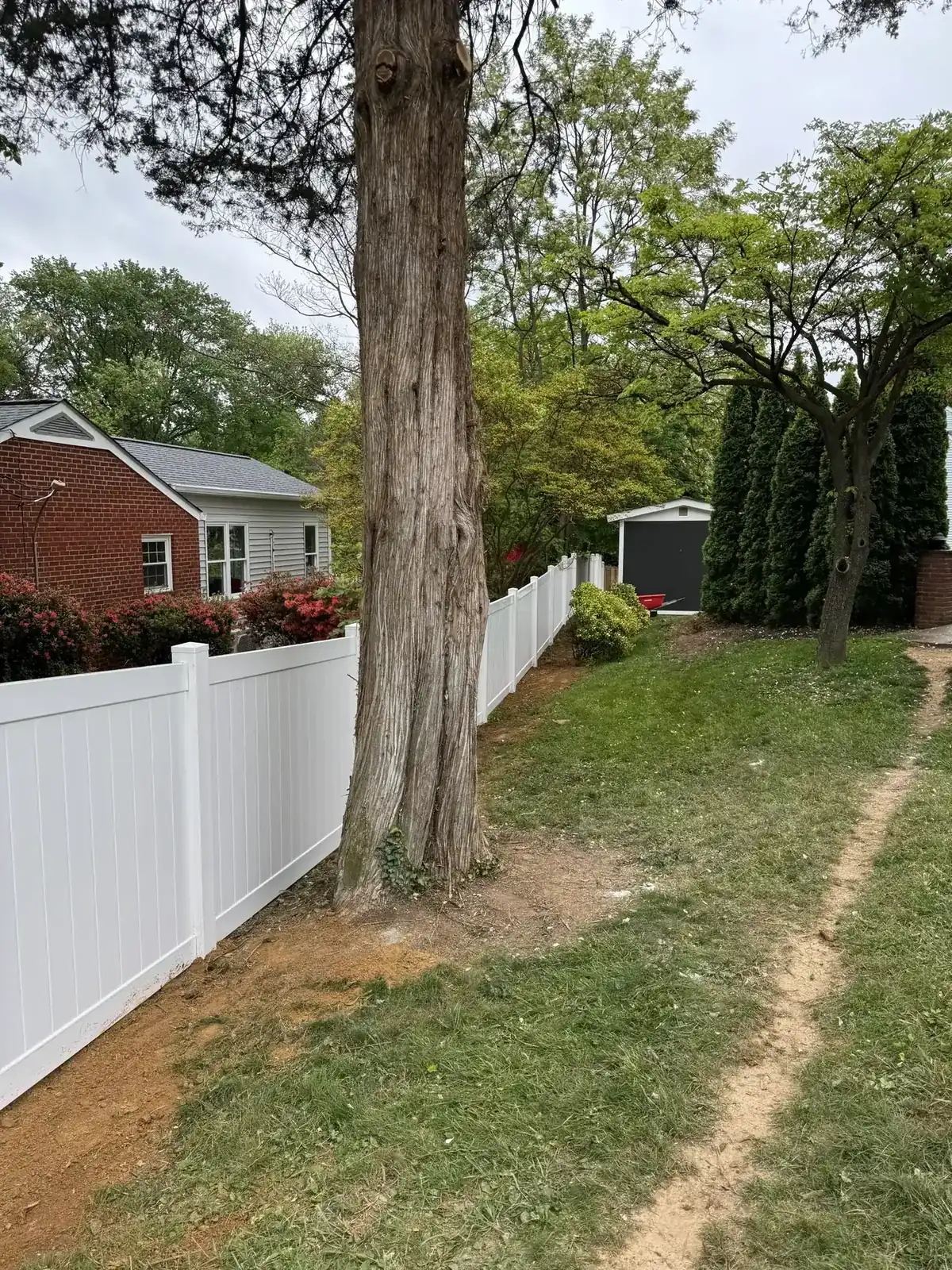
The most common material debate on our estimates. Both build a great privacy fence — the difference is what the fence asks of you over 25 years.
Vinyl vs wood: the numbers
| Vinyl privacy | Wood privacy | |
|---|---|---|
| Installed cost per foot | $40–$70 | $30–$60 |
| 150-ft backyard line | $6,000–$10,500 | $4,500–$9,000 |
| Typical lifespan | 25–40+ years | 15–25 years |
| Maintenance | Wash annually | Stain/seal every 2–4 years; board swaps |
| Color options | White, tan, woodgrain tones | Any stain or paint |
| Storm behavior | Panels pop, re-hang cleanly | Boards break, posts lean |
| HOA preference here | Usually approved, often required | Allowed in most, fading in some |
Planning ranges, October 2026. Your estimate confirms both.
Is a vinyl fence worth the extra cost?
Run the 25-year math for a 150-foot line. Wood: $4,500–$9,000 up front, plus a staining cycle every few years — call it $800–$1,500 a cycle if you hire it out — plus board and post swaps in the back half of its life. Vinyl: $6,000–$10,500 once, then a garden hose. For most homeowners staying five-plus years, the curves cross.
When wood is the smarter buy
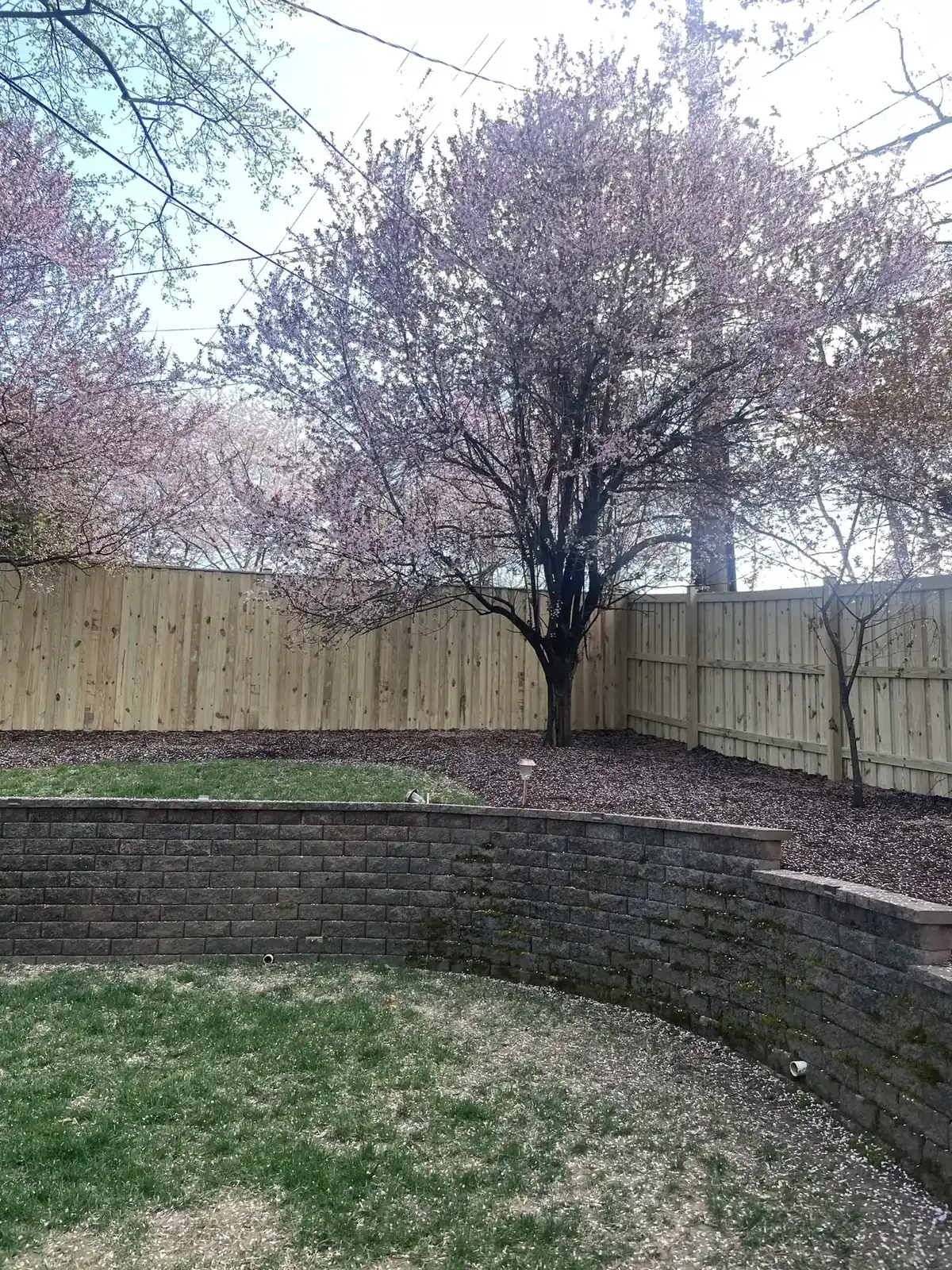
When the budget leads, when you want a specific stain to match the house, or when the fence is a shorter-term bridge. Wood also takes repair gracefully — one board, one nail, done. And on large rural lines, wood and ranch rail keep costs sane.
When vinyl wins outright
Pool code lines, HOA neighborhoods, full-sun exposures, rental properties, and for anyone who has stained a fence once and sworn never again. Vinyl's panels also pop out in storms and re-hang — wood breaks and stays broken until repaired.
What about composite?
Composite splits the difference at $60–$100 per foot: wood's warmth, vinyl's calendar, and a heavier panel. See the composite fence page — and our full material comparison.
What about our climate specifically?
Northern Virginia is hard on wood: clay soil holds water against posts, summer humidity feeds mildew on shaded runs, and freeze-thaw finds every footing that was poured shallow. Vinyl ignores all three — its weak spot is impact, not weather. On wide-open Loudoun lots, wind argues for shadowbox wood or reinforced vinyl posts. Under heavy tree canopy, vinyl's wash-it-once-a-year routine beats wood's mildew scrubbing. Both materials handle our winters; the difference shows up in the maintenance calendar, not the survival rate.
Our honest line on the estimate
We install both and sell neither — the yard decides. Slope, sun, soil, neighbors, and budget come to the estimate with you; the recommendation comes back in writing. Get the free estimate and price both.