
By Ray, owner — VA Class A contractor
A gate is a style decision and a hardware decision wearing the same boards. Pick the style for where the gate stands and what passes through it; pick the hardware so it still hangs true years later. Here are the wooden gate styles we build across Northern Virginia, and when each one is the right call.
When does a picket gate fit?
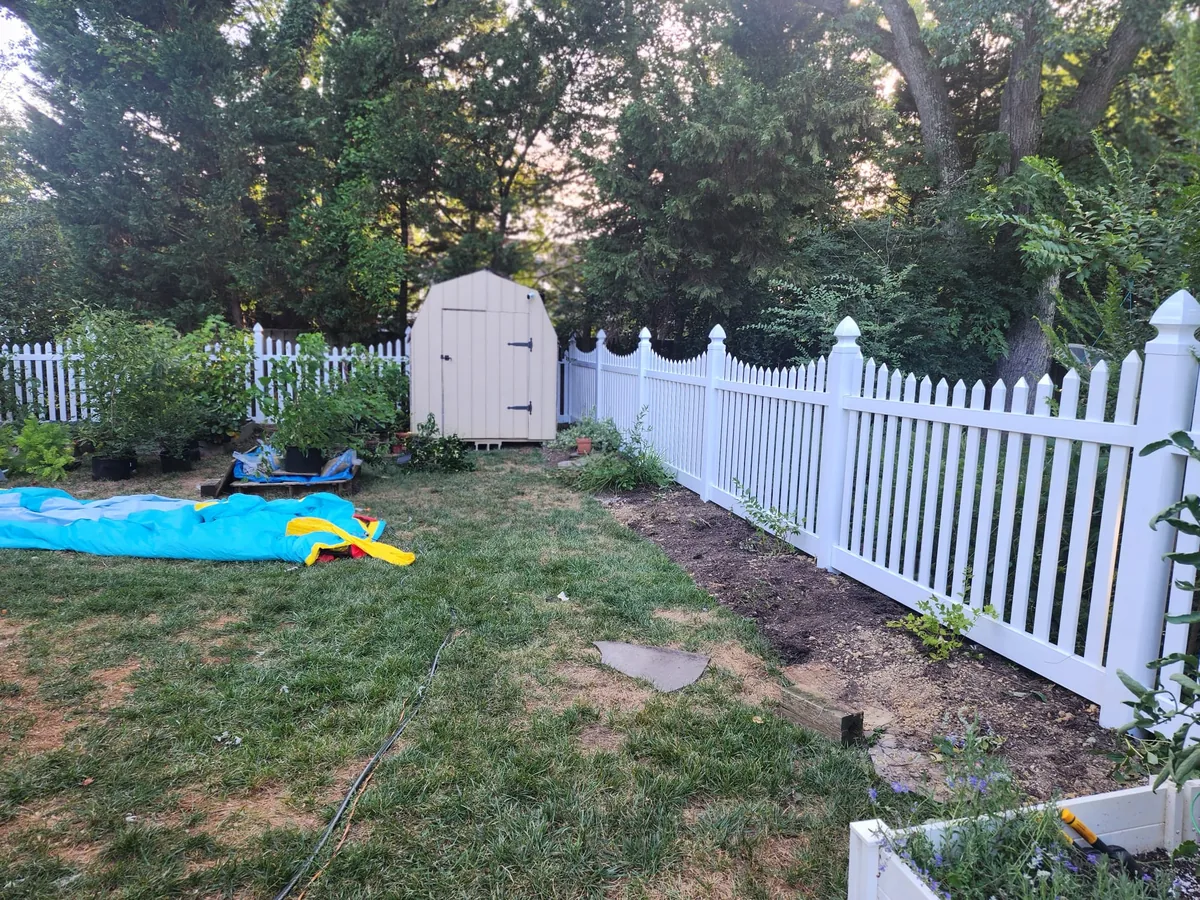
A picket gate belongs where the fence invites people in — front walks, garden entries, the path from a driveway to a side door. The spaced boards keep the openness of the picket run they match, so the gate reads as part of the front of the house rather than a barrier on it. Choose it when you want the line marked but the view kept. Spacing on the gate matches the run beside it, measured board to board rather than eyeballed, or the seam between fence and gate shows from ten feet. Hardware finishes the story: a thumb latch suits a garden gate, while a heavier lever suits the side-yard gate that carries groceries twice a week.
What does a solid privacy gate need?
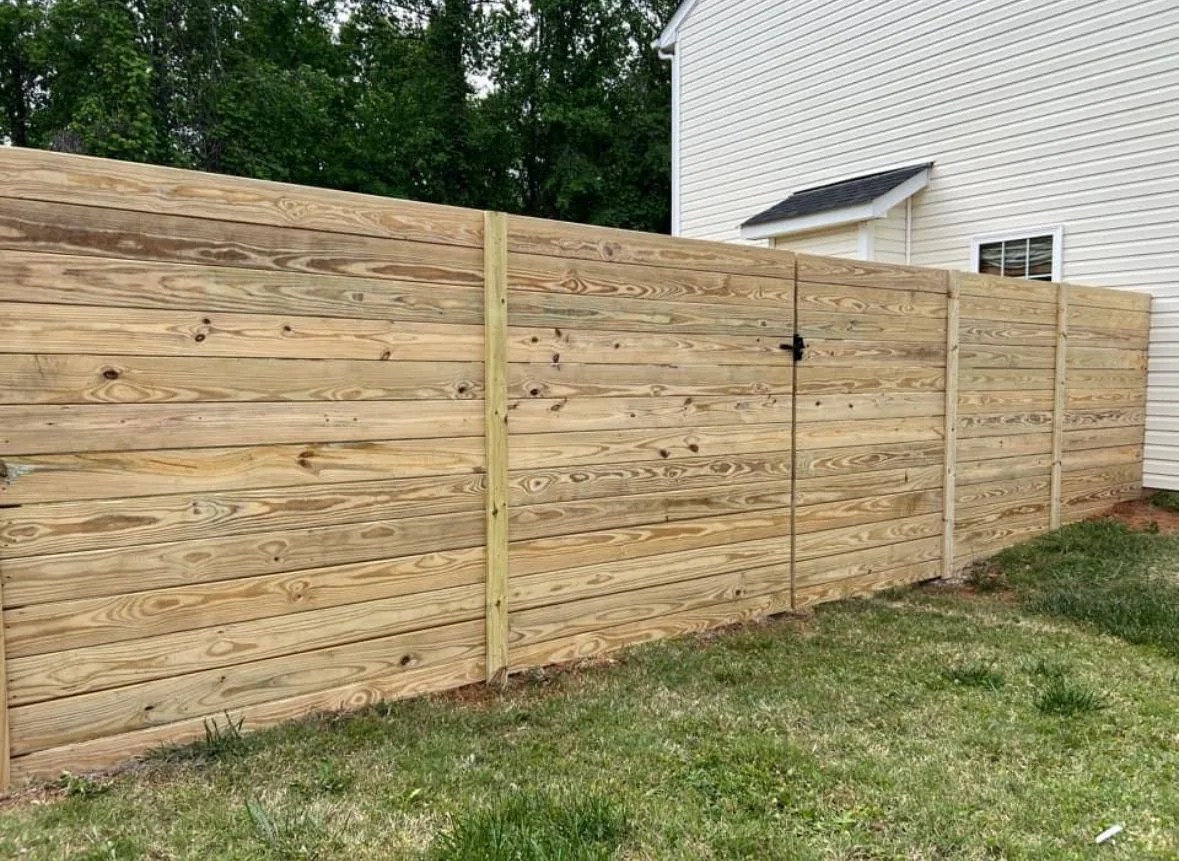
A privacy gate continues a solid run — stockade, board-on-board, or shadowbox — and closes a backyard the same way the fence does. Because the leaf carries full boards, it is heavier than it looks, and the build has to respect that: a true frame, corners that resist racking, and posts set stiffer than the line. The gate repeats the panel's board cut, dog-ear or straight-top, so the line reads continuous from either side. Built that way, a privacy gate disappears into the fence, which is the point. You can see matched gates across our wood fence installation projects.
Why choose an arched top?
The arch is the one gate shape that announces itself, and it earns its place at entries you want to feel considered — a garden gate off a patio, a walk gate facing the street, the passage between front and back yards. The curve costs little to build and changes how the whole corner of the yard reads. An arch also forgives a rolling grade, since the high point reads as design rather than correction. Keep the rest of the line straight and let the arch carry the moment.
What works across a wide span?
Wide openings ask for two leaves, not one long one. A double gate meets in the middle over a removable drop or a drop rod, opening fully for mowers, trailers, and equipment while a single leaf handles daily use. Over long spans, wood's weight grows faster than its strength, which is why leaf width — not total opening — drives the frame design. On rural and semi-rural properties, the crossbuck farm gate carries the same idea across a drive with a look that suits outbuildings and fields. Spans beyond a few feet per leaf move from carpentry into engineering, and we build them that way.
How do you size a gate to its daily traffic?
Measure the widest thing that passes regularly and add clearance for gloves and winter bulk. Thirty-six inches suits people; forty-eight suits wheelbarrows and bikes; beyond that, plan a double leaf. Traffic frequency decides hardware weight too: a gate opened forty times a day lives a different life than one opened on trash night, and we hang them accordingly. Sizing to reality is the least expensive insurance a gate ever gets.
Which hardware stops the sag?
Whatever the style, sag comes from the same three sources: a frame that racks, hinges undersized for the leaf, and posts that flex. The fixes are equally consistent — braced corners, hinges rated for the actual weight, and gate posts set deeper and stiffer than line posts. And when a gate post itself is the problem, no hardware upgrade saves it — the post comes out and goes back in on a footing that matches the leaf it carries. When an older gate has already tipped past adjusting, our fence repair crew can re-frame or re-hang it, usually in a single visit.
Not sure which style suits your line? That is what the free on-site estimate is for. Call (888) 820-6099 or send an estimate request, and we will walk the fence with you and match the gate to both the yard and the hardware it needs.