
By Ray, owner — VA Class A contractor
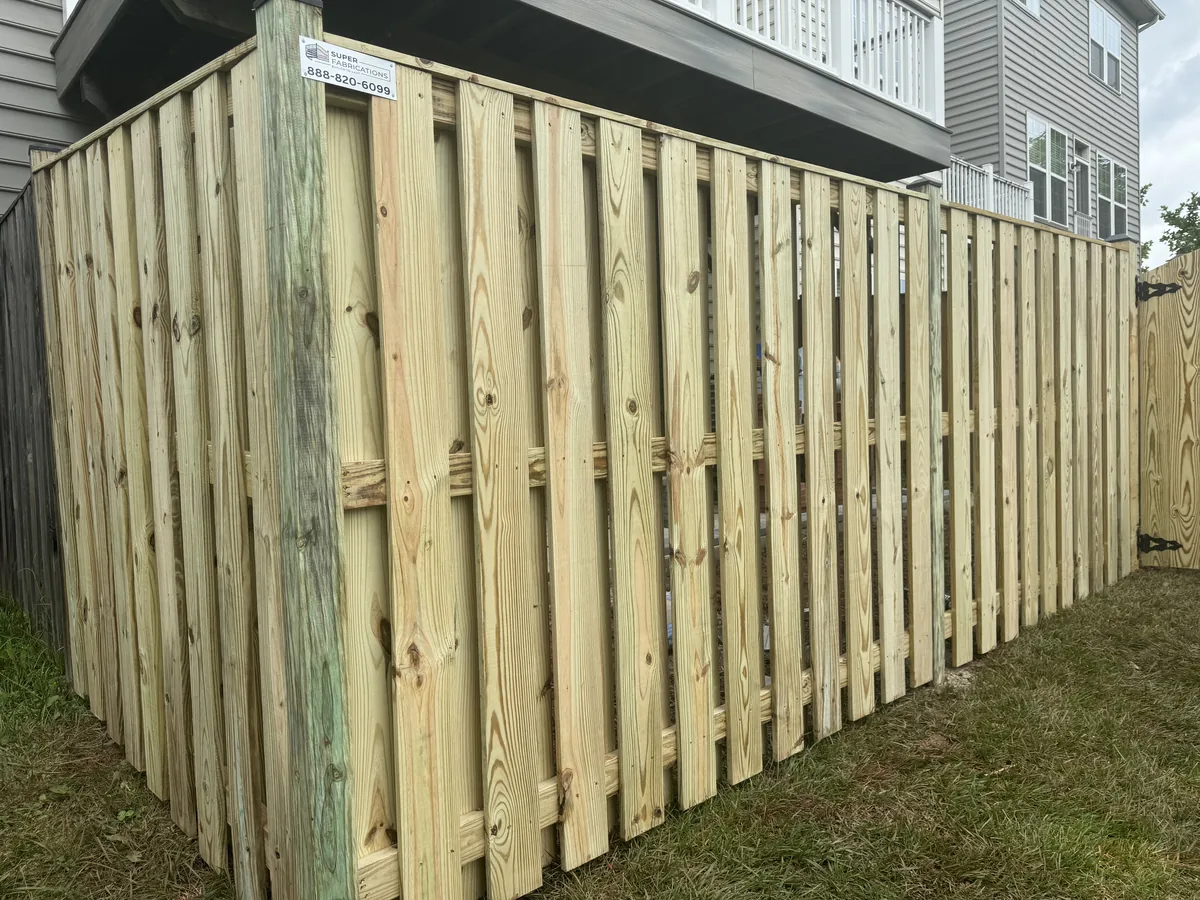
Every sagging wood gate tells the same story, and it is almost never the boards. Gravity pulls the leaf, Northern Virginia humidity swells and shrinks the frame through every season, and something in the structure lets go first. Build the gate so nothing can let go, and it hangs true for its whole life. Here is how we build them, and how we fix the ones that were not.
Why do wood gates sag in the first place?
Three forces work on every gate. Weight pulls the outer corner of the leaf downward, always in the same direction. Moisture moves the wood — a frame square in May can be out of true by October. And the gate post flexes under a load the line posts never carry, because a gate is the only part of the fence that swings on its connections. Sag is not bad luck; it is physics nobody designed against.
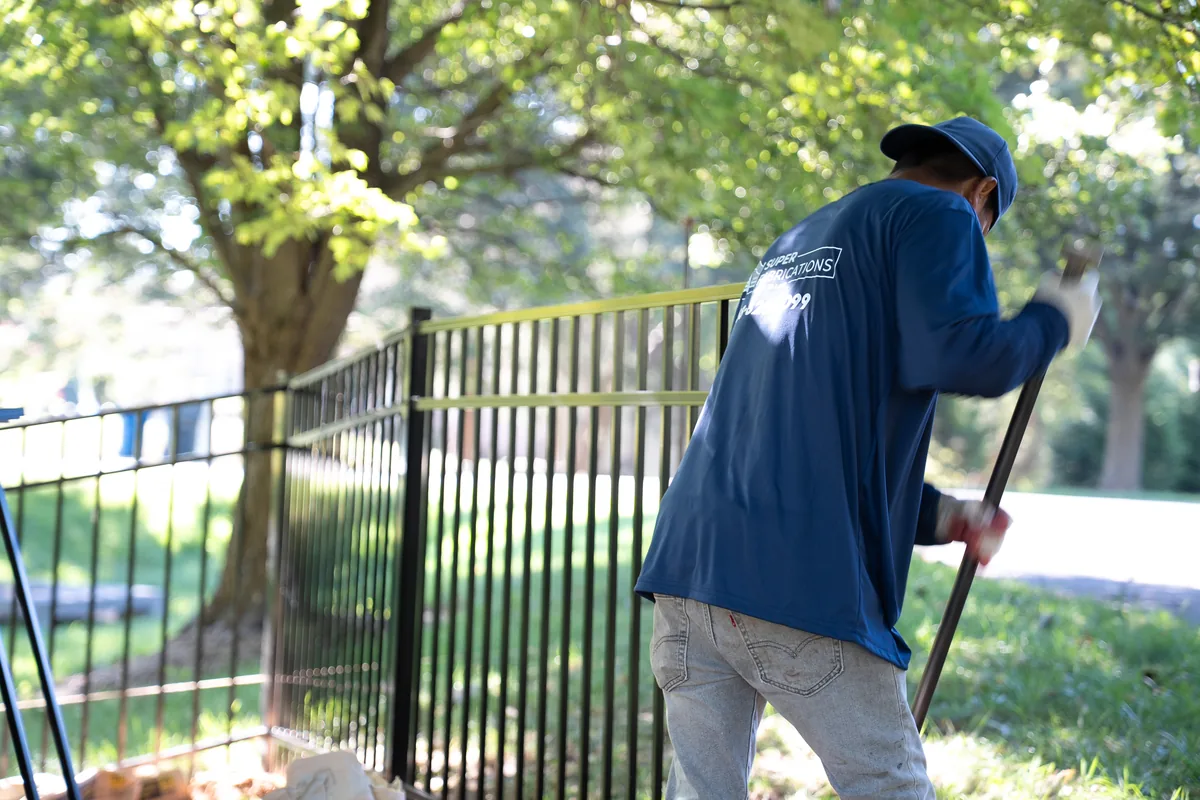
What makes a gate frame hold its shape?
Build the frame as its own structure instead of relying on the boards. On a typical six-foot privacy leaf that means a frame of sound dimensional lumber, corners joined or bracketed so they cannot fold, and boards attached to the frame rather than spanning it. Add a diagonal member running from the lower hinge side up toward the outer latch corner — the orientation matters, because the diagonal works in tension against the exact direction gravity pulls. An anti-sag cable with a turnbuckle gains you a lifetime of adjustment: a gate built like this can be squared with a wrench in five minutes, years later.
How much do gate posts matter?
More than anything else on the gate. We set gate posts deeper and on stiffer footings than line posts, because every swing of the leaf is a tug on that post, and a post that moves even slightly re-opens the gap between latch and strike every week. A shallow gate post shows its first symptom at the latch, not the post — the strike wanders a fraction of an inch and the gate stops closing cleanly. On double gates we go further still: bigger posts, deeper footings, since two leaves double the working load. A perfect frame cannot out-hang a lazy post.
Which hinges and latches hold up?
Galvanized or coated hardware, sized for the leaf's real weight with margin to spare. We favor adjustable hinges, because the small seasonal movement in wood is easiest to correct with a turn of a wrench rather than a re-hang. Latches belong where the daily user reaches them, unless the gate's job is to outsmart a dog — then convenience gives way. The difference between hardware grades shows up in year two, which is why we never hang a gate on whatever was in the truck bin. And when replacing a hinge on an existing gate, bring the old hardware along — matching the screw pattern saves the frame from a second round of holes, and old wood does not forgive a second round.
What about double gates?
A double gate gets one extra part that makes it work: the drop rod. It seats into the ground or a receiver and locks the meeting leaf in place, so the pair closes as a gate and holds as one. Skip it and the free leaf finds its own position within a season — usually a wrong one.
When is it time to repair instead of rebuild?
If the frame is sound, sag is an adjustment — re-square, tension the cable, tighten the hinges. If the frame itself has racked or the post has moved in the ground, the honest fix is a rebuild on a proper footing. Our fence repair crew makes that call on-site and shows you the difference in cost before touching anything. Victor Aviles wrote in a review posted on Google: "I had a little issue with the installation but he sent his people back to rectify, very pleased with the service." Standing behind the gate after install day is part of building it.
Need a gate that stays square, or the fence to hang it on? Call (888) 820-6099 or send an estimate request, and we will build it on our wood fence installation standard.