
Homeowners often assume fence season ends at Thanksgiving. In Northern Virginia it does not. Winter is a working season for fence installation here, and for many yards it is the smarter time to schedule. Here is what actually changes when the temperature drops.
Can you install a fence in winter in Northern Virginia?
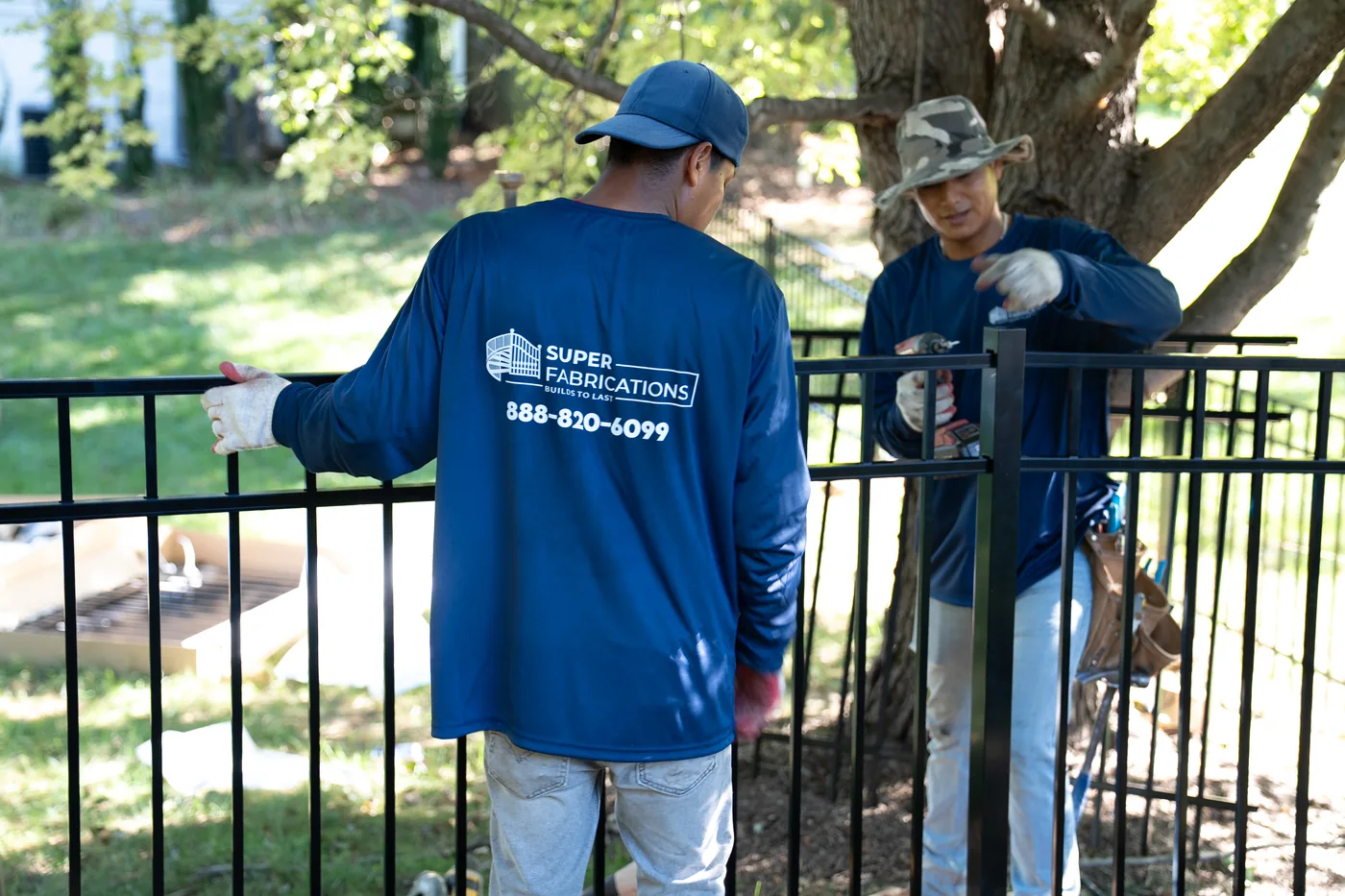
Yes. Our region sees cold snaps, not permafrost. Except after a heavy snow or a deep freeze, the ground stays workable for digging, and a crew that plans around the weather keeps setting posts through the off-season. We install fences year-round across Northern Virginia and Maryland.
How does the frost line affect fence posts?
Winter does not change the physics of a fence post; it only makes the rules matter more. Posts are always set below the local frost line so freeze-thaw cannot heave the footing. In summer that depth is routine. In winter, crews watch the forecast, dig while the ground is workable, and pour footings with cold-weather practice: proper mix, protection while it cures, and patience.
Concrete cures more slowly in cold air. It still cures, and it still reaches full strength — the schedule just allows for it. That is the one honest trade of a winter install: cure time gets respect. Homeowners sometimes ask whether a winter-installed post behaves differently come spring. It does not. Depth below the frost line is what stops heave, and that depth is the same in January as in June.
What is easier about scheduling in the off-season?
Two things. First, queues are shorter. Spring and early summer stack up fast in Fairfax and Montgomery counties; winter schedules breathe. Second, your yard is more accessible. Garden beds are dormant, perennials are cut back, and there is less to protect along the fence line.
Families also use the timing well: a fence installed in January or February is ready when the grill comes out in April. Winter also suits projects that need a little back-and-forth — if you are still choosing between two materials or two heights, off-season lead times leave room to decide without pushing the build into the spring queue.
Does cold weather hurt the finished fence?
No. Wood, vinyl, aluminum, and chain link are all built for the mid-Atlantic winter. Crews handle vinyl a little more carefully in deep cold because panels stiffen, and they plan cutting and staining around wet days. The materials themselves do not mind the season; the workmanship standards do not change.
Which materials install well in winter?
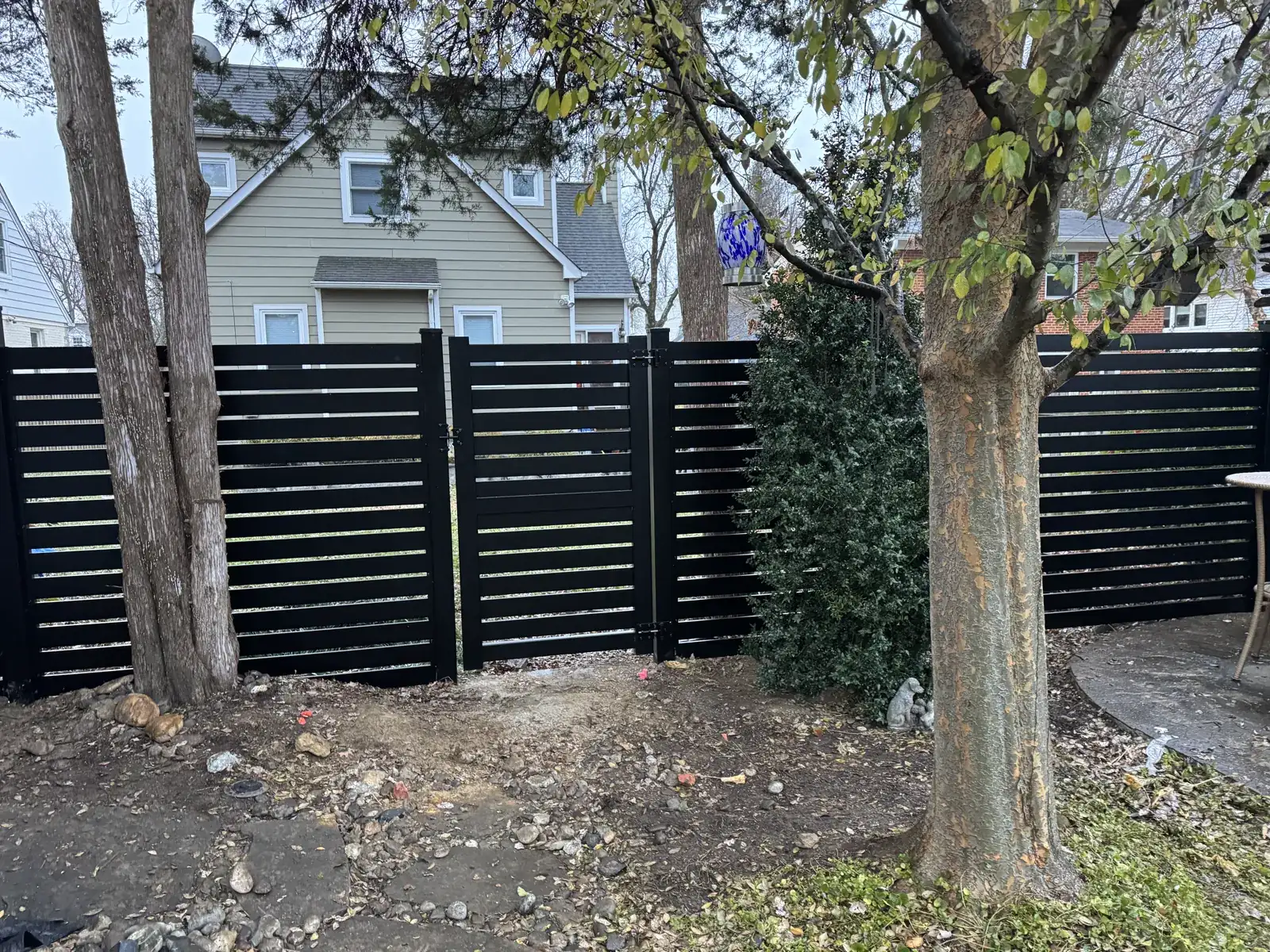
All of them, with small adjustments. Wood posts and panels set the same way they do in October; stain waits for the right temperature window, which we schedule rather than rush. Aluminum and chain link barely notice the season — metal and mesh handle cold without complaint. Vinyl asks for the most care: panels stiffen in deep cold, so crews cut and seat them gently instead of forcing a fit.
Gates deserve a mention in every season, winter included. Hardware goes on tight, hinges get set while the posts are plumb, and latches get tested before the crew leaves. A gate adjusted in January should still swing clean in July.
What should you plan before a winter install?
The fence goes up fast; the paperwork does not. Zoning rules, HOA approvals, and permits take calendar time regardless of season, so start them early. Call 811 — Miss Utility locates buried utilities before any digging, and that locate is free and required by law. Clear the fence line of decorations, furniture, and anything stored against the old fence. Think about the crew's path too. Winter daylight runs short, so a line with clear access — a gate wide enough for material, a walkway free of stored bikes and planters — gets more done per hour of light.
If an old fence is coming out first, our fence replacement service handles removal and haul-away in the same visit as the new install.
Is winter right for your fence project?
If you want a shorter wait, an open calendar, and a fence ready for spring, the off-season works in your favor. See our fence installation in Northern Virginia service for the full process, or request a free on-site estimate and call (888) 820-6099. We will look at your ground and give you a straight answer about timing.