
Some yards take a catalog fence and smile. Most Northern Virginia yards argue. The grade drops two feet from one corner to the other, the lot line jogs around an old easement, and the only sensible gate location sits nowhere near where the standard plan wants it. That is where custom design stops being a luxury and starts being the investment.
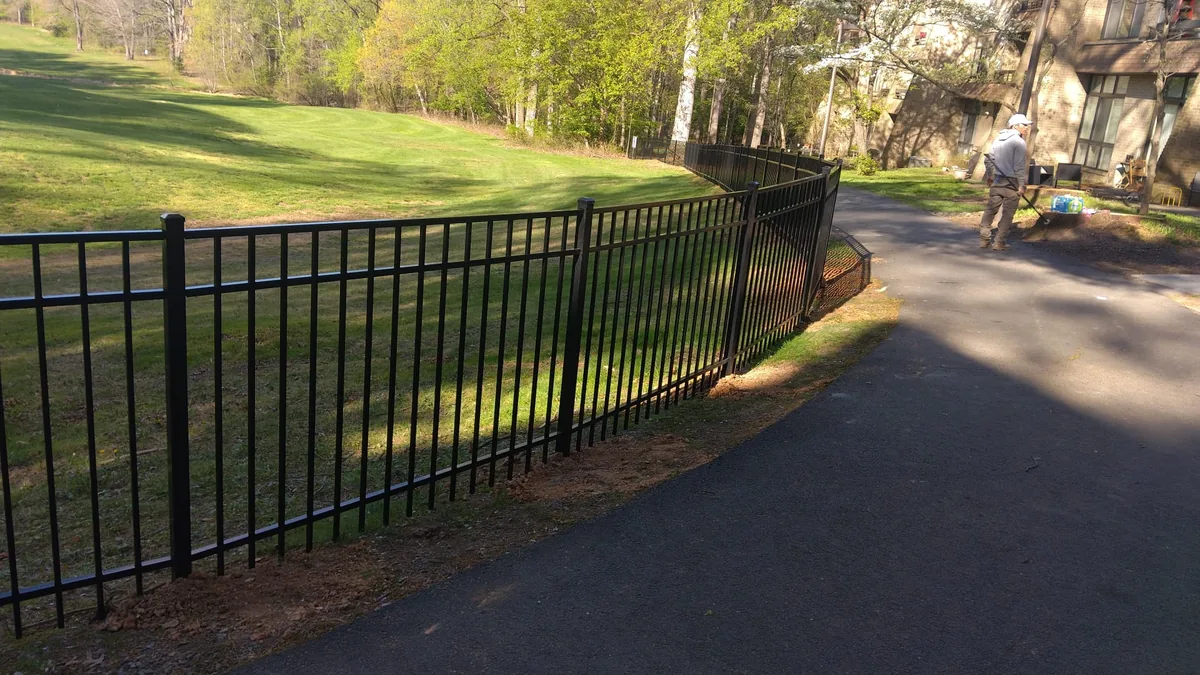
We build custom residential fencing across Fairfax, Loudoun, Arlington, and Montgomery counties, and the projects that justify it share the same traits: difficult ground, awkward lines, or a gate the property genuinely needs. On easy lots, an honest contractor says so and saves you the design fee.
When does a custom fence beat a standard run?
A standard run works when the yard is flat and rectangular from corner to corner. Few are. On a sloped lot, a stepped or racked line keeps pickets close to the ground instead of floating a foot above it. On an irregular lot, a fence that follows the true property line prevents a survey dispute with the neighbor later. Cookie-cutter panels assume none of this, and the gaps under the bottom rail announce it every winter. One Vienna-area customer put the value plainly. Bob McFadden wrote in a review posted on Google that Ray "arrived promptly and gave good advice about options and what was not needed." Knowing what to skip is half of custom design.
How do we fence a sloped yard?
Slope is the most common reason a do-it-yourself plan fails. We choose between racking the panels — letting each section tilt with the grade — and stepping each panel down the hill with a level top. Racking keeps clean lines on gentle grades. Stepping handles the sharp drops common in Reston, Great Falls, and the Prince William hills, where a single panel can lose a foot of grade.
Water is the second half of the slope problem. Runoff concentrates along the downhill side of any fence line, and soil that washes out from a footing takes the post with it. Custom plans route the line around natural swales, add gravel at the low points, and set posts deeper on the downhill posts that carry the load. The catalog plan never mentions any of this; the walk around your yard is where it gets solved.
What do odd lot lines and obstacles demand?
Mature trees, septic fields, drainage swales, and county setbacks all bend a fence line. We stake the line in the yard before ordering a single panel, so the fence dodges the oak instead of fighting it. A curved section around a specimen tree, an inset panel to clear a utility box, a jog to stay inside the surveyed boundary — each is a small custom decision that prevents a large correction later. The survey plat you already have tells us most of what we need; the walk confirms the rest.
Why mix materials on one property?
A single material rarely suits every side of a lot. Solid wood or vinyl privacy belongs where the kids and the dogs play. See-through black aluminum flatters the front walk without hiding the garden. Joining them along one line — privacy in back, picket or metal across the front — costs little extra while the posts are going in, and the property reads as one designed plan instead of two fences that met by accident. Matching post styles and colors at the transition is the detail that makes the mix look planned. Our fence installation team builds these transitions across Northern Virginia every week.
What does a custom gate change?
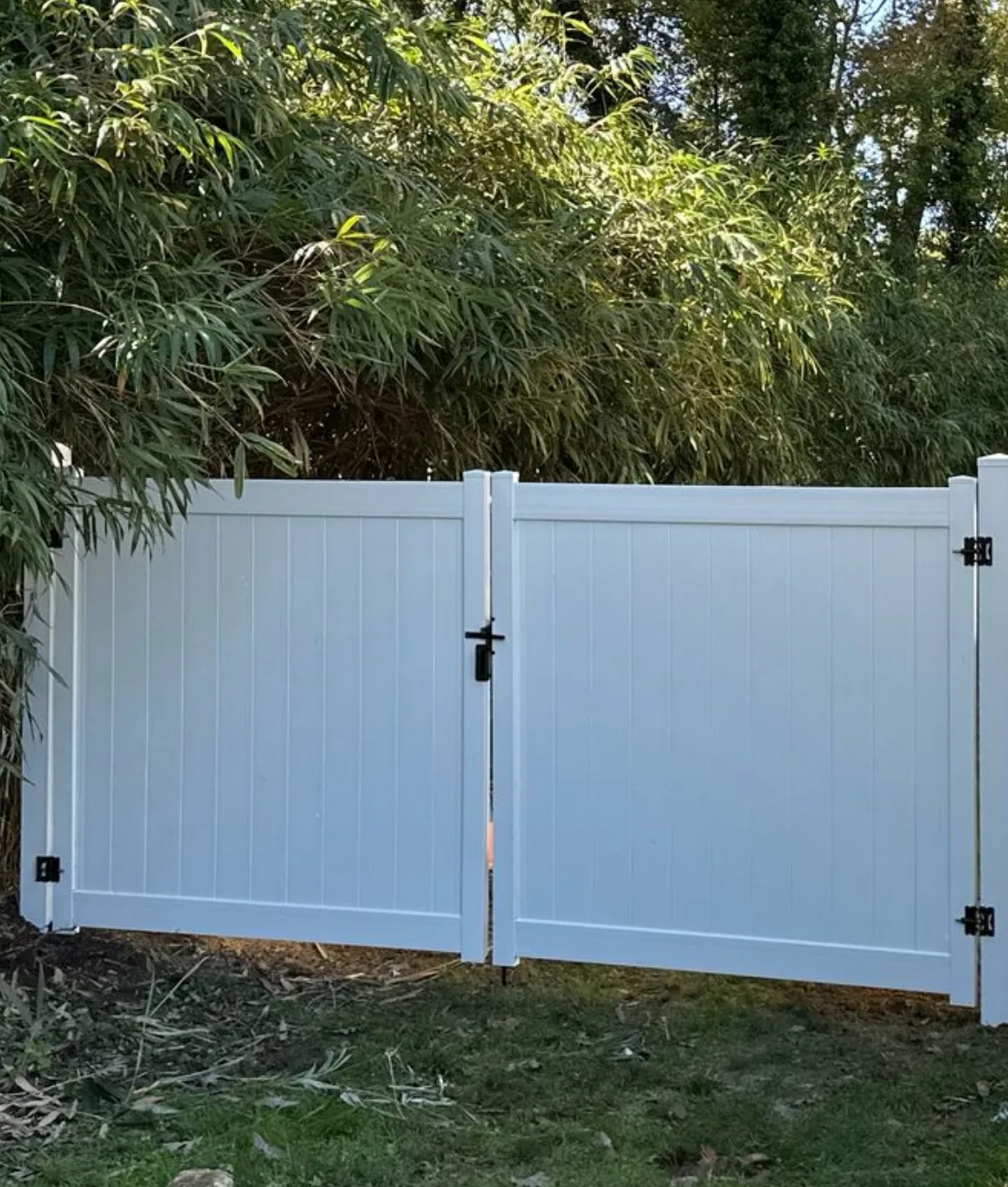
Gates are where custom thinking pays daily. A double gate wide enough for the riding mower, a walk gate set beside the grill instead of across the patio, a driveway gate hinged on the side your habits actually use. Small decisions compound: a gate that lands on level ground swings true for decades, while one dropped across a slope fights gravity every time it closes. If automation is anywhere in your future, we size the posts and plan the routing now, so an operator bolts on later without rebuilding the entry. Automatic gate installation starts with a frame square enough to carry it.
How do you start a custom project?
With a conversation on your property. The estimate is free, and the design happens where the fence will stand. We walk the grade together, mark the gate spots, and talk through materials before anything is ordered. Then permits, Miss Utility, stakes, posts, and a walkthrough with you at the end. Call (888) 820-6099 and tell us what your yard is doing that a catalog fence cannot fix.