
Northern Virginia driveways are converting, one operator at a time. The reasons are not mysterious — convenience, security, and a solar option that finally fits our long rural drives. Here is why automated gates have moved from estate accessories to homeowner standard, and what the daily reality looks like.
Why are more homeowners automating their gates?
The honest first reason is small and human: nobody enjoys getting out of the car in an ice storm to drag a gate open. An operator turns the evening arrival into a keypad code or a tap, and the gate closes behind you without a second thought. The second reason is security with actual teeth: a closed, locked gate is a decision point for anyone approaching your property, and it works the same at 3 p.m. and 3 a.m. Families with dogs and small children add the third reason — the yard stays closed even when every hand is full.
Swing or slide — which fits your driveway?
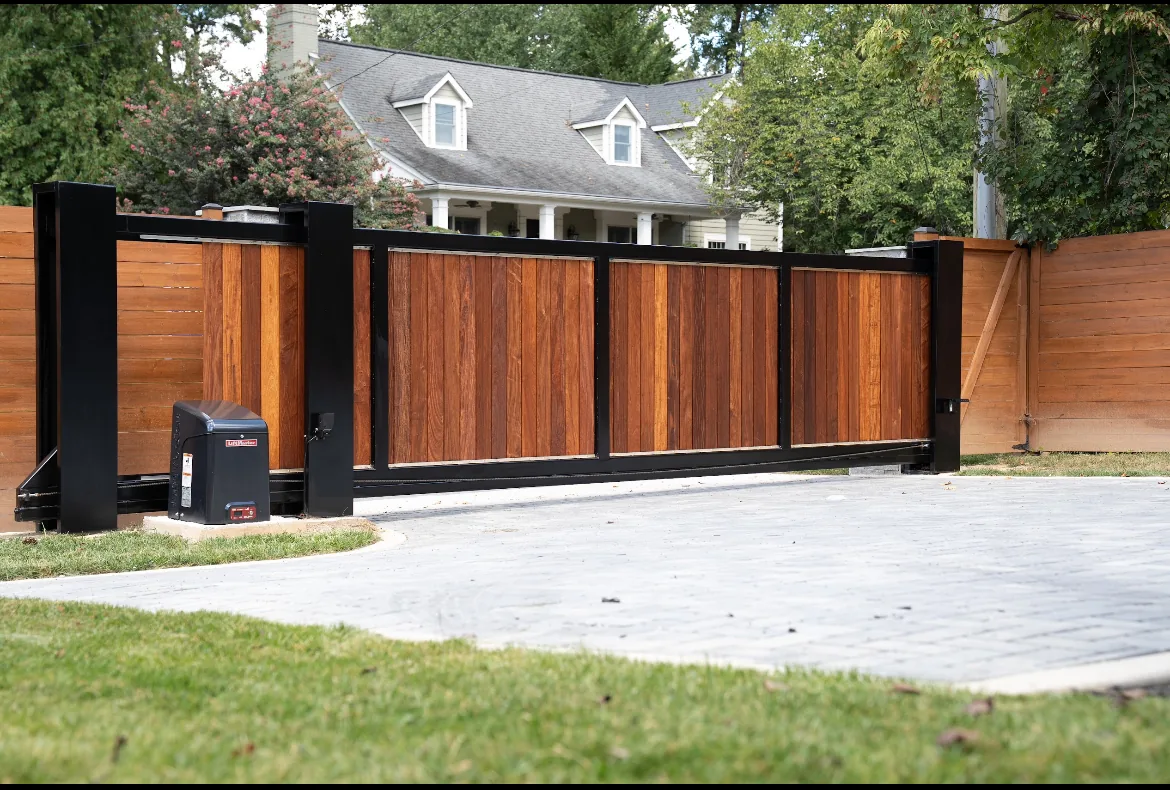
Swing gates are the classic: a single leaf for narrower drives, double leaves for wide entries, arms that move gracefully and cost less to automate. Slide and cantilever gates win where the driveway is short, sloped, or buried in snow — the leaf runs parallel to the fence instead of arcing across the apron. We match the configuration to the site on every automatic gate installation, and where a fence line is part of the project, the gate is designed with it rather than bolted on afterward.
Style rides along with the mechanism. Wood-clad leaves match a board fence, aluminum infill keeps the view open at the street, and ornamental steel reads formal at a colonial frontage. The operator hides behind the style either way — what you actually see is the gate closing itself at dinner time, which is the part that sells itself.
How do solar operators hold up here?
Better than most people expect. A solar panel and control box run a residential operator without trenching power to the curb, which is why solar has taken over long rural driveways in western Loudoun and Fauquier. Modern panels charge through our cloudy stretches, and battery backup carries the gate through the outage that would leave a wired system half-open. For town lots with power nearby, wired operators remain the simplest path. Either way, the control box lives on the post, the panel faces south, and the system asks nothing of you until the one morning years from now when a battery needs replacing.
What is the repair reality?
Operators are machines that live outdoors, and pretending otherwise sells a future of frustration. Hinges wear, storms find wiring, and a magnetic lock or control board eventually needs a service call. The honest pitch is this: buy hardware with parts availability and a dealer who services what they sell. We install LiftMaster operators as an authorized dealer, and we repair gates we did not install — hinges, locks, wiring, and operators. A homeowner described exactly that kind of visit in a review posted on Google: Armin Rahbar wrote that the team serviced an automatic gate, "replaced hinges and installed magnetic lock, and took care of some complex electrical wiring issues."
What should you ask before buying an automated gate?
Three questions sort the good installations from the regrettable ones. What happens when the power fails — battery backup, manual release, and can you work the release yourself? Who services this operator in five years, and do they stock the parts? And what does the gate do if something is in the way — photo eyes and edge sensors are the difference between a pause and a dent. Any installer who answers those three in specifics has built a few of these; one who waves at the brochure has not.
What does installation involve?
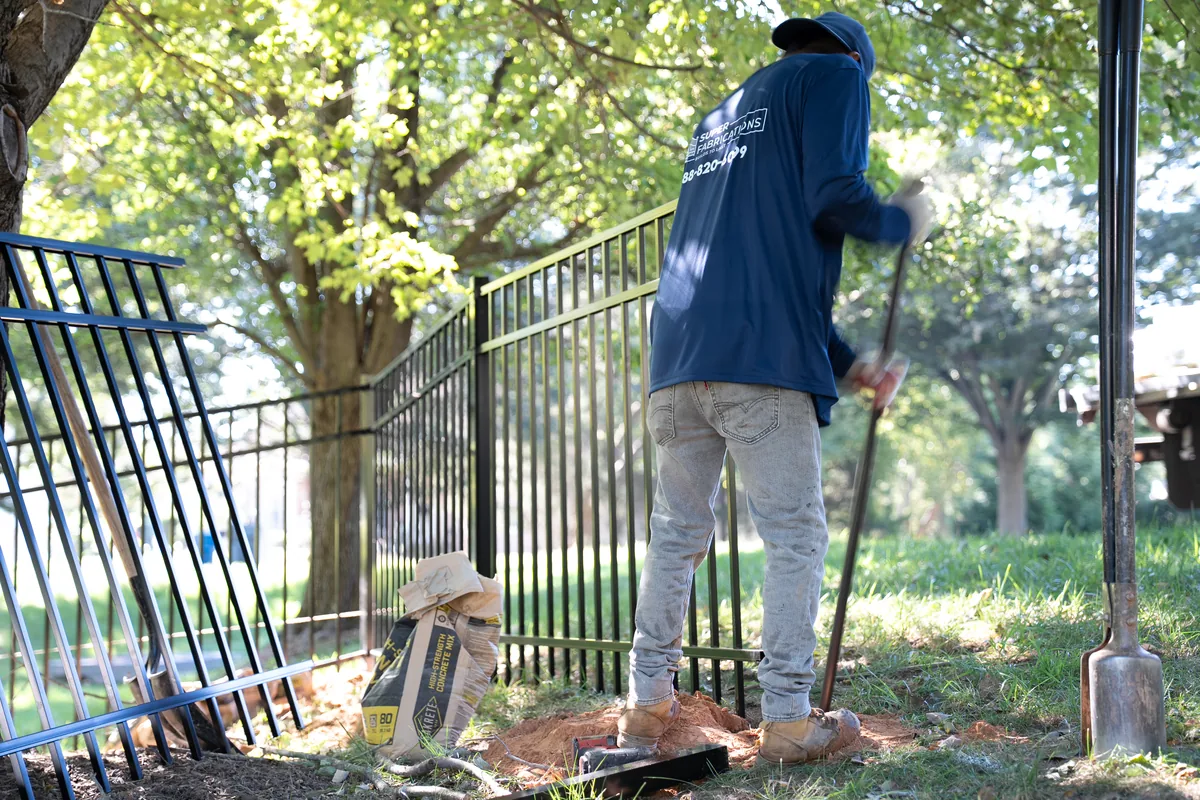
Posts sized for the operator's weight, a gate square enough to push against, the operator mounted and wired, and the access devices — keypad, remotes, or app control — programmed to your household. On a new fence project it all happens in one schedule; as a retrofit, we assess the existing gate first, because an operator amplifies whatever the frame already is. See how the full line comes together on our fence installation page, then get the free on-site estimate. Call (888) 820-6099, and we will walk the driveway with you.