
Numbers make a fence project real. Below are three typical project types — labeled typical on purpose, because these are planning pictures, not a specific customer's job. Use them to size your own project in your head. Then let your estimate confirm the numbers, because your yard gets its own measurements.
What does a typical wood privacy replacement look like?
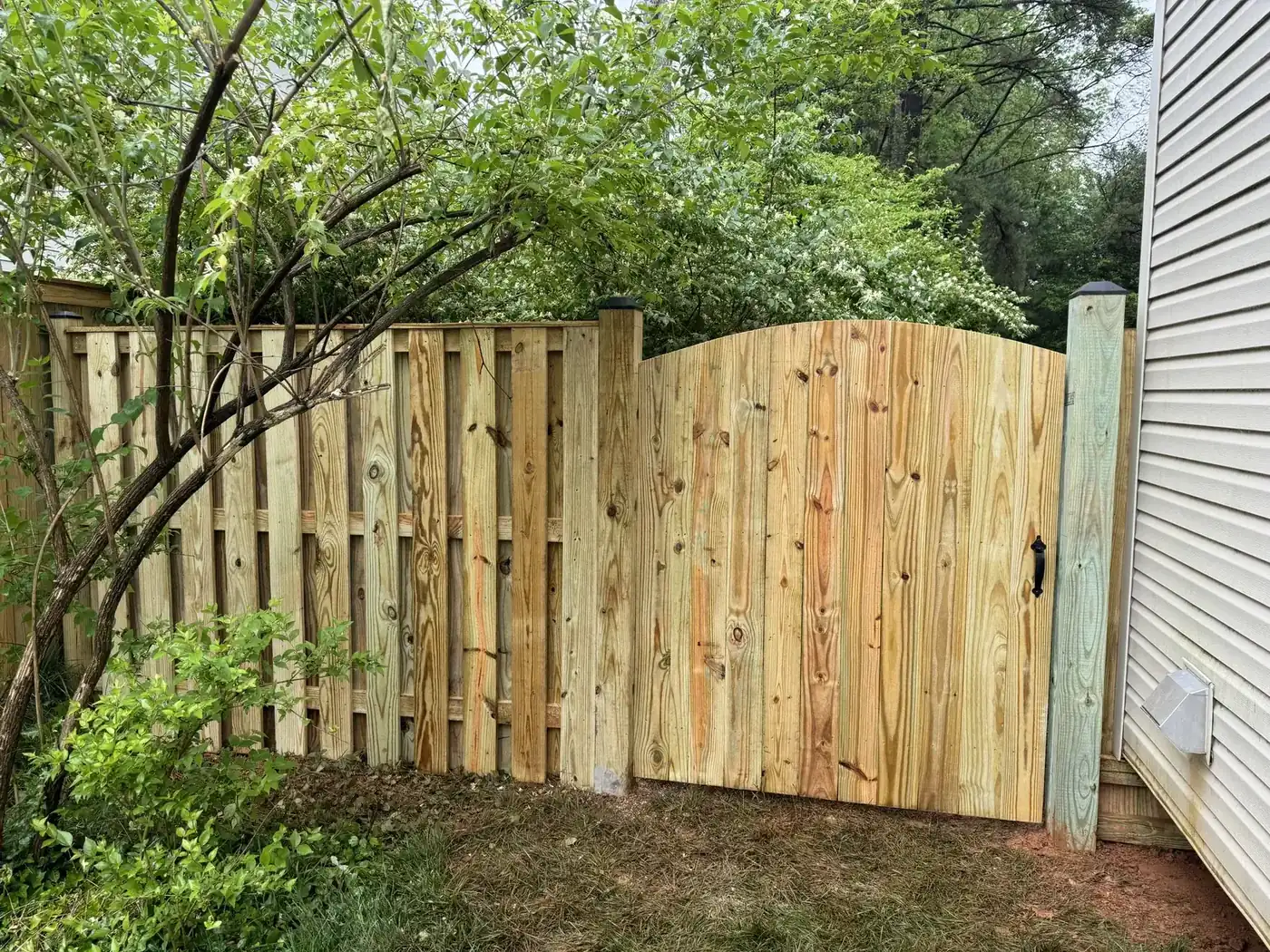
The most common call we get: a 150-foot run of 6-foot wood privacy around a quarter-acre yard, replacing a fence that reached the end of its life. The old fence comes out first and the debris is hauled away. The new line usually follows the old one, with a walk gate where the old gate stood. Wood privacy carries a typical planning range of $30 to $60 per linear foot installed, so a 150-foot run lands somewhere in that band before gates and extras — your estimate confirms the number. Permits come next where required. The install itself is the fast part: posts one day, assembly close behind. Bob McFadden's Google review describes the shape of it: "The installers arrived on time, were professional, friendly, and efficient. The installation was completed same day." His review also notes that we modified the initial project proposal quickly to meet requested changes — the other half of a replacement job, adjusting the scope to the yard instead of the yard to the scope.
What does a typical aluminum pool fence look like?
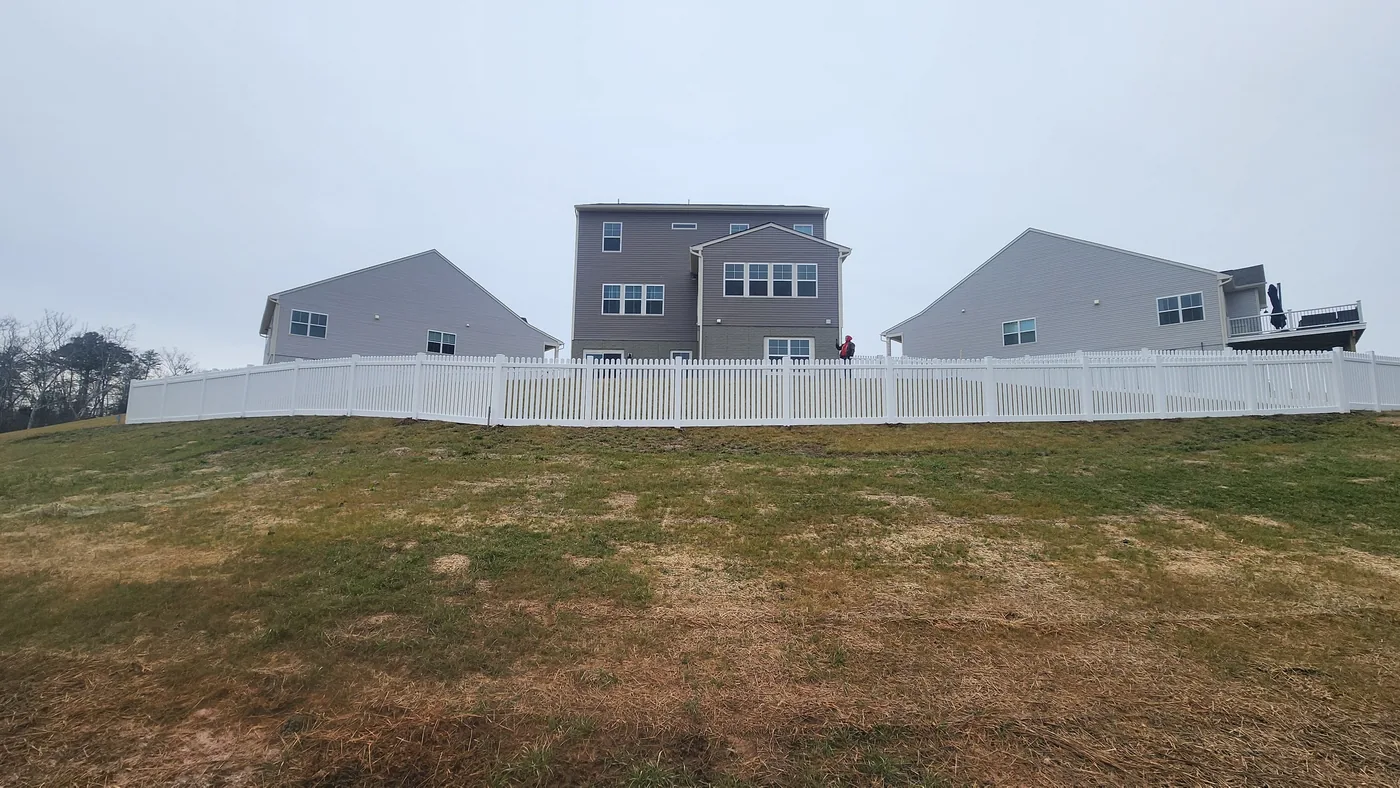
A four-sided run around an in-ground pool, black aluminum at barrier height, with self-closing, self-latching gates where code requires them. Virginia's baseline is a 48-inch barrier; Montgomery County wants 5 feet, so the same pool two states apart builds differently. Aluminum open fence carries a typical planning range of $40 to $75 per linear foot installed — your estimate confirms the number for your pool's footprint and gate count. Pool jobs also run on two clocks, the build and the inspection calendar, and we quote both into the schedule. Timing matters as much as price here: the barrier must pass before the pool passes inspection, and inspection season books up. We plan pool fences backward from that date.
What does a typical driveway gate with an operator look like?
A double swing gate across a residential driveway, sized to the clear opening — many residential drives want 12 to 16 feet of it — with a LiftMaster operator, keypad entry, and solar power where trenching to the house is impractical. Gate projects carry more moving parts than fence runs: the gate frame, the posts, the operator, the access control, and testing under real use. That is why a gate quote is its own line, priced to the width, the material, and the operator package rather than by the foot. Ask the same question of any gate plan: what clears this opening on its heaviest day? The answer sizes the leaves. The estimate confirms the number, and the schedule includes the wiring and test days a fence-only job never needs.
How do gates and removal change the total?
Two line items move any of these totals. Gates first: a walk gate adds hardware, a frame, and installation time, and a double drive gate adds more of each — which is why we list them as their own line instead of hiding them in the per-foot number. Removal second: tear-out and haul-away of an old fence is real work, and quotes that skip it are pricing a different project. Ask for both lines explicitly on any estimate you compare, ours included.
How should you use these numbers?
As planning figures, and nothing more. Footage times the per-foot range gets you in the neighborhood for the first two projects; the gate needs its own quote. Other materials carry their own bands — vinyl privacy, for instance, has a typical planning range of $40 to $70 per linear foot installed. Gates, removal, and permits move totals in both directions. When you want to see finished work instead of planning figures, browse our projects gallery. And when an existing fence is the reason for the call, our fence replacement page covers removal, haul-away, and same-line rebuilds. The estimate is free and happens on your property — call (888) 820-6099, and we will put your own numbers on paper.