
Vinyl or wood? It is the most common material question we hear in Northern Virginia and Maryland, and the right answer depends less on the fence than on the household. The full comparison tables — cost, lifespan, maintenance, privacy — live in our vinyl-vs-wood guide. This piece covers the five questions that actually settle it.
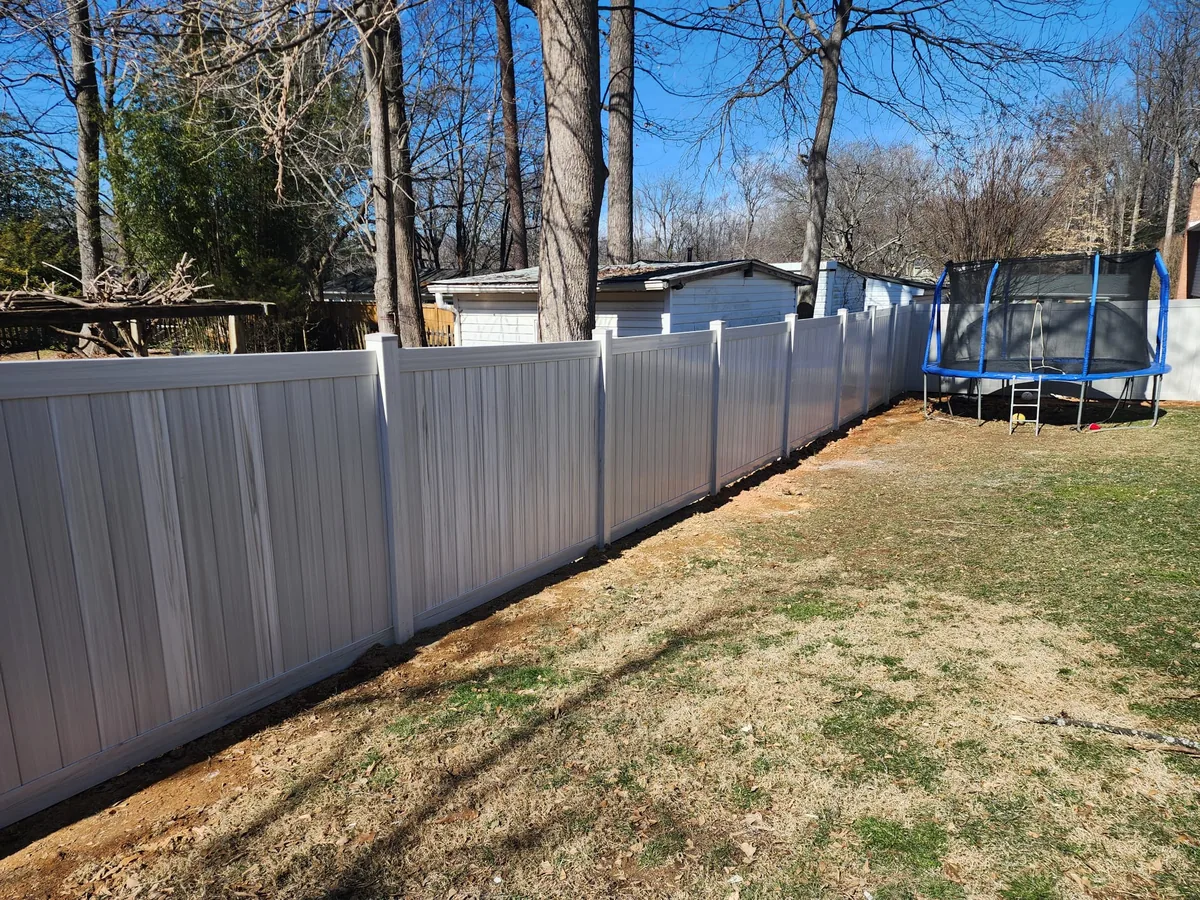
How much maintenance do you actually want to do?
Answer honestly, because the fence rewards whichever amount you choose. Vinyl is the set-and-forget option: no staining, no sealing, a hose and soapy water once or twice a year, and the color runs through the material so nothing peels. Wood asks for a stain or seal cycle every few years, an eye on the boards after wet springs, and an afternoon here and there swapping a cracked picket.

Some homeowners enjoy the wood routine; the yearly walk and touch-up is part of owning the yard. Others want the fence to never appear on a to-do list again. Neither is wrong — but only one of them is you. The tools tell the same story: a hose, a bucket of soapy water, and ten minutes cover a vinyl wash, while wood asks for a brush, a dry day, and a weekend now and then.
What matters more: starting price or the long view?
Wood typically starts lower. Vinyl carries a higher starting price and then asks for almost nothing for years — no stain purchases, no board replacements, no weekend lost to a brush. Over a long ownership, the maintenance you do not do is part of the price you already paid. The exact numbers shift with footage, style, and current material costs, so read the ranges in our vinyl-vs-wood fence guide and let an on-site estimate pin yours.
Which material fits your yard's style?
Wood brings grain, warmth, and range: it stains or paints any color, takes classic profiles from picket to cap-and-trim, and sits naturally in mature landscapes. Vinyl brings crisp uniformity: bright white, tan, cypress, and mocha tones, clean lines that hold, and the tidy look so many HOA communities standardize on. Walk your street and notice which fence you keep noticing — that instinct is worth more than any brochure.
How do color and finish decide it?
Vinyl locks its palette at installation — white, tan, cypress, mocha, and a handful of specialty tones, unchanged for the life of the fence. That is a feature if you want the color settled, and a limit if you enjoy changing things. Wood is the opposite: stain it honey this decade, gray-wash it the next, paint it to match new shutters the year after. If the house color is a moving target, wood keeps up. If the house color is settled, vinyl matches it once and stays matched.
How does each material handle your household?
Dogs and kids do well with both materials when the design is right: solid privacy panels in either material contain jumpers, and dig barriers install at the base of either. The differences show at the edges — vinyl cannot splinter and will not hand you a loose board after a hard winter, while wood absorbs an impact by cracking one board you can replace in an hour. Chain link and aluminum serve other jobs; this choice is about privacy yards. Pool and hot-tub yards add one more layer: barrier rules set minimum heights and gate hardware for any fence that guards water, and both materials meet them when built to spec.
When does each material win outright?
Vinyl wins when low maintenance leads, when the neighborhood look calls for crisp uniformity, and when the plan is to install once and think about the fence as little as possible. Wood wins when the starting budget leads, when the home wants natural or period character, and when the owner genuinely does not mind the care cycle. Households planning to sell within a few years often lean vinyl for the same reason buyers like it: it photographs clean and asks nothing of the next owner.
Alireza Ghazinasab's review posted on Google sums up how either install should go: "Great service provided, very competitive pricing. The fence installed looks great."
Where should you go from here?
Shortlist your answer — vinyl or wood — then see the styles in person on our vinyl fence installation and wood fence installation pages. Request a free estimate or call (888) 820-6099, and we will walk your line, price both materials, and leave the decision where it belongs: with you, holding real numbers.