
Security for a home is not one tall fence; it is a set of decisions that fit your county's rules, your family's habits, and — if a pool is anywhere near the plan — the barrier code that overrules aesthetics. This is the guide we wish every homeowner read before buying six hundred feet of anything.
How tall should a security fence be?
Tall enough to be work, short enough to be legal. Privacy at six feet stops the casual climber and hides the comings and goings of your household. But county rules set the ceiling: Fairfax County allows up to 7 feet in side and rear yards while capping front yards at 4 feet on most lots; Arlington holds 4 feet within 25 feet of a public right-of-way; Montgomery County tops residential at 6 feet 6 inches and permits every fence; Washington DC requires a building permit above 6 feet. We design to the parcel, then maximize within it — height in back where it counts, openness where the law and your sightlines prefer it.
Which side of the fence should see through?
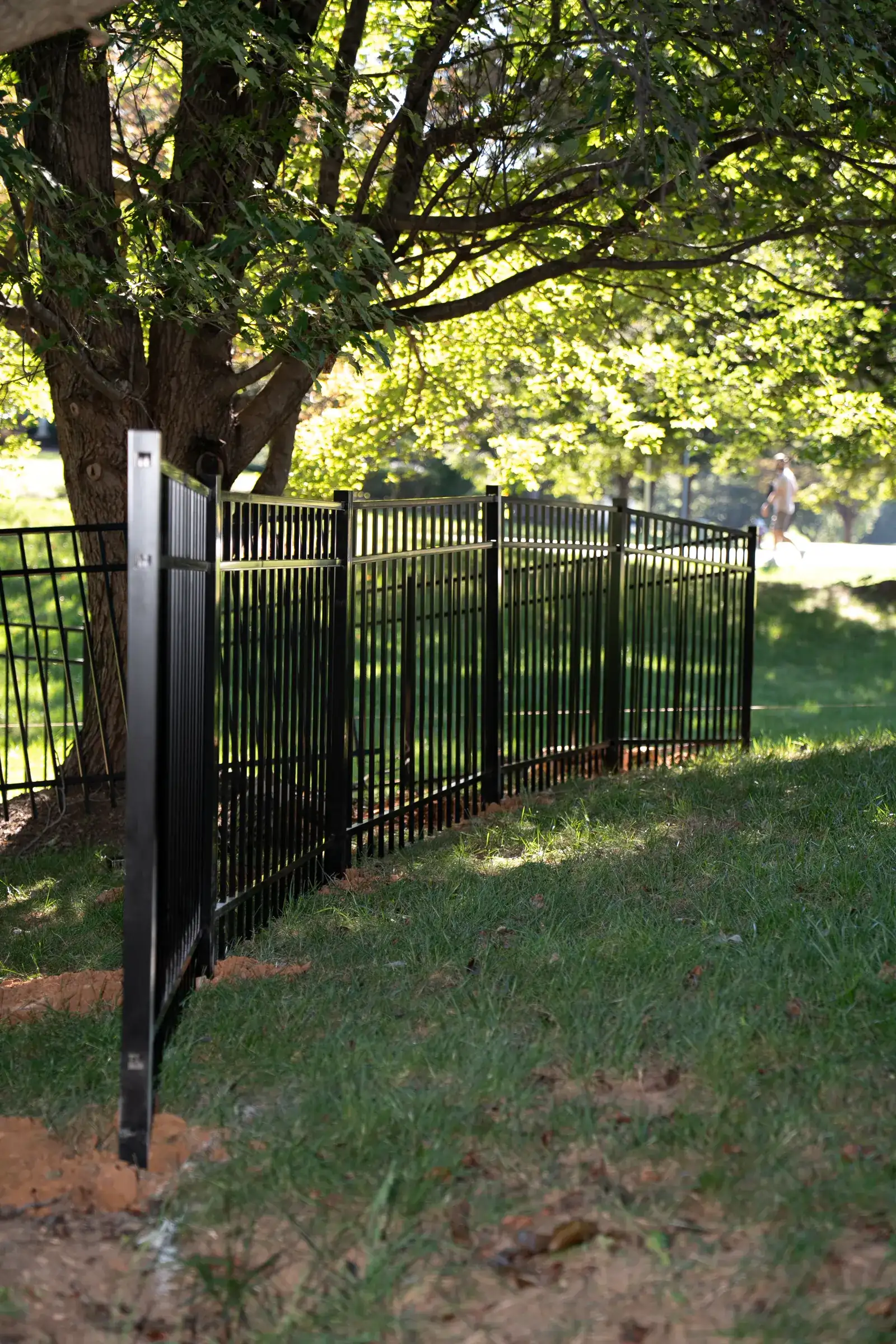
They solve different problems, so most secure plans use both. Solid privacy — wood board-on-board or vinyl — removes the view into your yard: toys, routines, the back door left open on a warm evening. That is the core of residential security for most families. See-through metal — black aluminum or ornamental steel — does the opposite job at the front of the property: it defines the line, looks sharp, and leaves your neighbors' eyes on the street working for you.
An intruder plans around being seen, which makes your neighbors part of the security system. A solid six-foot wall at the front blocks their view as thoroughly as it blocks a stranger's. Open metal at the street and solid privacy behind the side lines gives you deterrence where witnesses exist and concealment where they do not. That arrangement, more than any single height, is what a planned security line looks like.
What gate hardware actually secures a yard?
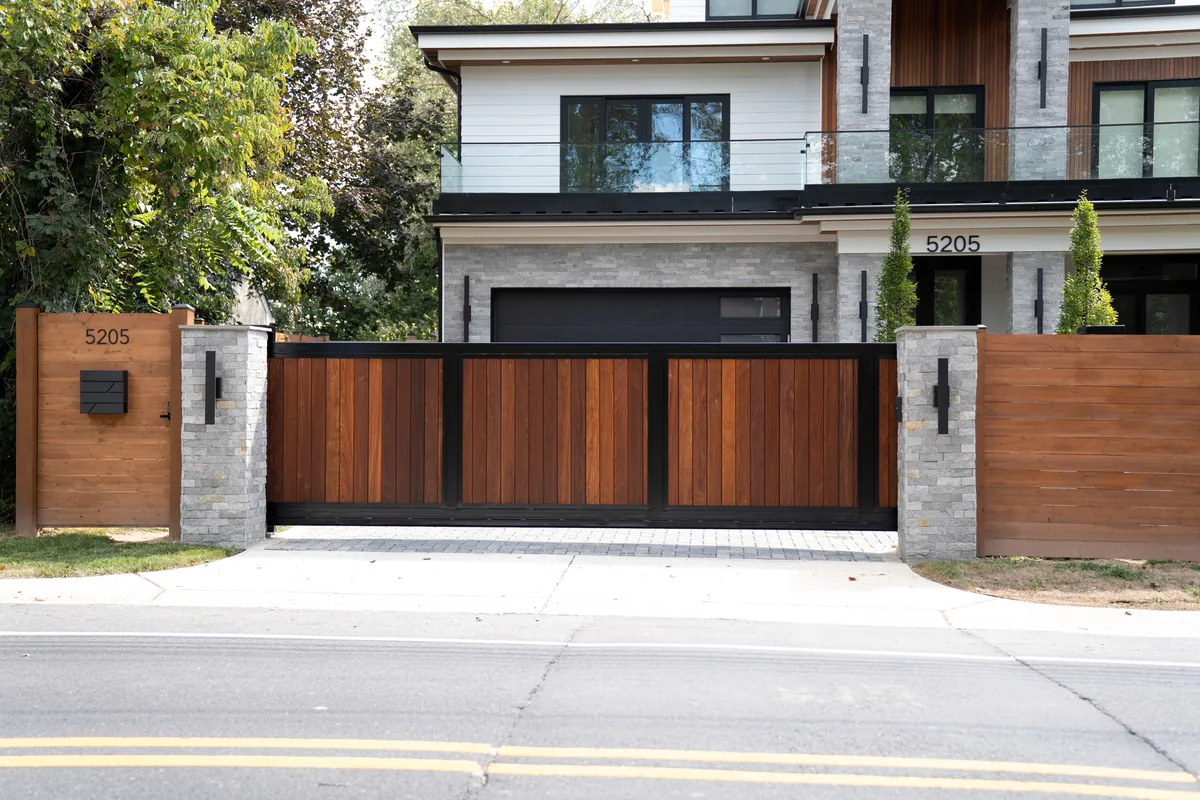
Gates are where yards fail. A secure plan specifies a self-closing, self-latching gate with the latch on the inside — mounted high enough that small hands and long arms through the gap come up empty — hinge screws that bite framing rather than trim, and a drop rod on double gates so the second leaf cannot be lifted off its pin. For the driveway, an automated gate turns the entry into a controlled door with a keypad instead of a standing invitation. Hardware is a small share of the budget and the whole difference between a gate that closes and one that merely hangs.
How does pool code overlap with security?
Directly. Virginia requires a pool barrier at least 48 inches tall, with gates that are self-closing and self-latching, latch on the pool side; Montgomery County requires a 5-foot barrier for pools. If your security fence encloses a pool, the pool code sets the minimums — climb-resistant design, no handhold-friendly crossbars near the barrier, latch placement out of a child's reach. We build pool enclosures to code as standard practice; see pool fence installation for the barrier specifics. A pool inside the security plan is the case where the two rulebooks write the same fence.
What does upkeep contribute to security?
A fence protects only while it is whole. A latch that quit in July, a sagging gate, a storm-loosened panel, vines climbing into a natural ladder — each returns the easy access you paid to remove. Walk the line each season with the security job in mind: work every latch, watch every gate close, cut back climbing plants, and repair storm damage the week it happens. The well-kept line also reads as an occupied, attentive property, which is its own deterrent.
What do county rules and neighbors add?
Two practical notes. Corner lots face stricter rules — in Fairfax, both street-facing yards count as front yards; in Montgomery County, corner fences within 15 feet of the intersection cap at 3 feet above the curb. And the finished side of a wood fence traditionally faces out — some towns, like Vienna, require it. A security fence that starts a property-line dispute protects nothing. We call Miss Utility, verify setbacks, and stake the line with you before posts are ordered. Start the plan at our fence installation page, get the free on-site estimate, and we will design the line once, legally, to fit the family. Call (888) 820-6099.