
By Ray, owner — VA Class A contractor
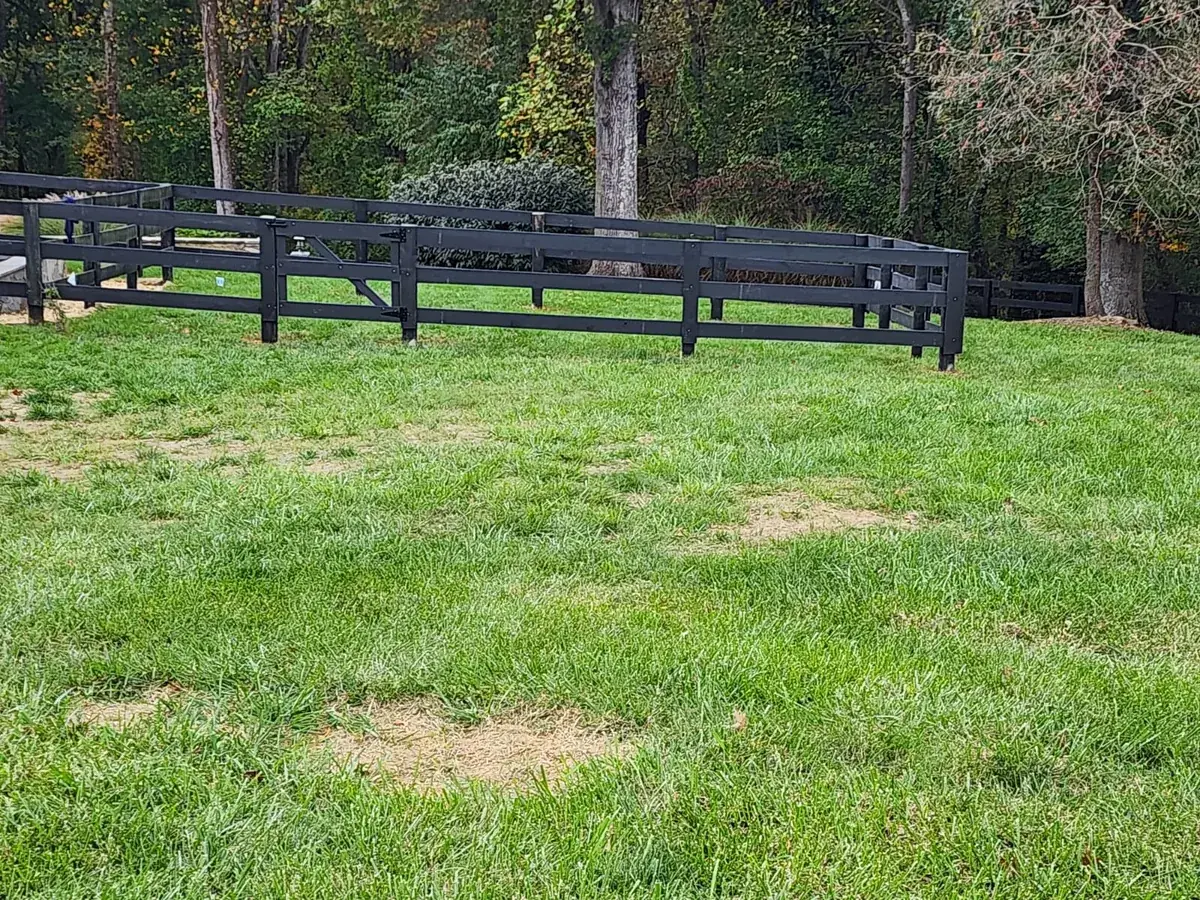
Out west of the subdivisions, one fence has to answer to two kinds of clients: the horses in the field and everything else trying to get in or out. Rail alone is kind to horses but open at the bottom. Wire alone contains small animals but disappears until a horse leans into it. Rail fence with wire mesh answers both, which is why it is our default recommendation on Virginia homesteads that keep animals.
Why combine rail and mesh on one line?
Because each covers the other's blind spot. A horse reads a rail line — it is visible in low sun, in fog, at a gallop — and a rail flexes instead of cutting when an animal presses it. That visibility is not cosmetic, either: most horse fencing injuries trace to an animal that did not know the fence was there until it arrived at speed. But rails leave open gaps at the ground where foals reach under, where dogs slip through, and where deer walk in as if invited. Fastening no-climb mesh behind the rails closes every one of those gaps without changing what the fence looks like from the road: a clean rail line with a quiet steel grid behind it.
What is no-climb mesh?
A woven wire grid with openings small enough that a hoof cannot pass through and get caught — the feature that makes it the standard around foals. Where standard field fence invites a pawing hoof to wedge, no-climb keeps legs on the near side of the wire. It is also the mesh of choice for homesteads with goats and sheep, whose horns and heads defeat wide openings. And it keeps the wildlife drama on the far side: the neighborhood dogs that treat open paddocks as a shortcut meet wire instead of pasture. Galvanized construction handles our wet springs and the fertilizer that gets spread along a paddock line.
How tall should the combination run?
Most horse lines stand about four feet at the top rail, with the mesh rising to meet it. That height reads as a proper boundary to a horse and passes the appearance test from the driveway. What matters more than the number is consistency: a line that steps up and down reads as something to test. We carry the height steady along the run and let the terrain come to the fence rather than the reverse.
Does the mesh keep deer out?
It helps, with an honest limit. Mesh stops deer from walking through and keeps fawns from squeezing under — a real difference in a garden or orchard along the fence line. A determined adult deer, though, jumps rather than climbs, so serious garden exclusion asks for dedicated deer netting standing far taller than paddock fence. The two often live on the same property: rail-and-mesh around the animals, tall netting around what the deer want to eat. Our ranch rail and deer fencing page covers both.
What about gates on a mesh line?
Gates on animal property work harder than gates anywhere else, so we build for the equipment that uses them — tractors, hay wagons, trailers — and set those gate posts stiffer than the line itself. Wide swing gates cover most entries, and the mesh terminates to a framed leaf at each gate so openings stay square and nothing snags on raw edges. Where a drive crosses the mesh line daily, an automatic gate on an operator saves the dismount every trip.
What does the combination ask for in upkeep?
Less than its acreage suggests. Walk the line after each season and check the three things that move: rail fasteners working loose, mesh pulling away from a post, and weeds climbing where the mesh meets the ground. Horses test gates hardest, so hinge pins and latches get the same seasonal glance. A line on that routine holds its tension and its look for years; a line ignored concentrates the same work into one busy weekend every third year.
Walking your paddocks with you is how the layout gets right — sightlines, gates, and where the deer actually cross. Call (888) 820-6099 or send an estimate request, and we will plan the line with both clients in mind.