
Dogs do not read fence brochures. They dig, they jump, they squeeze, they patrol the same twelve feet until the grass dies. A pet fence that works is physical fencing built around how your dog actually behaves — and we build them across Northern Virginia and Maryland every week. Here is how each behavior shapes the design.
How tall should a dog fence be?
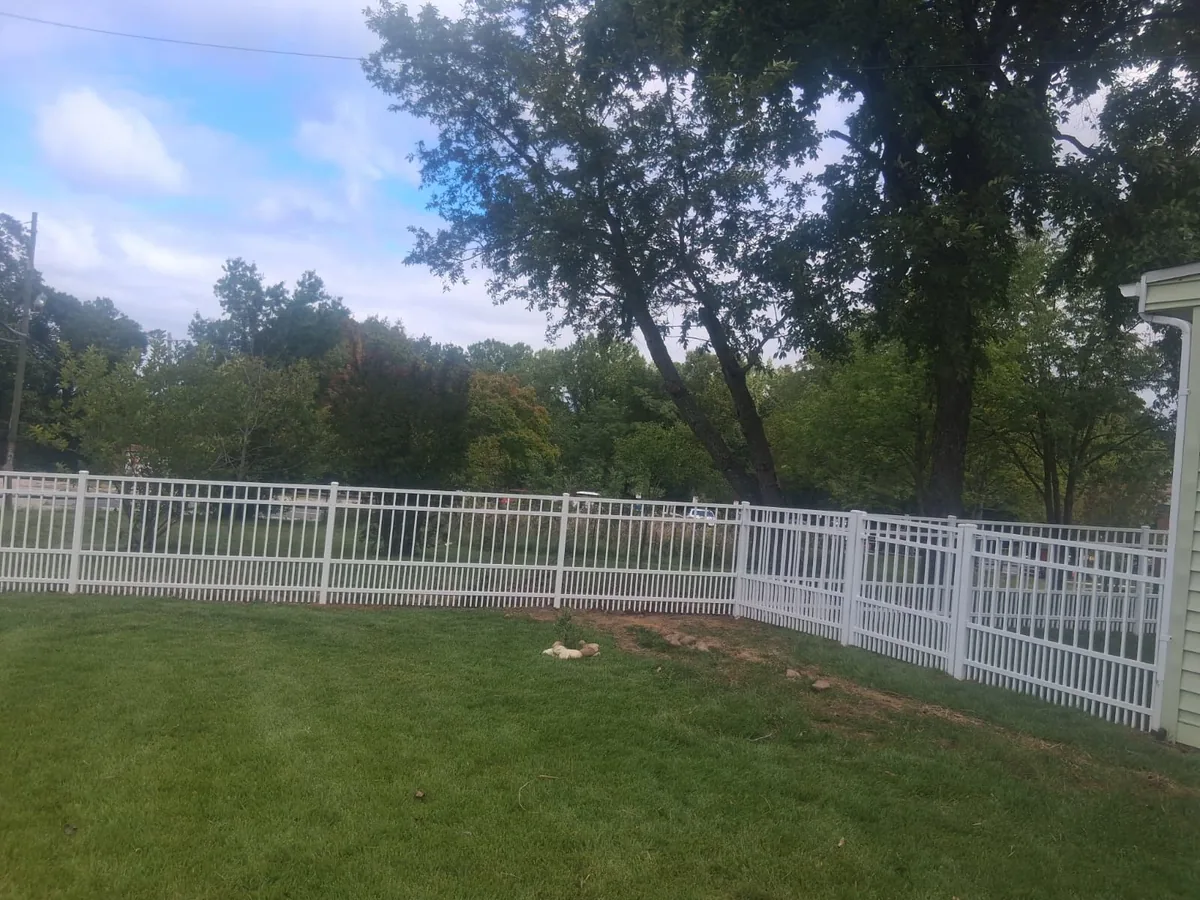
Match the athlete, not the average. Small and calm dogs do fine behind four feet. Mid-sized and energetic dogs justify five. Determined jumpers — shepherds, huskies, the backyard Olympians — need six feet, and here is the part owners miss: the fence surface matters as much as the height. Smooth vinyl pickets give claws nothing to grip; chain-link weave is a ladder. For a jumper, six feet of solid vinyl privacy beats six feet of chain link every time. Start the material conversation on our vinyl fence installation page, where most pet owners we work with land.
What about the view — should the dog see the street?
Usually not, and this is where privacy earns its place in a pet plan. A dog that can see every jogger, squirrel, and delivery truck through the line rehearses the breach all day — barking at the gap, testing the corner, learning exactly where the world passes by. A solid panel removes the rehearsal. For watchdog temperaments that genuinely benefit from seeing out, we use higher mesh or spaced sections on the least busy side of the lot and solid panels where the sidewalk and the street run. It is behavior design as much as it is fencing.
What stops a digger at the base?
A digger defeats a fence from below, so the design goes underground. We extend protection at the base — a barrier section set into the trench line or anchored along the grade — so the first twelve inches of excavation meet something that is not dirt. Gravel or paver edging along the inside of the line adds a second discouragement for the persistent. During the estimate, ask where your dog already digs; escape plans follow routines, and the existing holes tell you exactly where the new line needs reinforcement.
Why does picket spacing matter for puppies?
A puppy that fits its head through a gap will try the shoulders next. Tight picket spacing — the puppy-picket profiles we build on aluminum and vinyl — closes the gaps small breeds and litters can slip through, and it looks intentional rather than defensive. For chain-link yards, smaller mesh does the same job. Plan spacing against the full-grown dog, not the eight-week-old fluff ball currently chewing the estimate: a broad-chested adult needs room to patrol without catching a hip at the corner turns.
What about multiple dogs or a new puppy?
Two dogs change the math in both directions: they teach each other, and the lessons are rarely the ones you want. A jumper who demonstrates the high corner for the second dog doubles your problem, so plan for the athlete even if the other dog has never leapt in its life. A new puppy in a home with an established dog needs the tightest spacing for the puppy and a height check for the veteran. During the estimate we ask about each animal by name — age, size, habits — because the fence has to satisfy the pack, not the average.
When is a double gate worth it?
Any time a leash is involved at an opening to the world. A double gate — a second gate section forming a small vestibule — lets you open the outer gate only after the inner one has closed behind the dog. It is the difference between a controlled exit and a sprint for the street, and anyone who has chased a terrier down a Vienna sidewalk at dawn knows which one wins without it. Driveway gates for pet households get the same treatment: self-closing hardware and a latch the dog cannot nose open from inside.
Why physical fencing instead of electronic?
Because a buried wire asks the dog to hold the line, and a built fence simply holds it. We build physical fences only — we do not install electronic containment systems. A physical barrier cannot lose a battery mid-afternoon, does not depend on a collar fitting correctly, and keeps other animals and people out of the yard as well as keeping your dog in. For working budgets, chain link fence installation delivers honest containment for decades; for the finished-yard look, vinyl does it with no splinters and no staining cycle.
Bring the dog to the estimate — seriously. We will watch the patrol route, find the weak spots, and size the height, spacing, and gates to the animal standing in front of us. Free, on your property. Call (888) 820-6099.