
Two neighbors, one fence line. Done well, it is the easiest project in Northern Virginia: one run, one crew, two yards finished together. Done carelessly, it starts an argument that outlives the fence. A little etiquette prevents most of it.
Who owns the fence on a shared property line?
Start with the plat, not the assumption. Most homeowners believe they know where the line runs until the survey comes out. Check your plat or deed, and if the line is uncertain, a survey settles it for about the cost of one fence section. Ownership of an existing boundary fence varies with state law and deed language, so when the question matters — a replacement either neighbor pays for — put the agreement in writing first.
We have watched this play out across Vienna, McLean, and the rest of Fairfax County: neighbors who walk the proposed line together with flags in the ground rarely disagree later. If a previous owner built the fence and nobody remembers the terms, the plat plus a plain conversation is still the surest start — most shared fences have been shared so long that both owners simply keep the habit.
Which side should the finished side face?
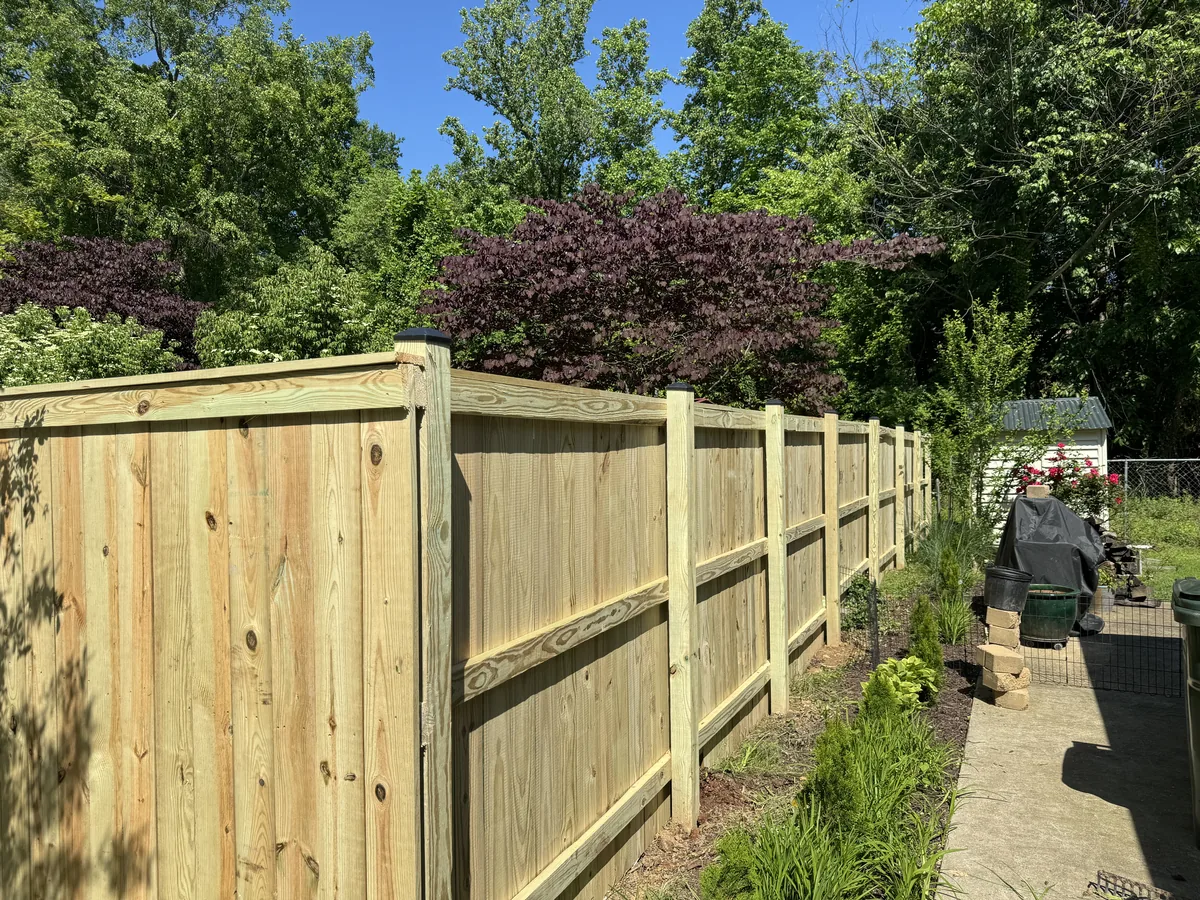
The finished side — rails hidden, pickets showing — traditionally faces out, toward the street and the neighbors. It is the courteous default and many HOAs require it. Some towns write it into code: the Town of Vienna's zoning rules, for example, call for the finished side to face the street and adjoining properties. Shadowbox designs sidestep the question entirely; they look finished from both sides, which is one reason neighbors pick them for shared lines.
Can two neighbors split one fence job?
Yes, and it happens often. One continuous run down the line costs both owners less together than two shorter fences each owner builds alone. The practical steps are simple: agree on the line, agree on the style and height, decide the cost split, and sign one proposal that covers both properties.
We quote two-yard jobs as one project — one line, one set of posts, one crew. Customers tell us in their reviews that fences were finished in a single day; when two yards share the run, both are done before dinner.
What should the written agreement cover?
Five lines prevent most disputes: where the line runs, what style and height go in, how the cost splits, who the fence belongs to afterward, and what happens if one owner sells. Add access — the crew needs to reach the line from both yards — and the agreement is done in a page.
Keep it friendly. The document is not a lawsuit waiting to happen; it is the memory of a conversation, written down before the concrete trucks arrive. Neighbors who write it together almost never need it again.
What about fences that stop mid-line?
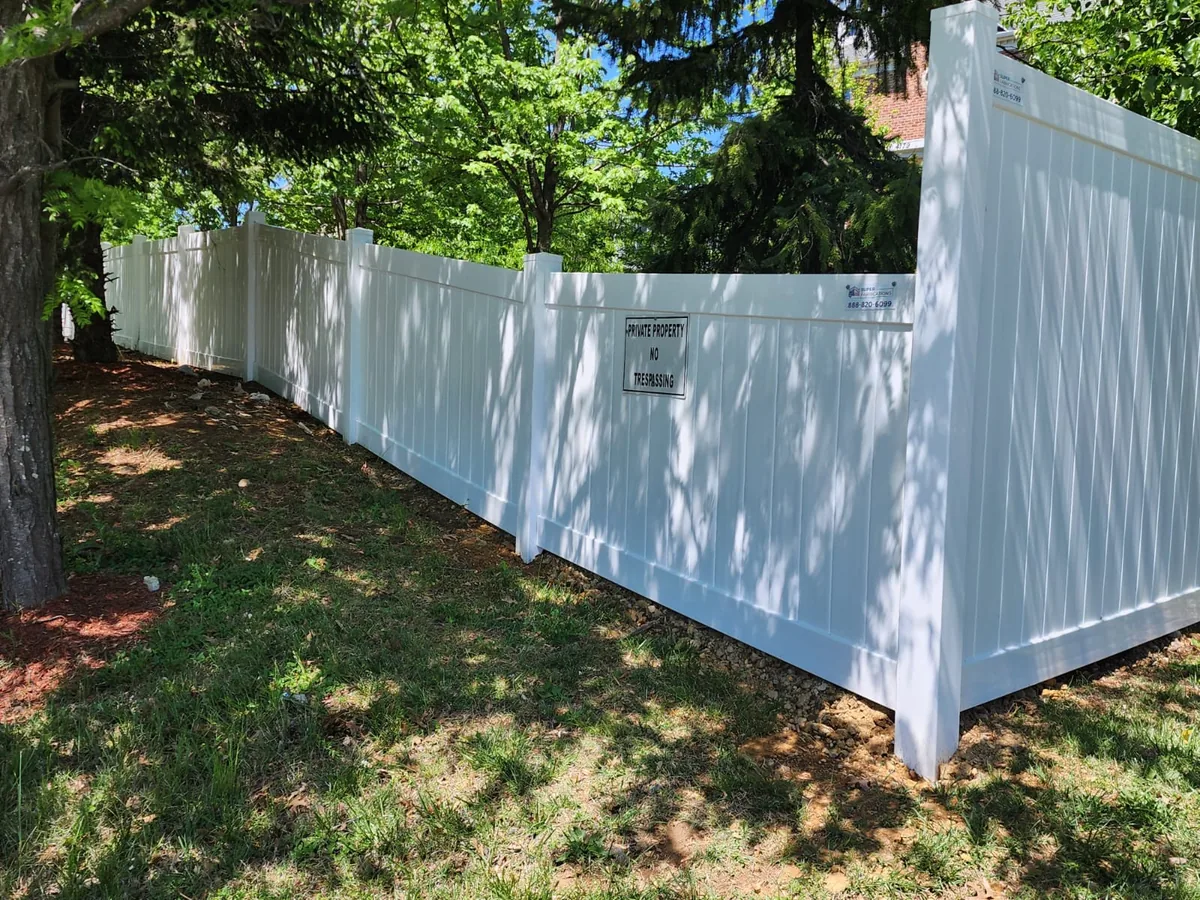
Sometimes a run has to stop where a neighbor says no. End it deliberately: a return end or a finished end post looks planned, while a raw cut edge looks abandoned. If the neighbor may join later, say so in the style choice — matching heights and colors let the next owner continue the line without tearing anything out.
Corners deserve the same finish. Where your fence turns a corner to face the street, the finished side shows to the neighborhood, and many codes say it must. Vienna's rule on finished sides, noted above, is one local example.
What if the neighbor does not want a new fence?
Build on your side of the line. Your fence, your call, as long as it sits inside your property and meets county and HOA rules. Give the neighbor the finished side, keep the line exact, and leave them the option to join later — a fence designed so a matching run can continue someday is a gift to the next owner of that yard.
When is replacing a shared fence the moment to talk?
An aging shared fence is where the two-yard project shines. Our fence replacement service pulls the old run and rebuilds the line once, instead of two households each hiring crews in separate seasons. If you are in Vienna or nearby, our Vienna fence company page covers how we work in our home town.
Talking about a shared line is easier with a third party holding the tape measure. Request a free estimate or call (888) 820-6099, and we will walk both yards and quote the run as one project.