
A wood fence does not die of old age all at once. It fades, checks, loosens at the posts, and then one spring you are re-hanging more boards than you are cleaning. Here is what wood actually lasts in Northern Virginia and Maryland, stated as planning ranges rather than promises, and what keeps a fence on the far end of those ranges.
How long do wood fences last in this region?
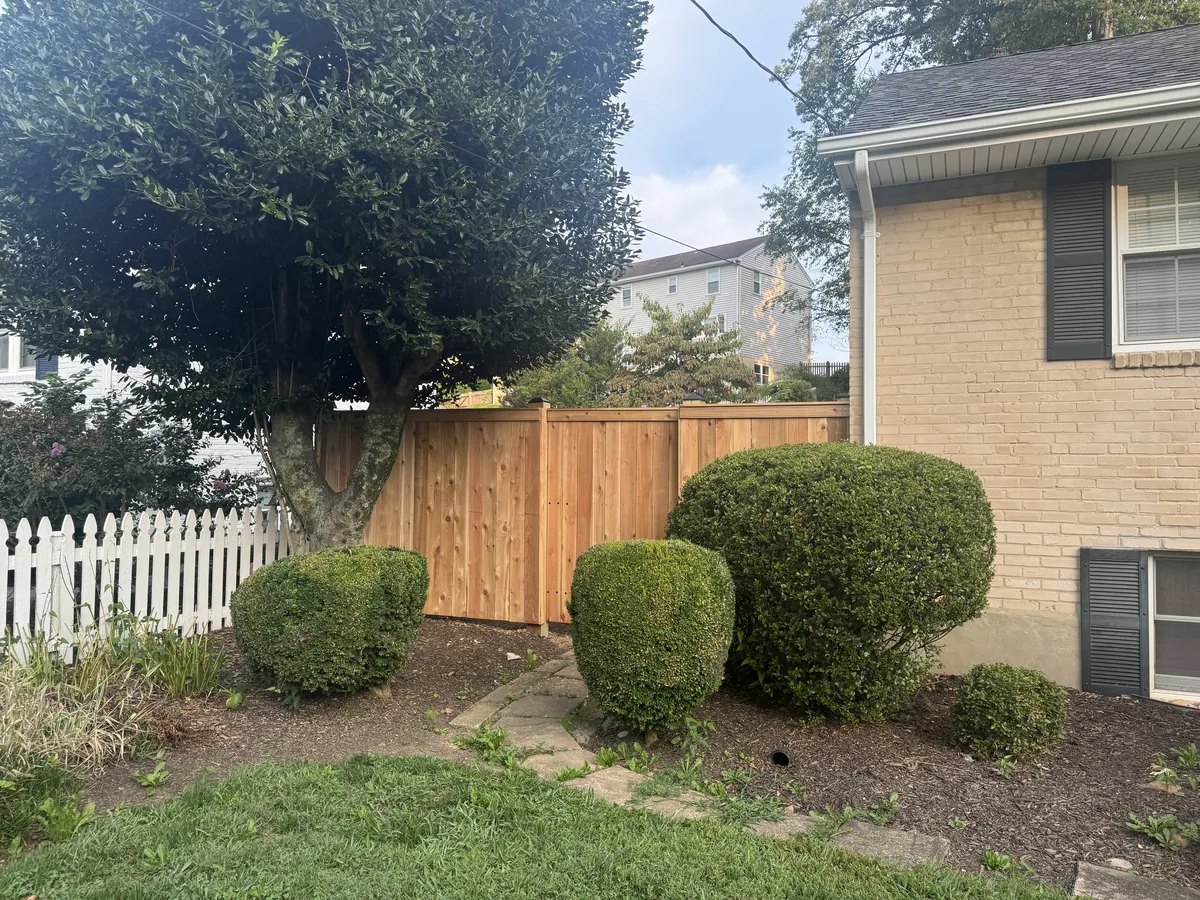
Plan on 15 to 25 years for a well-built, well-maintained wood fence in our climate. That is the honest range we plan around for pressure-treated pine and cedar alike. Neglect shortens it; steady maintenance is what moves a fence toward the upper end.
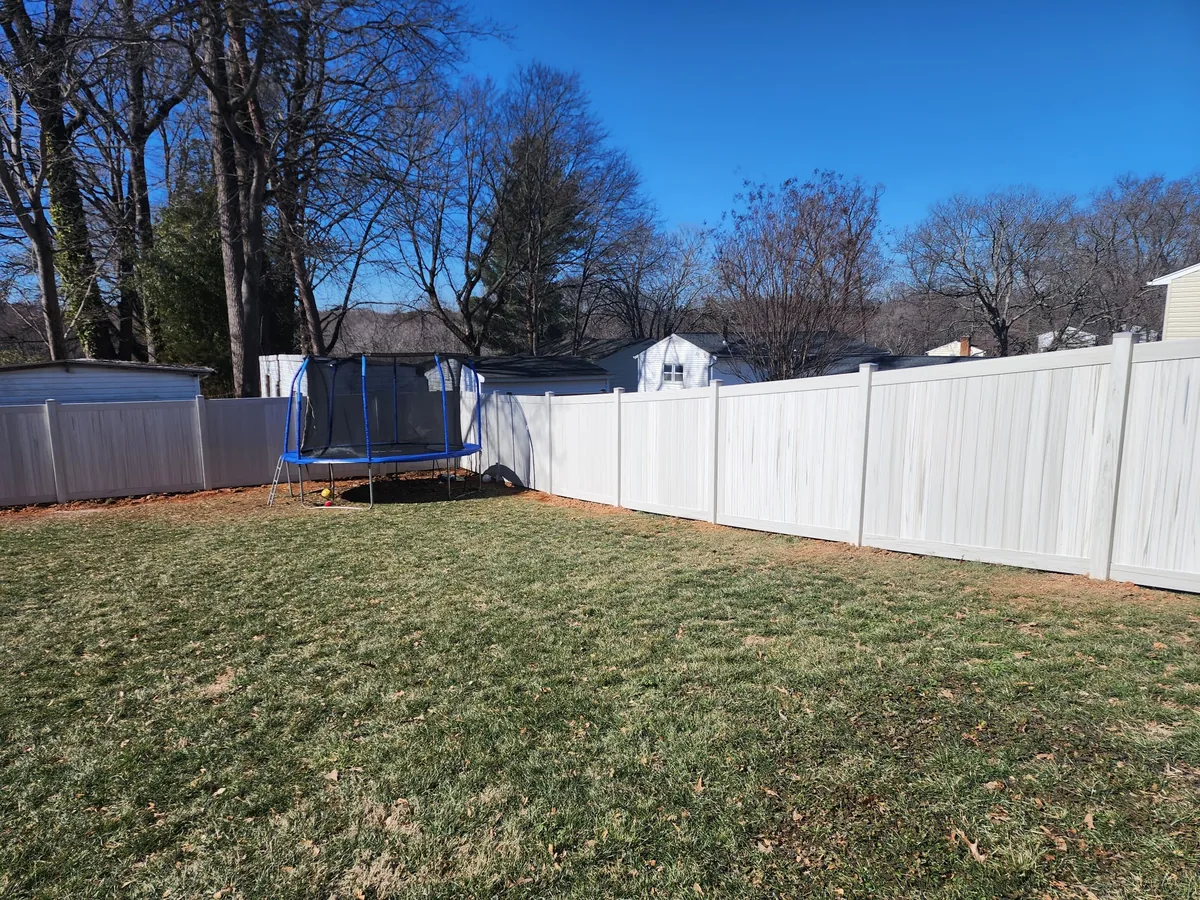
Why a range and not a number? Exposure varies fence to fence. A shadowbox line on dry, sunny ground in Loudoun County ages differently from a stockade fence in a shaded Reston backyard where moisture lingers. Same materials, different calendar.
Pressure-treated pine or cedar — which lasts longer?
Both land inside the 15-to-25-year planning range when posts and boards are maintained. Pressure-treated pine is protected against rot and insects by treatment, which is why it dominates post and rail stock. Cedar carries natural oils that resist decay on their own and weathers to a soft gray if left unfinished.
In practice, the material matters less than the details: post depth, hardware quality, drainage at the base, and whether the stain cycle happens. A modest pine fence maintained on schedule outlives a cedar fence nobody touches. Ask to see both species side by side during the estimate; the color and grain differences are easier to choose in person than from a sample card.
Why do wood fence posts fail first?
Ground contact is where wood fences lose. Moisture sits against the post at grade, freeze-thaw pries at the footing, and rot works below the soil line where nobody looks. Panels outlast posts almost everywhere in Northern Virginia. That is also why a fence that is "failing" is often really just failing at its posts.
Our wood fence installation work sets posts deep with proper concrete footings for exactly this reason — the posts are the lifespan. Watch the footings as well as the posts. Concrete should crown slightly above grade so water sheds away from the wood; a footing buried under mulch holds moisture against the post it was poured to protect.
Does fence style change how long wood lasts?
Style plays a real part. Shadowbox designs alternate boards on both sides of the rail, so wind passes through instead of loading the run — fences that breathe survive our summer storms with fewer shaken fasteners. Cap-and-trim tops shelter the end grain of the boards, and end grain is where water enters. Picket fences dry fastest of all, because there is simply less board per foot to stay wet.
Solid stockade and board-on-board runs give the fullest privacy and take the most weather, which makes their maintenance cycle the one that matters most. None of this changes the 15-to-25-year planning range; it decides where in the range a fence lands.
What maintenance actually extends a wood fence's life?
Four habits do most of the work. Keep the bases clear — rake soil, mulch, and leaves back from the pickets so boards dry out. Keep sprinklers off the line. Restain or seal on a cycle of every few years, and after any wet spring, check how water beads on the boards. And replace a cracked board promptly; one loose board invites wind damage to its neighbors.
Hardware belongs on the checklist too. Loose hinge screws, a gate that swings crooked, and rusty fasteners staining the boards are all cheap fixes now. Fasteners are the parts that hold a wood fence together, and replacing a handful of them takes minutes on a service visit.
Michael Kitlan described the start of that cycle in a review posted on Google: "Picket fence came out better than expected. Ray helped with the whole process, including the Miss Utility."
When does repair give way to replacement?
Use the same test we use on every repair visit: if damage or post failure touches roughly a quarter of the line, replacement usually wins. Under that, fixing costs less. Our fence repair team will tell you honestly which side of that line your fence sits on.
Wondering where your fence falls? Request a free on-site estimate or call (888) 820-6099. We will walk the line, test the posts, and give you the number that matters.