
A fence line is a wall with doors, and the doors get all the use. Gates are also where fences fail first — the sagging walk gate, the driveway gate too narrow for the trash cart — so this guide covers the decisions that make a house's gates work for decades: widths, hardware, frames, and what automation-ready really means.
How wide should a walk gate be?
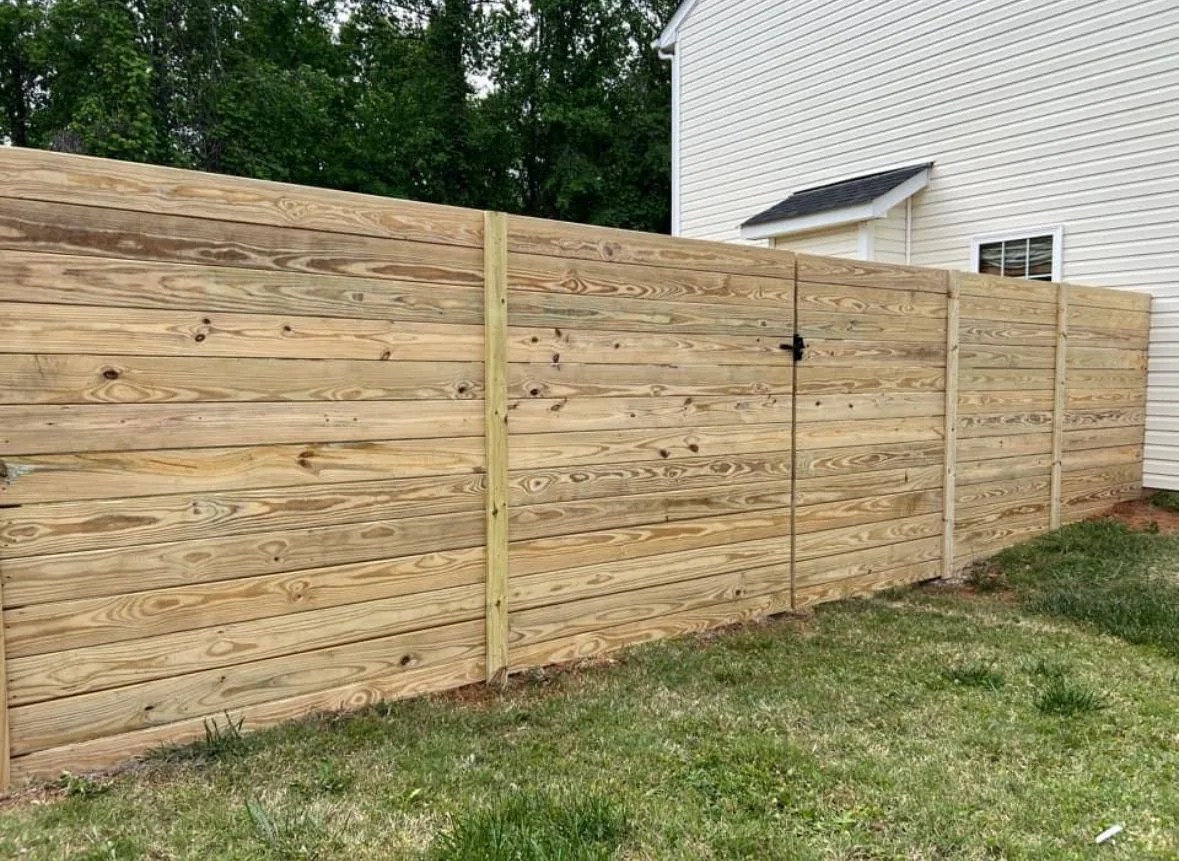
Most walk gates run three to four feet, and the right answer depends on what passes through. A 36-inch gate moves people; a 48-inch gate moves the mower, the wheelbarrow, and the sofa on moving day. In tight townhouse side yards around Arlington and Alexandria, we sometimes pair a narrower gate with a removable panel for the once-a-year move. Place the gate where your habits are, not where the fence drawing looks balanced — beside the patio beats across it, and a gate that swings over flat ground outlives one that arcs across a slope.
What size driveway gate do you need?
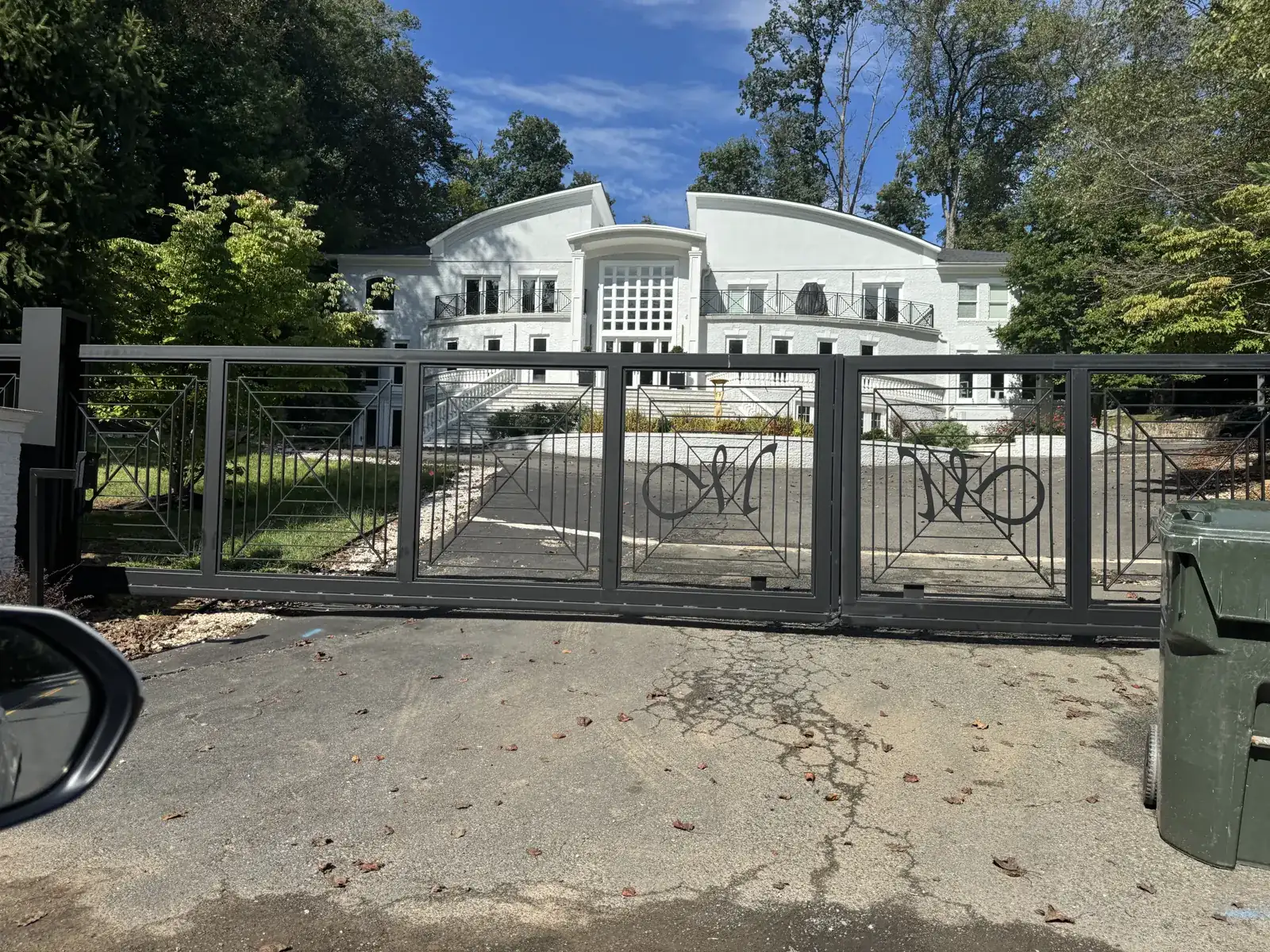
Measure your widest regular visitor: the trash service, the delivery truck, the snow contractor. Single swing gates suit drives up to roughly ten feet; double swing gates — two leaves meeting in the middle — cover the wider entries typical of Loudoun and Prince William properties. Slide and cantilever gates solve drives where snow piles or a short apron leave no swing room. Hinge side matters more than people expect: pick the side that lets the gate open away from the street grade and against the fence line, so wind helps rather than fights. Our automatic gate installation page shows the swing, slide, and cantilever configurations we build.
Which hardware matters most?
Hinges and latch — everything else is trim. Heavy strap or barrel hinges carry the weight for decades; light hinges drag within a couple of seasons. Self-closing springs matter on pool and pet gates, and a self-latching mechanism with the latch on the inside matters everywhere. Double gates need a drop rod — the cane that pins the passive leaf to the ground — or the meeting point waves in every storm. Wood gates want a braced, square frame; where the design calls for wood cladding, a steel frame underneath keeps it true while the wood weathers. Hinges, latches, and frames are the first things we service on gate calls across the region, and the first things we refuse to go cheap on.
How do materials pair with gate frames?
Every gate is really two structures: the frame that carries the load and the face you see. Vinyl gates ride manufacturer frames sized for the panel weight. Aluminum and steel gates are their own frames, welded square at the shop. Wood is the material that needs help — wood expands, shrinks, and twists with our humid summers and frozen winters, so a steel or aluminum frame under the cladding is the difference between a wood gate that looks new in year ten and one that racks by year three. Match hardware to the exposure: hot-dip galvanized and coated hardware is what survives our winters here.
What makes a gate automation-ready?
Four things, decided before the posts go in: posts and footings sized for an operator's weight and push, a gate frame stiff enough to carry it, room for the operator arm or slide track, and a plan for power — a low-voltage run, or a solar panel where trenching is impractical, which suits long rural Loudoun driveways well. Build those in now and adding an operator later is a bolt-on afternoon. Build without them and automation means rebuilding the entry. We size driveway gates automation-ready by default.
What does gate maintenance look like?
Twice a year, fifteen minutes. Oil the hinges, check the latch engagement at full close, look at the drop rod, and sight along the gate for a developing twist. Watch how it closes: a gate that swings shut on its own and latches is healthy, one that stops short or bounces is telling you a hinge or a post has moved. Catching that early is the difference between an adjustment and a rebuild — the same logic that makes us check every gate twice at the walkthrough.
How do we hang a gate that stays square?
Plumb posts, hardware torqued to the frame, and a diagonal brace carrying the load the right direction — compression toward the bottom hinge. Then the test: swing the gate twenty times, check the latch engagement at each pass, adjust, and repeat. The wood fence installation and gate work we do ends with that test every time, and with you working the latch yourself at the walkthrough. Start with a free estimate at (888) 820-6099 — bring the list of everything that needs to fit through the gate, and we will size it right.