
Leaves, rain, and the first hard freeze test every fence in Northern Virginia and Maryland. An October walkthrough catches the small stuff — a loose picket, a sagging latch, mulch piled against a post — before winter turns it into a spring project. Here is the checklist we hand to our own customers, and it takes about half an hour.
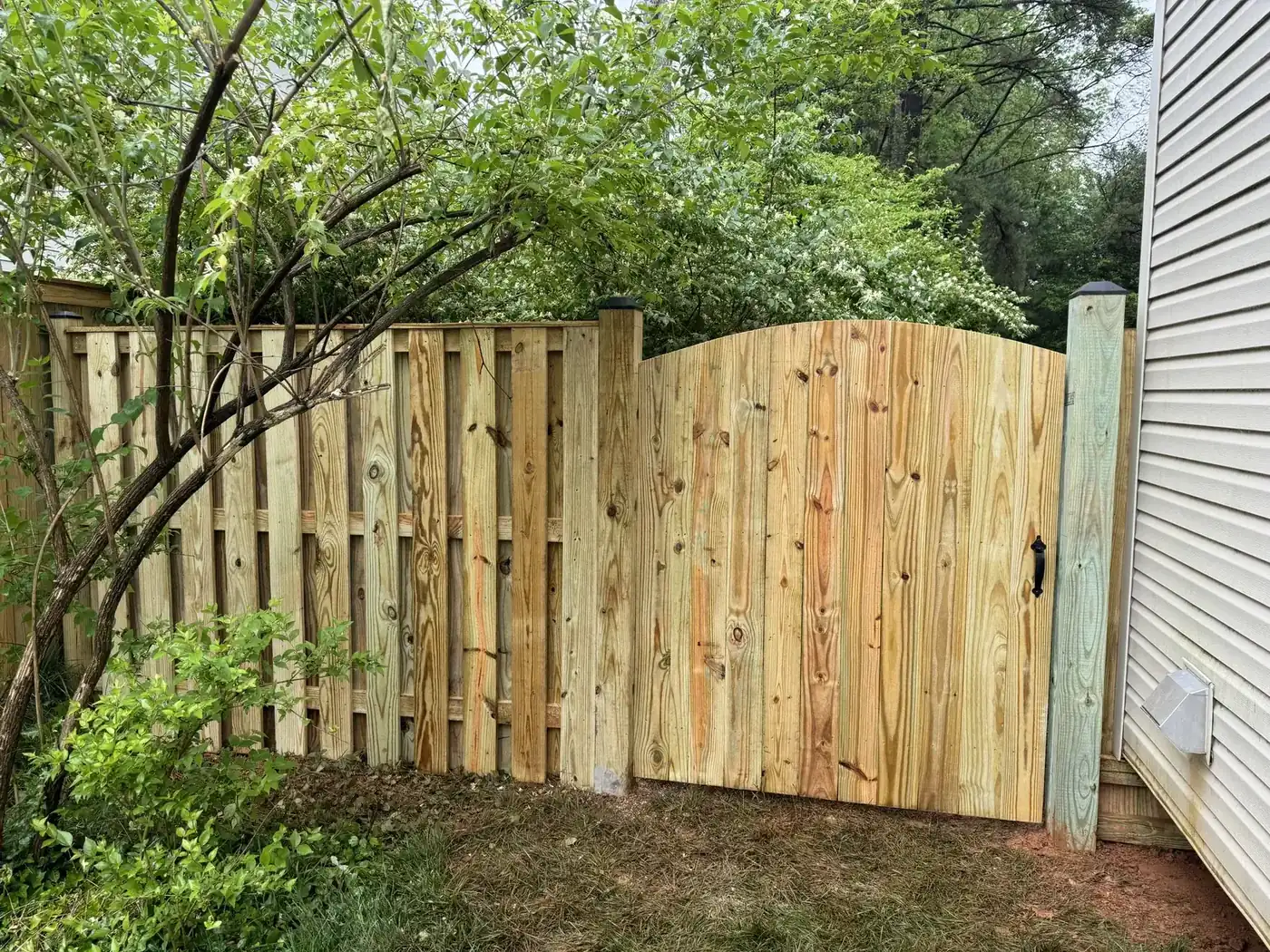
What should you check before the first frost?
Walk the entire line once, slowly, from both sides. Push each post at shoulder height and watch for movement where the post meets the ground. Sight along the rails from the end of the fence; a sagging line shows up as a dip long before a panel fails. Open and close every gate and watch how the latch meets the strike.
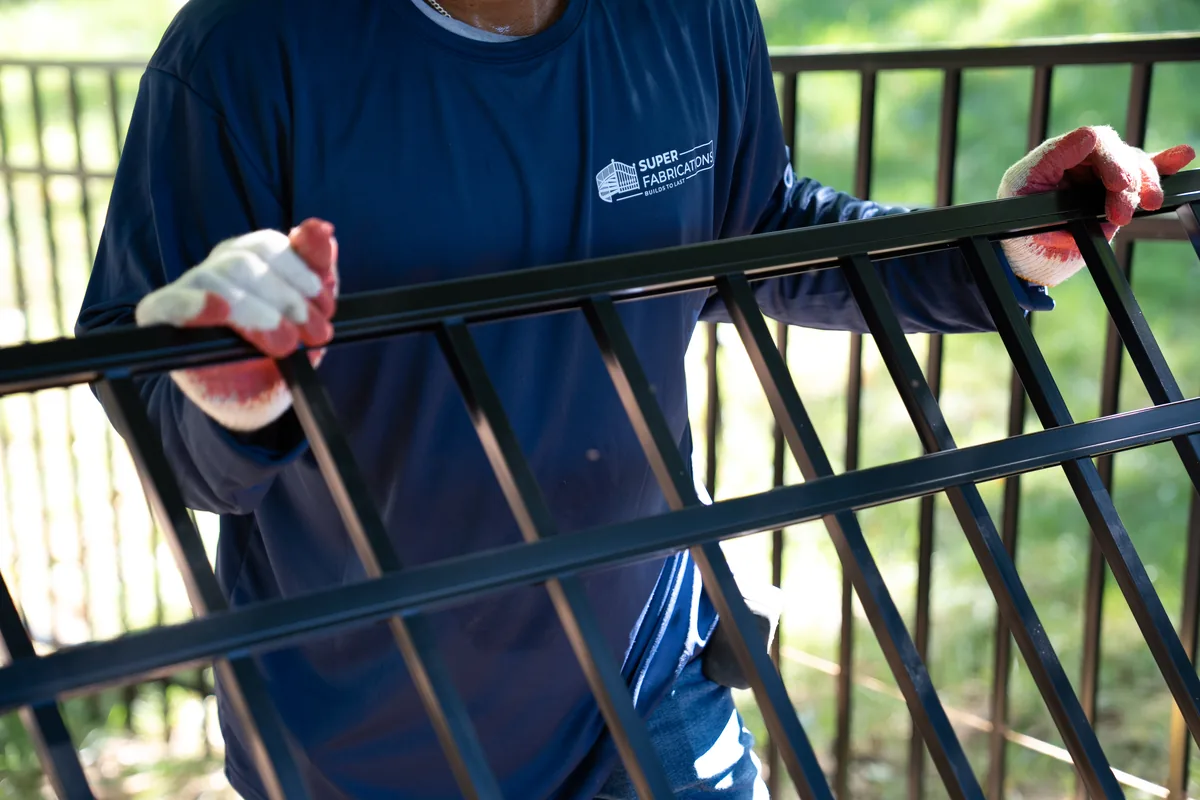
Give the small parts their due while you are out there. Tighten hinge screws, work a drop of oil into each latch, and look at the bottom of every walk gate for drag marks. Gates are the moving parts of a fence, and moving parts announce problems early — a scrape, a sag, a latch that needs a shove.
Write down anything that moves, cracks, or drains badly. A note in October is a small repair in November and a much smaller bill than the same note in April.
How do you spot trouble at the posts?
Post bases cause most winter failures. Look for soil pulling away from the concrete footing, wood darkening at ground level, or rust streaking from steel brackets. Frost heave lifts footings that were set too shallow, and a post that leans after the first freeze rarely straightens on its own.
Caught early, a leaning post is a half-day fix: pull it, re-set it below the frost line, and re-attach the rails. Our fence repair team does exactly that across the region all autumn. Caught late, a heaved post takes two panels down with it. Write the date on your notes, too; a post that moves a little each week is a different repair than one that shifted in a single storm.
What does each material need this fall?
Wood wants dry feet and sealed grain. Rake mulch and leaves back from the pickets, and check the stain; water should bead on the boards. Touch up bare, gray patches before the wet season. Vinyl wants a wash with soapy water and a check for cracked panels, since a small crack grows with ice. Aluminum and iron want a look at hinge screws and any scratches down to bare metal. Chain link wants a check on tension wire and top rail after a summer of use.
The upkeep differences between materials are bigger than most homeowners expect. Our fence material comparison puts cost, lifespan, and maintenance side by side.
Why clear plants and debris off the line?
Moisture is the enemy. English ivy and Virginia creeper look charming on a fence and hold dampness against every board they touch. Pull vines, trim shrubs back a hand-width from the pickets, and never pile leaves against the base. Keep sprinklers from soaking one spot all winter; a repeated wet zone is where rot begins.
What about drainage and the ground along the line?
Autumn rain shows you where water goes. Walk the line after a storm and look for standing water against post footings, soil washing out from under rails, and mulch drifting onto the lowest boards. Water that pools at a post all winter works at the footing until something moves.
Most drainage fixes are small: pull soil back to grade, add a shovel of gravel at a low spot, reroute a downspout that empties onto the line. If a neighbor's grading sends water your way, a calm conversation in October beats a bowed fence in March.
When should you call a fence contractor instead?
Call us when posts lean, when more than a couple of panels are broken, or when a gate frame has racked out of square. Those are structural issues, and do-it-yourself fixes rarely hold through a Northern Virginia winter. Homeowners who call early get better scheduling too. As LTL put it in a review posted on Google: "Super fabrications did a fantastic job on our fence! They were prompt, courteous, and price competitive."
Get ahead of the freeze. Request a free on-site estimate or call (888) 820-6099, and we will walk the line with you before winter does its worst.