
Homeowners rarely ask for security and beauty in the same sentence, yet that is exactly what a residential fence should deliver. A fence that protects but glowers drags the whole property down. A fence that flatters but invites strangers protects nothing. Finding the right residential fencing means planning height, visibility, and gate hardware as one design.
How does fence height affect security?
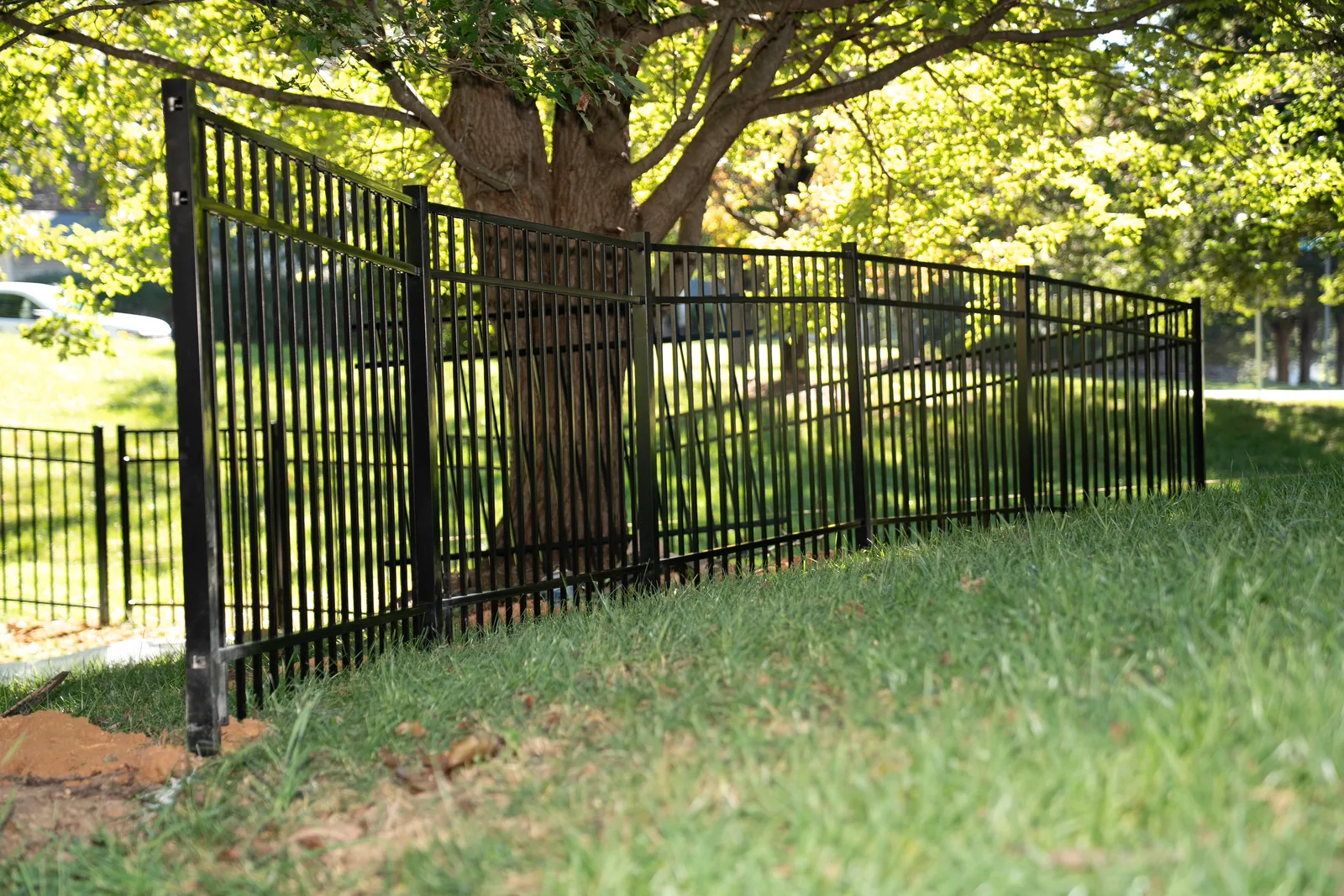
Height is the first deterrent, and the county sets its ceiling. In Fairfax County, side and rear yard fences may run up to 7 feet, while front yards cap at 4 feet on most lots. Arlington allows 6 to 7 feet away from public rights-of-way but holds 4 feet within 25 feet of them. The Town of Vienna keeps front yards at 4 feet and rear yards at 6. Montgomery County, across the river, tops residential fencing at 6 feet 6 inches and requires a permit for every fence. We check the rule for your address before you fall in love with a plan the zoning office will reject.
Does a solid fence beat a see-through one?
Depends on which side of it you stand. Solid privacy — wood board-on-board or vinyl — hides bicycles, grills, and the daily pattern of your household from casual view. That is real security. But solid board also blocks your own sightline, which is why many homeowners flip the plan: privacy in the back yard, open ornamental metal across the front where visibility works for you. An intruder prefers an unobserved corner; a fence line your neighbors can see through removes it.
The mix also solves the beauty problem. Ornamental steel at the street reads welcoming and lets the garden show; solid privacy behind shields the play set and the patio. One property, two strategies, one continuous line — and neither side of the house feels like a compromise.
What makes gate hardware part of security?
Most residential breaches happen at the gate, because most gates are the weakest point in the line. A security plan specifies the latch — self-latching, mounted on the inside, positioned so no arm reaching through the gap can find it — hinge screws long enough to hold under load, and a drop rod on double gates so the passive leaf cannot be lifted off its pin. Where the driveway needs to close itself, an automated gate with a keypad puts a controlled door on the property. Our automatic gate installation work pairs operators and locks with the fence line so the whole system latches, not just the gate leaf.
What does maintenance have to do with security?
Everything, in practice. A latch that needs two hands, a gate that sags an inch off square, a corner where the vines grew into a ladder — each is a small failure that opens the same door the tall fence closed. Walk the line each season: work every latch, watch every gate swing shut, and pull woody vines off the fence. If a storm or a car has opened a gap in the line, close it fast. A maintained fence is not only handsome; it is the version that actually does the security job you bought it for.
Where do lights and sightlines come in?
A fence works with the lighting around it, and we plan for what your electrician or smart-home system adds later. Motion-sensor floods near gates and dark corners do more for security than an extra foot of height ever will. When we stake the line, we note where conduit runs and fixtures sit so the fence does not complicate them. We build fences, not electrical work — but a fence that ignores the lighting plan protects only half the yard. See how line, gates, and layout fit together on our Northern Virginia fence installation page.
How do you keep it beautiful?
Pick the profile before the height. Black aluminum with slender pickets reads elegant at four feet and serious at six. Vinyl in tan or mocha softens a tall privacy line. Wood stains warm and ages with the garden. Match the profile to the house — slender metal with brick colonials, horizontal lines with modern facades — and the fence looks like it was drawn with the original plans. A handsome, well-kept line is itself a signal that someone here pays attention, and that signal is half the security.
Start with a free on-site estimate, and we will walk the property, check your county's height rules, and design the line once. Call (888) 820-6099.