
The gate is the part of the fence you touch every day, and the part worth planning hardest. Swing, slide, and cantilever each fit a different driveway, and choosing wrong shows up the first time it rains or the first time a delivery truck idles at the entrance. Here is how we match the gate to the drive.
When does a swing gate make sense?
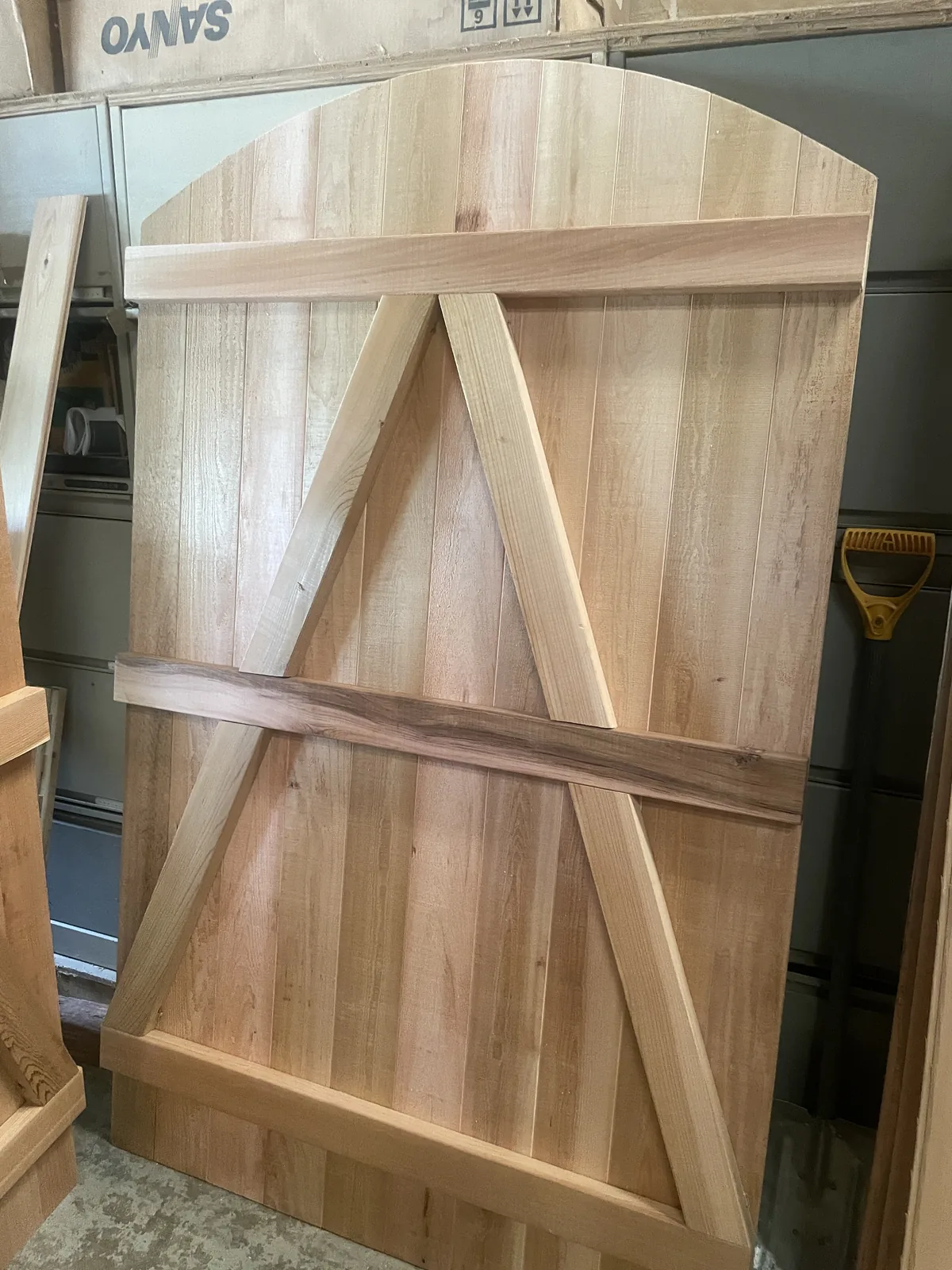
A swing gate suits a flat entry with room for the arc. Single swing covers a narrower drive on one hinge line; double swing splits a wide opening into two leaves that meet in the middle — and on many properties, one leaf opens for people on foot while both open for the car. Hardware stays simple, repairs stay local, and a well-hung leaf still moves by hand when the operator is offline. The measure that decides it is the apron: the swing arc needs clear, level space inside the property line, because a gate that opens onto a slope or into the street is a gate you will fight every day. Swing is the classic look, the simplest mechanism, and usually the first choice when the driveway allows it.
When does a slide gate fit better?
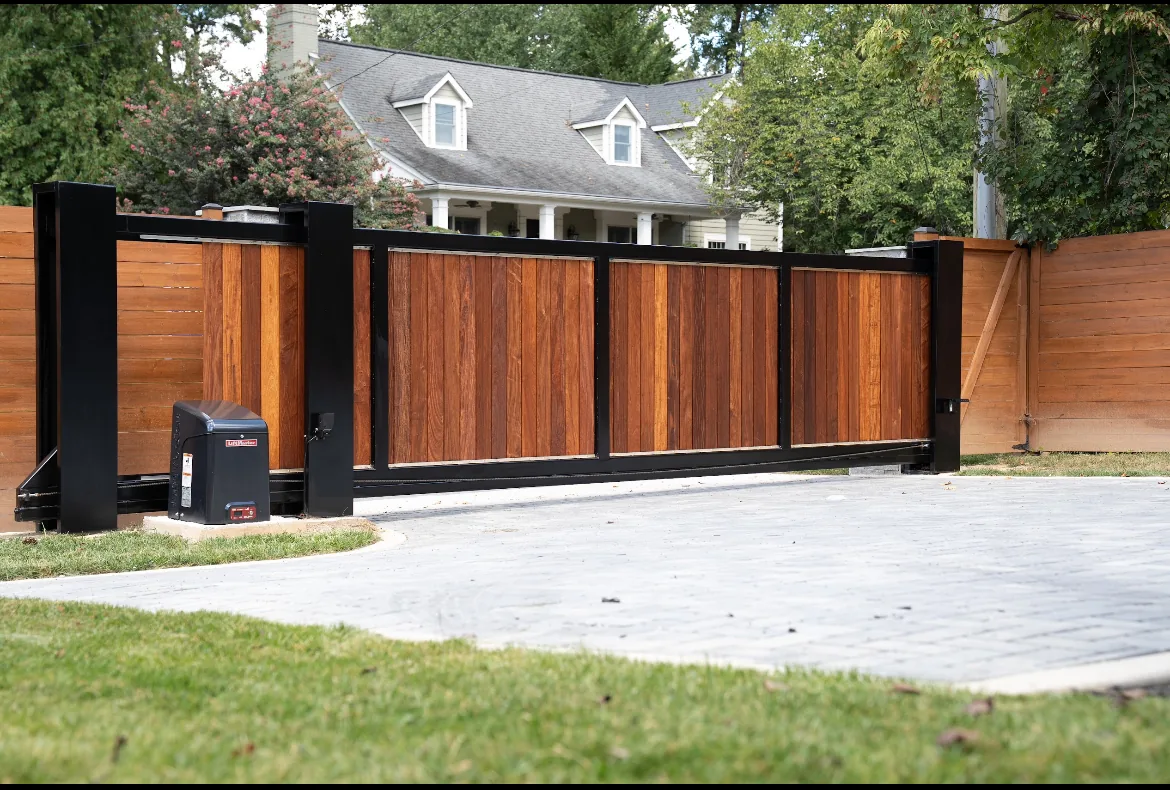
A slide gate suits a short apron. The leaf rolls sideways along the fence line instead of swinging into the yard, so it needs runway rather than clearance. Choose slide when cars park close to the entrance, when the drive rises steeply from the street, or when a swing arc would reach the sidewalk. Most slide installs ride the inside face of the fence line, which keeps the street side clean and the sidewalk clear. The trade is the track: a ground track must stay clear of debris, and the gate needs a straight run of fence beside it to park in. Where that run exists, a slide gate solves the tight-apron problem neatly.
Why choose a cantilever gate?
A cantilever gate is a slide gate that never touches the ground. The leaf rides on rollers mounted to posts and is counterbalanced by a tail section, so there is no track across the driveway. That solves the problems a ground track creates: gravel that jams, snow that buries, frost that heaves. And because nothing crosses the driveway surface, the approach stays flush for low cars and delivery trucks. Choose cantilever for long gravel drives, exposed entries, and anywhere maintenance of a track line sounds like a chore. The cost is the counterbalance — the gate needs side room for its own tail section.
How do width and slope decide it?
Measure the clear opening first: the space between the points the gate must close, wall to wall or post to post. Many residential driveways want 12 to 16 feet of clear opening, but your numbers are the ones that matter. Then read the grade across the entrance. A drive that slopes up from the street fights a swing gate's arc; the same grade is no problem for slide or cantilever. A flat apron with room to spare welcomes a swing. Bring the plat or just the tape numbers — either one starts the conversation. We measure both at the free on-site estimate, because this is a decision made with a tape, not a brochure.
How does the operator get power?
Every operator needs power at the gate. Some driveways can reach household power with a reasonable run; others — long rural entrances, fields without nearby outlets — make that run expensive. That is where the solar option earns its place: a panel at the gate charges the operator, and we install solar gate packages across the outer parts of our service area. We are a LiftMaster authorized dealer, so operators, keypads, and receivers come as one matched system. Keypads handle codes for family and vendors, remotes handle the daily comings and goings, and safety features stop the gate when something is in its path.
Want to see gates we have built? Browse the projects gallery — swing, slide, and cantilever, in aluminum, wood, and steel infill. Then see the full operator and access-control details on our automatic gate installation page, and call (888) 820-6099 for a free estimate. We will measure your opening with you.