
By Ray, owner — VA Class A contractor
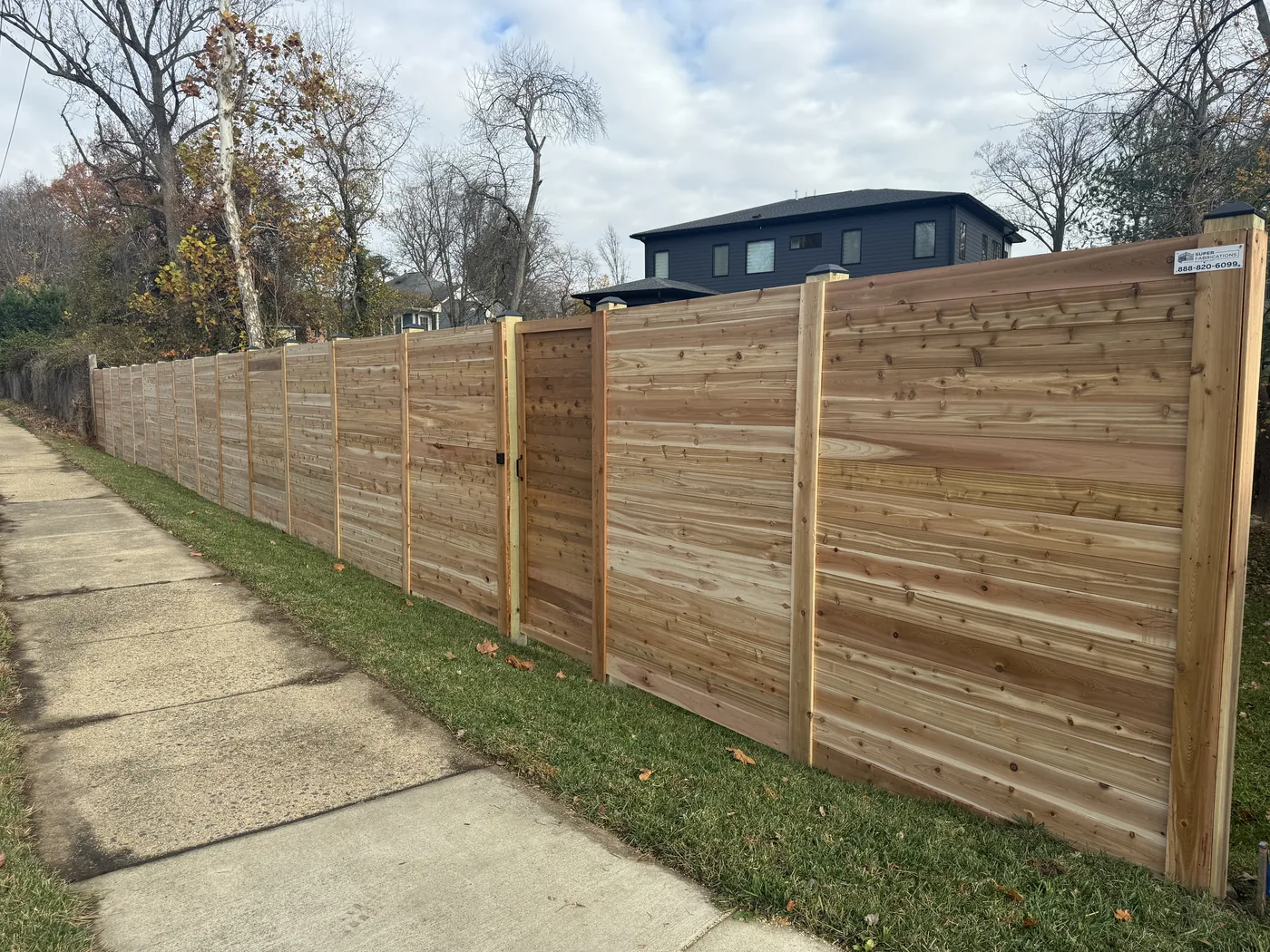
When homeowners say "wood fence," most picture the same 6-foot privacy run — and miss the range the material actually has. Wood takes direction better than any fence material we install: vertical or horizontal, trimmed or plain, mixed or matched. Here are the ideas we build most often, with an honest note about what each one asks of you.
What does a horizontal run change?
Everything about how the fence reads. Horizontal boards turn a boundary into a design feature — the lines stretch the yard, pair naturally with modern homes and decks, and photograph beautifully against brick and stone. Board spacing does double duty: tight lines screen, spaced lines filter light into the beds that need it. The trade is in the framing — a horizontal build leans on a tighter post structure and more careful board selection, because every line shows. We step horizontal runs with the grade so the lines stay true on sloped lots, which is most of them around here. See the look across our wood fence installation projects, from spaced cedar to solid privacy.
How do caps and trim finish the line?
Cap-and-trim is the upgrade that costs little and changes the silhouette completely. A cap board runs across the top of the pickets, protecting the end grain — the part of a board that drinks water fastest — while a trim rail frames the bottom. The fence reads as finished carpentry instead of a stockade, and the cap earns its keep by shedding rain. Trim also hides the fastener line, which is one reason capped fences photograph cleaner from the patio. On tall privacy runs, the cap is what stops the "wall" feeling at the seating area.
When do lattice and spindle tops earn their place?
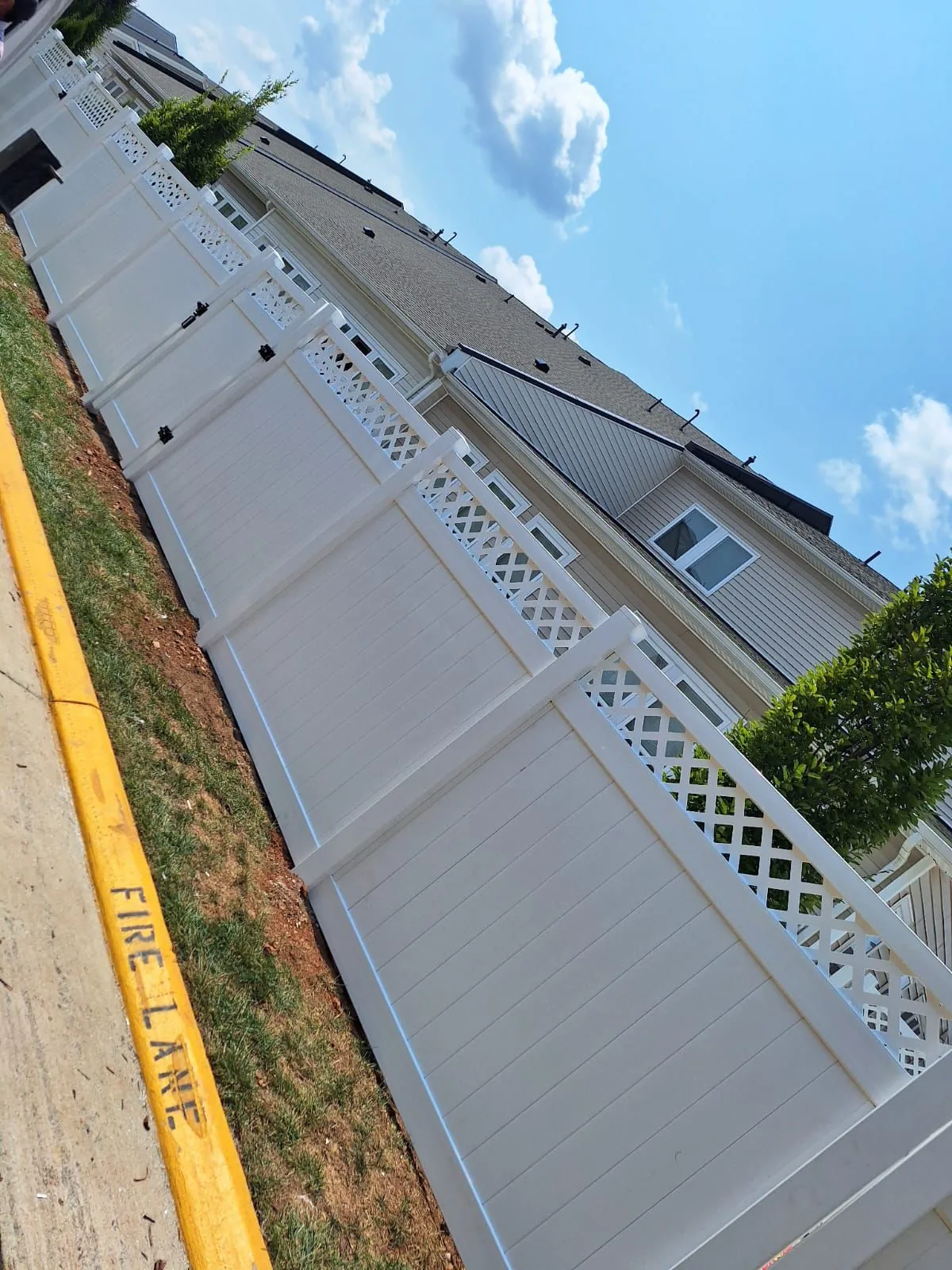
When height and light argue with each other. A lattice top adds a foot of patterned openness above solid boards, so the fence keeps its privacy where it matters and breathes where the eye needs relief. Spindle tops do the same job with a more tailored, craftsman rhythm. Both suit garden beds and patios especially well, because low sun still passes through the openwork while the seating area stays screened at eye level.
Can wood share the line with other materials?
Yes, and the combinations are where yards stop looking like every other yard. Wood between stone or brick piers reads formal and ages beautifully. A steel frame with wood infill gives a modern line a warm face. The mix works in reverse too — a wood run that turns a corner into an aluminum section lets the yard stay warm and the pool area stay open, one material each. Even a single material can mix board widths, wide and narrow alternating, for texture without a second trade on site. The rule we follow: let one element lead, and let the other support it.
What works along garden beds and short runs?
Not every idea needs a hundred feet of fence. Low picket runs frame vegetable beds and keep mulch where it belongs. A short accent section carries the cap-and-trim detail at knee height. Lattice panels screen the compost and the AC condenser without building a wall around either. Small projects like these are often the fastest way to try a wood style before committing a whole property line to it — and they photograph well enough that half of them come back to us as full-run requests the following spring.
Should you paint or stain a wood fence?
Stain, most of the time. Stain soaks in, moves with the wood, and renews with a simple re-coat every few years. Paint sits as a film, looks crisp on picket and horizontal builds, and eventually peels — and prepping a peeling fence for repaint is a weekend nobody enjoys. If the house trim argues strongly for paint, we will build for it and say so; otherwise stain wins on upkeep every season. Whichever finish you choose, see how it weathers first in our project gallery, where every photo is our own work.
An idea on this list fit your yard? Call (888) 820-6099 or send an estimate request, and we will walk the line and sketch how it builds.