
A wood fence does not have to look like every other wood fence on the street. Northern Virginia yards take design well — the lots are generous, the tree cover is real, and cedar and pressure-treated pine both stain to almost any tone. Here are the ideas we build most often, and where each one works.
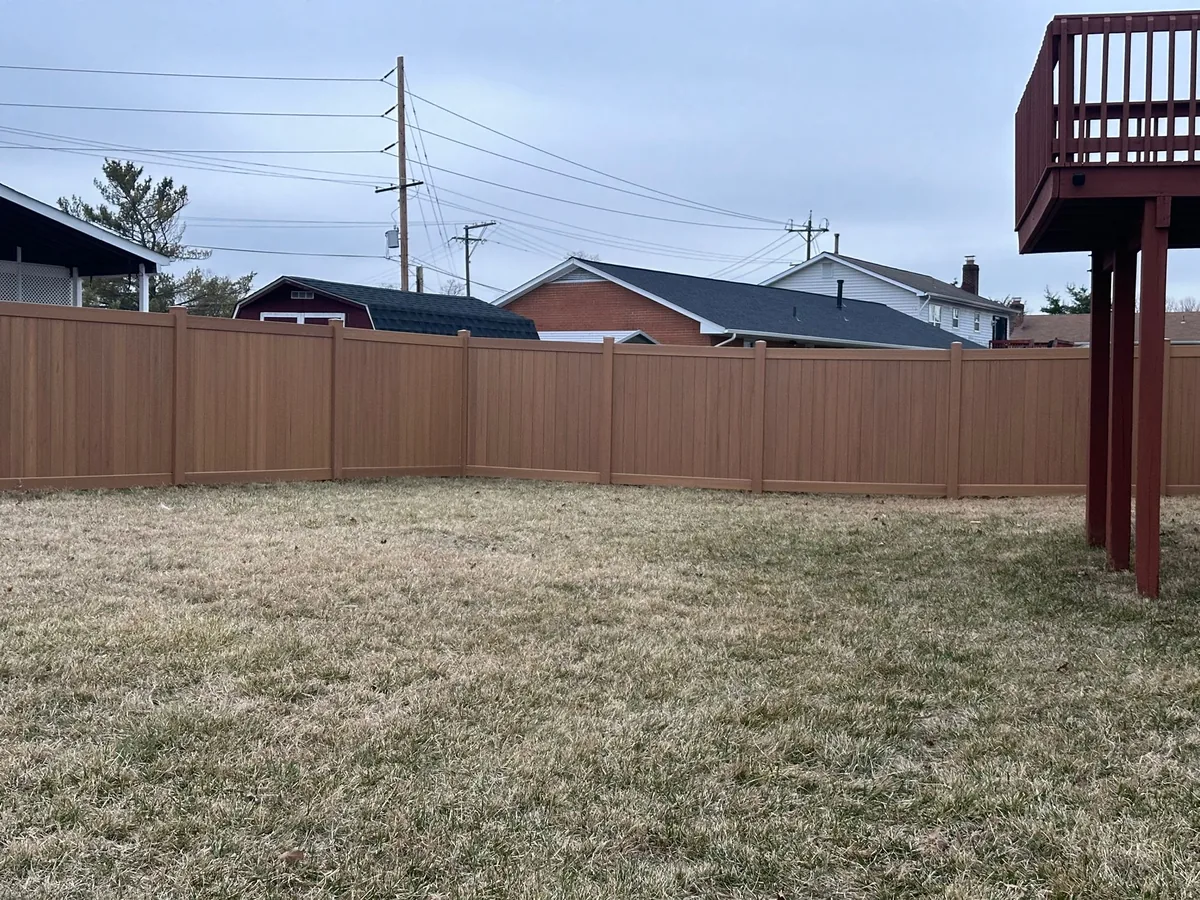
Which wood fence styles suit a Northern Virginia yard?
Four profiles cover most requests. Board-on-board overlaps the pickets and blocks every sightline even as wood shrinks through a dry August. Shadowbox alternates boards on both sides of the rail, so neighbors share the good face and air still moves through the line. Solid stockade is the budget workhorse for pure privacy. Spaced picket with a scalloped or gothic top belongs at the front, framing a garden instead of hiding it. Most yards combine two: solid privacy behind, picket along the walk. Our wood fence installation work runs the full range across Fairfax and Montgomery counties.
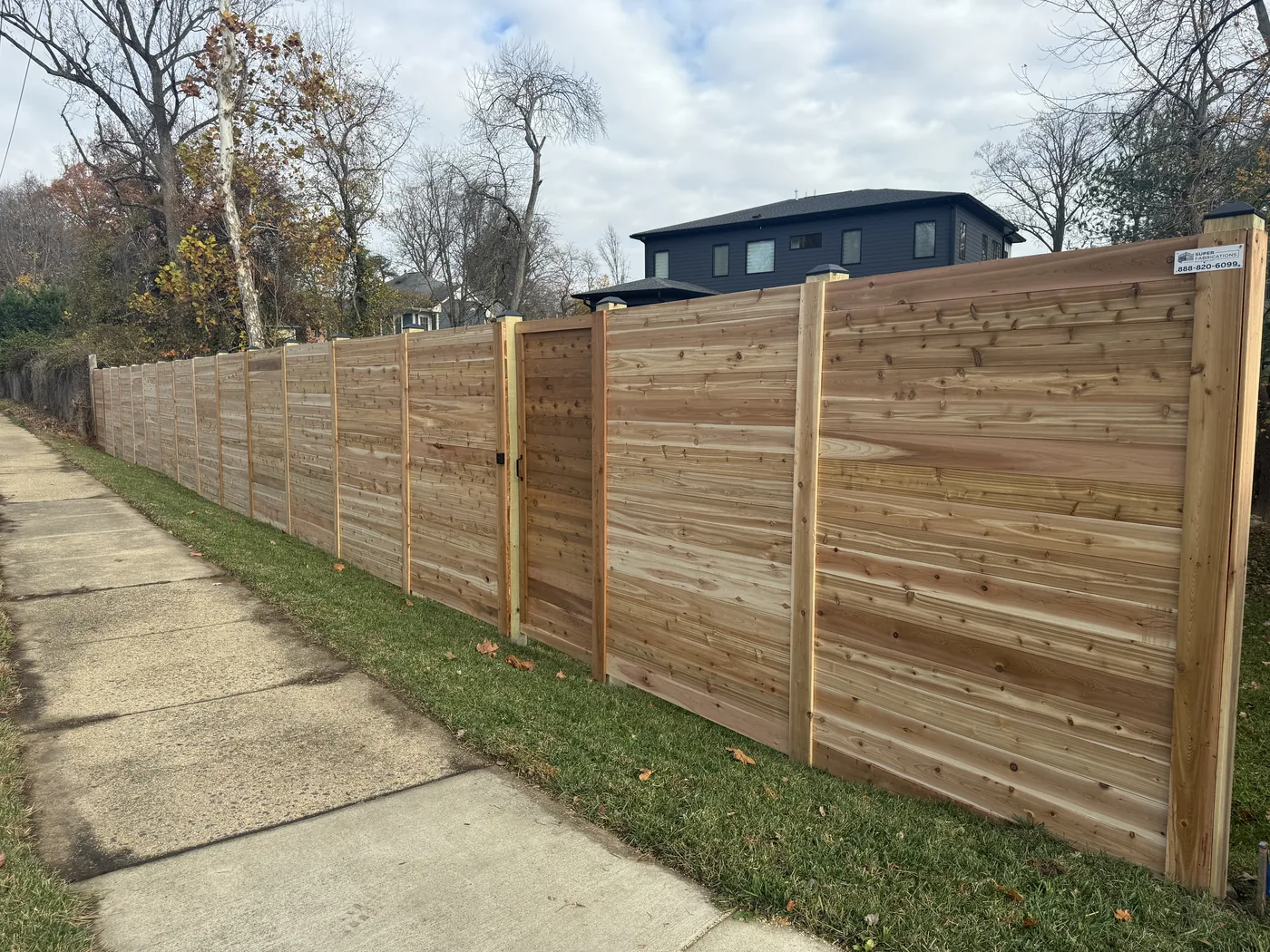
Why choose horizontal cedar?
Horizontal cedar is the request we hear most from owners of newer builds in Ashburn, Reston, and the Tysons corridor. The lines run with the house instead of against it, and the warm grain deepens handsomely over its first seasons outdoors. Horizontal work demands more of the framing — rails need closer spacing so long boards stay straight — which is exactly why it belongs in a crew's hands.
Spaced horizontal boards turn the same idea into a semi-private screen for a patio or hot tub, letting breeze and light through while softening the view. Run the boards with small, even gaps and the shadow lines do the decorating for free. Around a deck or a modern addition, the horizontal plane ties the fence to the architecture instead of boxing it in.
What do caps and trim add?
A cap rail is the modest upgrade that reads expensive. It hides the raw ends of the pickets, sheds rain off the top edge where rot starts first, and draws one finished line across the whole yard. Cap-and-trim stockade — a cap above and a trim board below — frames solid privacy the way casing frames a door. On tall shadowbox runs behind townhouses in Centreville and Chantilly, the cap is what keeps the fence from reading as a wall.
How do picket profiles change a fence?
The top cut of a picket sets the tone from the sidewalk. Gothic points read traditional and pair with cottage gardens in older Alexandria neighborhoods. Flat-top pickets under a wide cap read colonial. Dog-ear cuts soften a privacy line and remain the regional default. Scalloped tops dip and rise between posts and suit front-yard picket runs around Falls Church and Vienna. Mixing profiles front to back — picket at the walk, dog-ear privacy behind — keeps one material from feeling monotonous across a big lot.
What do gates and entries add to the design?
An arched walk gate turns a plain run into an entrance, and it costs little beyond the frame work. Wide gate openings matched to the fence profile — a matching picket gate in a picket run, a solid gate in a privacy run — read as one composition. Post caps at the gate jamb, a slightly wider gate bay, or a contrasting stain on the entry frame all mark the way in without adding a second material. Gardens and side yards benefit most: the gate becomes the destination rather than a hole in the line.
Which stain tones work here?
Northern Virginia light is strong in summer and gray for months in winter. Warm mid-tones — cedar, chestnut, honey — hold their character in both. Very dark stains look sharp on horizontal runs and modern homes but show every scratch. Natural weathering is an option on cedar if you accept the silver-gray drift; many owners in western Loudoun do exactly that and simply seal the wood to slow the move.
Species changes the stain conversation too. Pressure-treated pine drinks stain unevenly at first and rewards a penetrating semi-transparent coat; cedar's tight grain takes the same coat cleanly and keeps it longer. Whatever the tone, stain new wood after its first dry weeks, then watch the water bead: when it stops, the cycle is due again. Finished examples of several of these designs sit in our project gallery.
How do you pick a design?
Start from what the fence must do, then dress it. Privacy first, style second, budget third — in that order, the design questions answer themselves. Walk your yard at the hours you actually use it, note where the evening sun lands and which neighbor windows face the line, and bring those notes to the estimate. We design on-site, free, and the drawing happens standing where the fence will stand. Call (888) 820-6099, and we will bring the profile samples with us.