
A dog does not care what a fence costs. It cares whether the fence stops the thing it loves to do — jumping, digging, squeezing, or charging the gate. Match the fence to the dog and the yard stays secure for years. Here is how we size it up on walks around Northern Virginia.
How tall should a fence be for a dog?
Most dogs are contained comfortably by 4 feet. Dogs who clear 4 feet — athletic jumpers, some shepherd and husky types — need 6 feet, and a solid panel works better than an open design because it denies a running visual target. Climbers add another wrinkle: anything with toe-holds, like chain link, invites an athletic dog upward, so solid vinyl or wood panels earn their keep.
Which material works best for dogs?
For most households, a solid privacy panel in vinyl or wood is the answer. Vinyl is smooth, splinter-free, and shrugs off a wet dog shaking against it; boards do not loosen as the seasons pass. Wood offers the same solid barrier at a friendlier starting price and is easy to modify later — a dig barrier this year, a taller section next year.
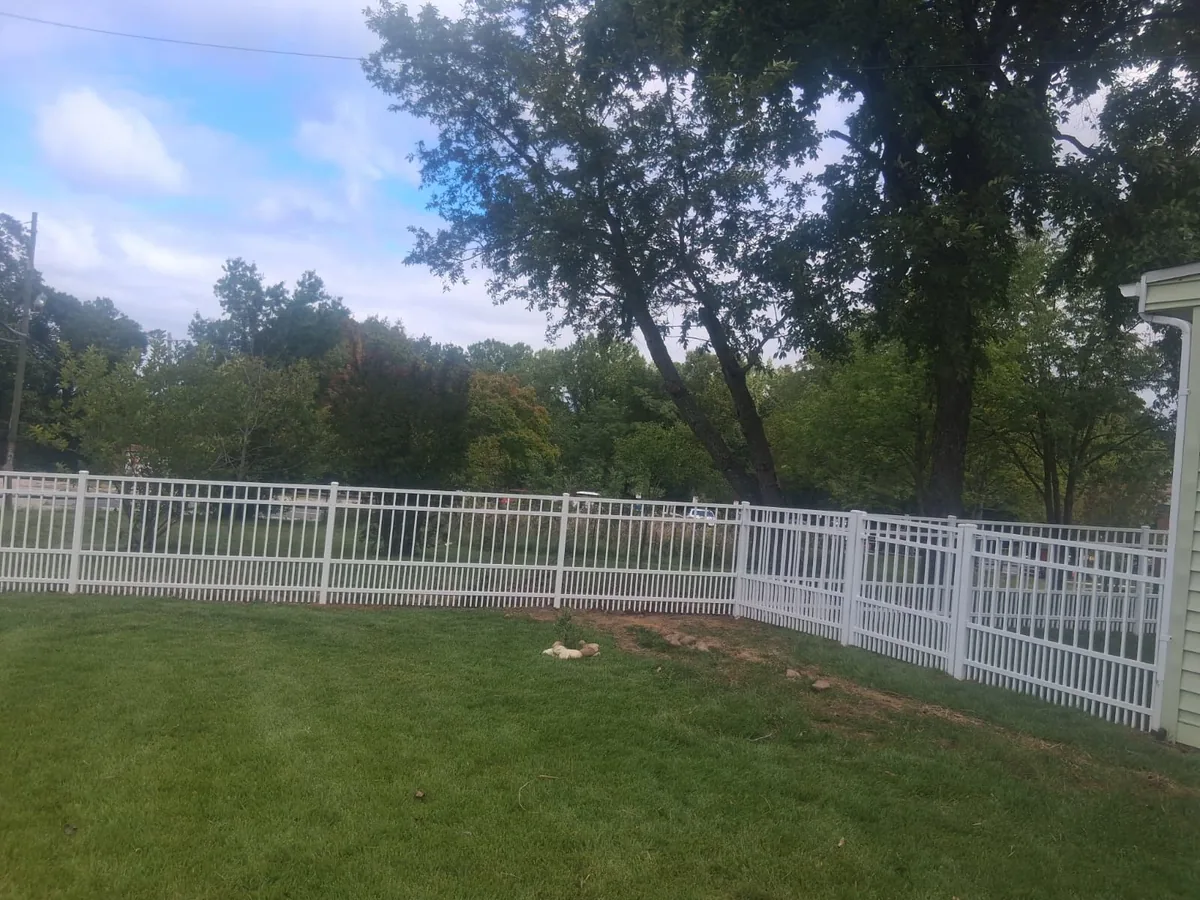
Aluminum earns a spot for a different reason. A puppy-picket style keeps small dogs in view and keeps noses off the fence line, and it works well where an HOA wants an open look. Our vinyl fence installation and wood fence installation pages show the privacy styles that stand up to dogs.
Do fences change how dogs behave at the line?
They can, and it is worth planning. Dogs patrol fence lines and react to everything they can see — every walker, every squirrel, every delivery. A solid privacy panel removes the visual trigger, which calms the line for your dog and the neighbor's alike. Where a full privacy look is not allowed, shadowbox and lattice-top designs cut the sightline while keeping an open feel.
Leave a patrol path along the inside of the run if your dog already has one. Blocking a favorite route with a shed or planters invites digging exactly where you do not want it.
What should a puppy owner plan for?
Plan the fence for the adult dog, not the puppy in front of you. That shepherd mix at 20 pounds will want the 6-foot solid run in two years, and adding height later costs more than building it once. Puppies also go through a chew phase; vinyl's smooth surface survives it better than soft wood, and a dig barrier installed now outlasts the phase.
Training rides on top of the fence, not instead of it. A self-closing gate keeps the routine honest: nobody props it open, nobody forgets it. The fence does the holding so the training has time to work.
How do you stop a digger?
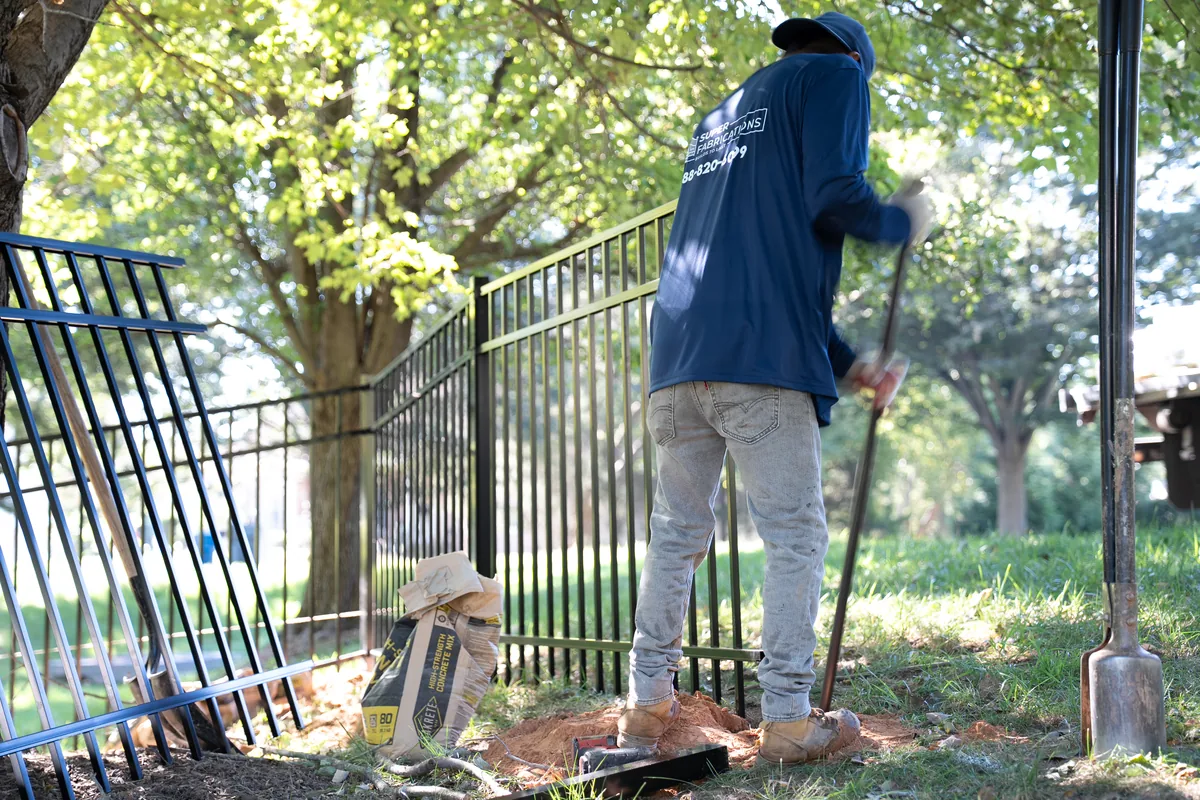
Block the route, not the dog. We run a dig barrier at the base — mesh or boards buried below grade along the run — and pour post footings that deny a tunnel a start. The two spots diggers love most are corners and the gate line, so we check the gap under every gate and close it with a gravel or concrete edge. A dog that has escaped once will test the same spot again; fix it once, properly.
What is puppy picket spacing?
Puppy picket is a style with pickets spaced so a small head — and the shoulders that follow it — cannot slip through. Standard picket spacing suits adult dogs and loose neighborhood cats; puppy spacing suits the 15-pound escape artist. It comes in aluminum and vinyl, so the open look survives even in strict HOA neighborhoods.
What kind of gate keeps a dog contained?
Three details do the work: self-closing hinges, a latch placed where paws and noses cannot work it, and a gap under the gate measured in fingers, not feet. Households with equipment to move — mowers, wheelbarrows, a trailer — do better with a double gate that opens wide without being left open. Close it and the yard is secure. For determined households, add a second latch high where clever noses cannot reach, and check the gap on the hinge side as well as the latch side — dogs find the second gap first.
Getting a fence right for a dog is a walk-and-talk job. Request a free estimate or call (888) 820-6099, tell us about the dog, and we will walk the yard with you.