
By Ray, owner — VA Class A contractor
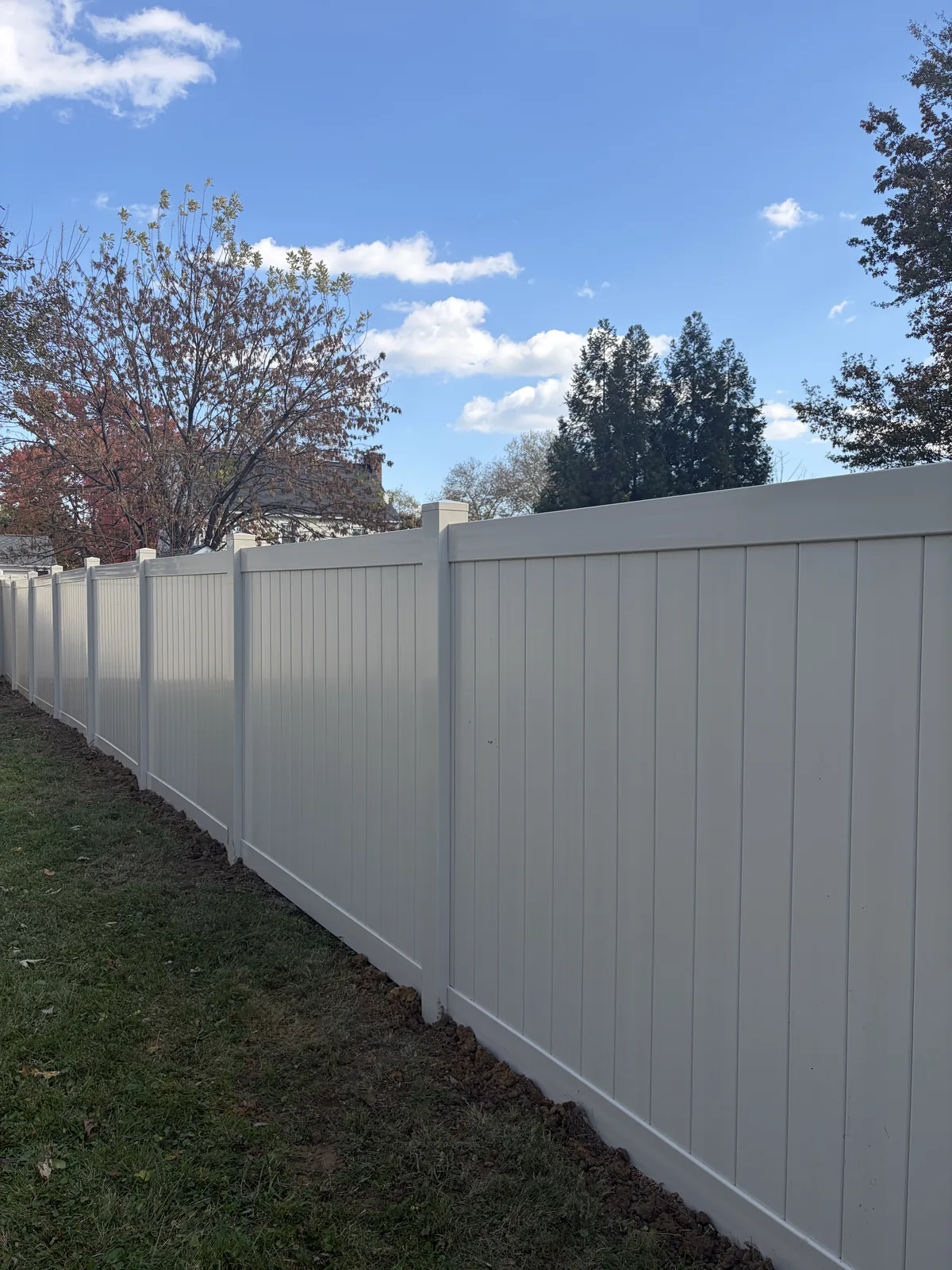
Homeowners ask this question for a good reason: vinyl's durability is real, but the internet is full of both hype photos and one cracked-panel horror story. Here is the honest version from the crews who set the posts — how vinyl handles bumps, wind, and sun, what actually fails, and what a failure costs to fix.
How does vinyl stand up to impact?
Vinyl flexes before it breaks, which surprises people who expect plastic to behave like glass. The flex is engineered in — panel profiles are designed to deflect and return, which is why a fence that survives a decade of soccer balls is normal, not lucky. A ball, a falling branch, a dog leaning on the line: everyday knocks leave nothing behind. The failures come from sharp, concentrated hits — a car bumper finding a gate post, a ladder dropped across a rail. Those can crack a panel, and because a vinyl fence is built from independent sections in independent frames, the crack swaps out without touching the rest of the run.
How does it handle wind?
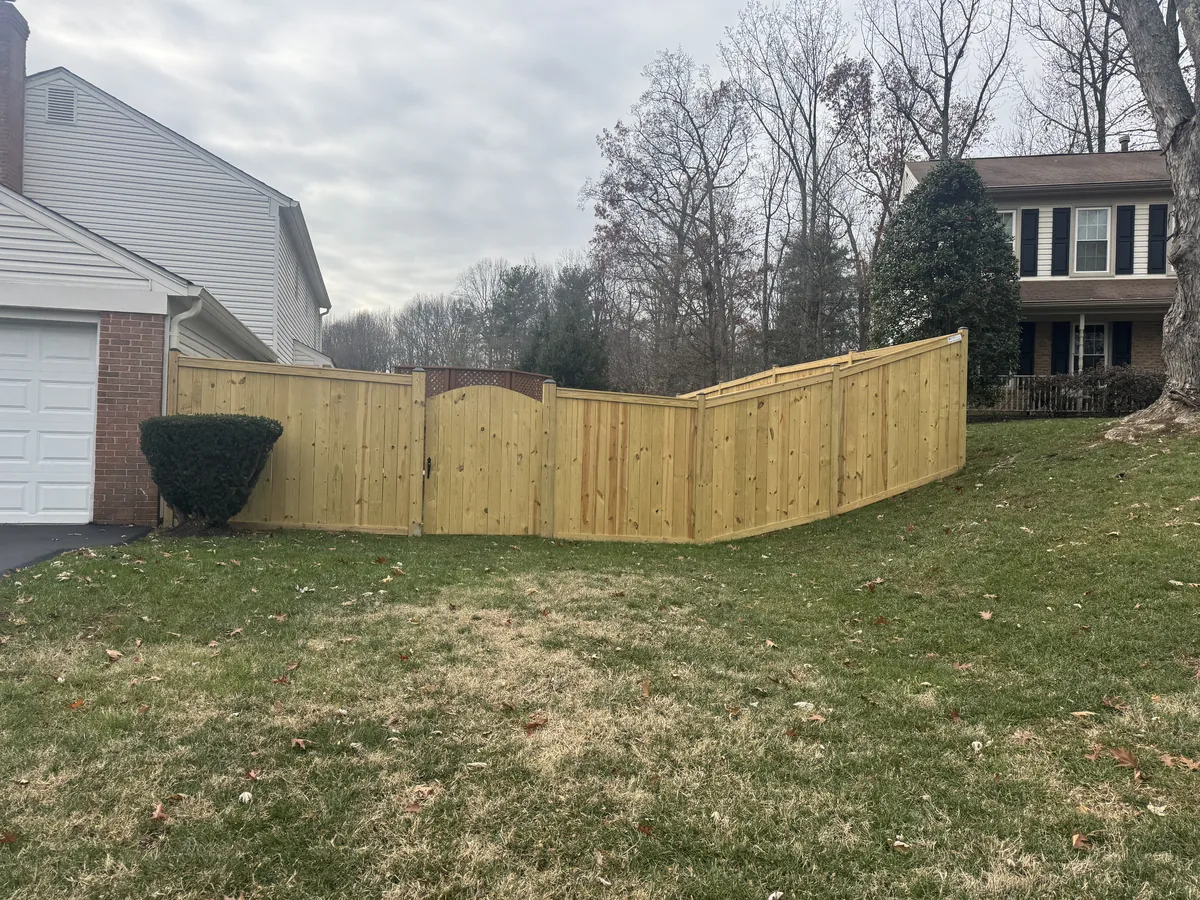
Wind is where installation quality matters more than the material. A privacy panel is a solid sail — in an open Loudoun field or on a corner lot that catches every front, that load lands on the posts. Vinyl handles it when the posts are spaced for the exposure, set on proper footings, and the rails are rated for the panel style. Open styles — picket and spindle — cut the sail area dramatically where exposure is severe. What homeowners hear about "vinyl fences blowing over" is almost always an undersupported install, not a material failure. Tell us where your wind comes from at the estimate; it changes how we space the line.
What does years of sun do to vinyl?
Much less than it does to wood, and here is why: quality vinyl is formulated with UV inhibitors through the material, not as a surface coat, so the protection cannot peel off. Over very long spans, expect a slight softening of the original tone — more a settling than a fade, and even across the run. What sun never does to vinyl is gray it the way it grays unsealed wood, and there is no stain cycle to repeat.
How does vinyl handle our seasons?
Well, and without the annual drama wood goes through. Rain, snow, and ice sit on vinyl without soaking in; freeze-thaw works at the footings, not the panels. Summer heat softens nothing you would notice — boards expand a fraction and the routed joints absorb it. The season that tests vinyl hardest is the windy one, which loops back to installation: posts spaced and footered for the exposure are what carry a privacy line through a March gust front. Salt spray is a non-issue this far inland, but road salt tracked in by shovels rinses off with the spring wash — one more argument for the once-a-year habit, and a fence that dries clean in April stays cleaner through August.
What actually breaks, and what does a fix involve?
In order of frequency on our repair calls: gate hardware outliving its adjustment, a panel cracked by impact, and a post disturbed by a root or a frost heave. Each is a section-level fix. Color-match matters here — because the pigment runs through the material, a replacement section from the same profile lines up with an older run in a way no re-stained board ever does. Our fence repair crew replaces a rail or panel in a single visit because the parts come off and on as units.
How do you keep a vinyl fence durable?
Keep plants trimmed back so trimmer lines never ride against the posts, wash the line once or twice a year, and have the gate hardware looked at each spring. Correct the one winter habit worth correcting: snow piled against panels by a plow — vinyl prefers to carry weather, not storage. For the longer view on cost and upkeep against other materials, see our vinyl fence installation page and the material comparison guide.
Want the durability question answered for your specific yard — its wind, its dogs, its driveway? Call (888) 820-6099 or send an estimate request, and we will walk the line and spec it honestly.