
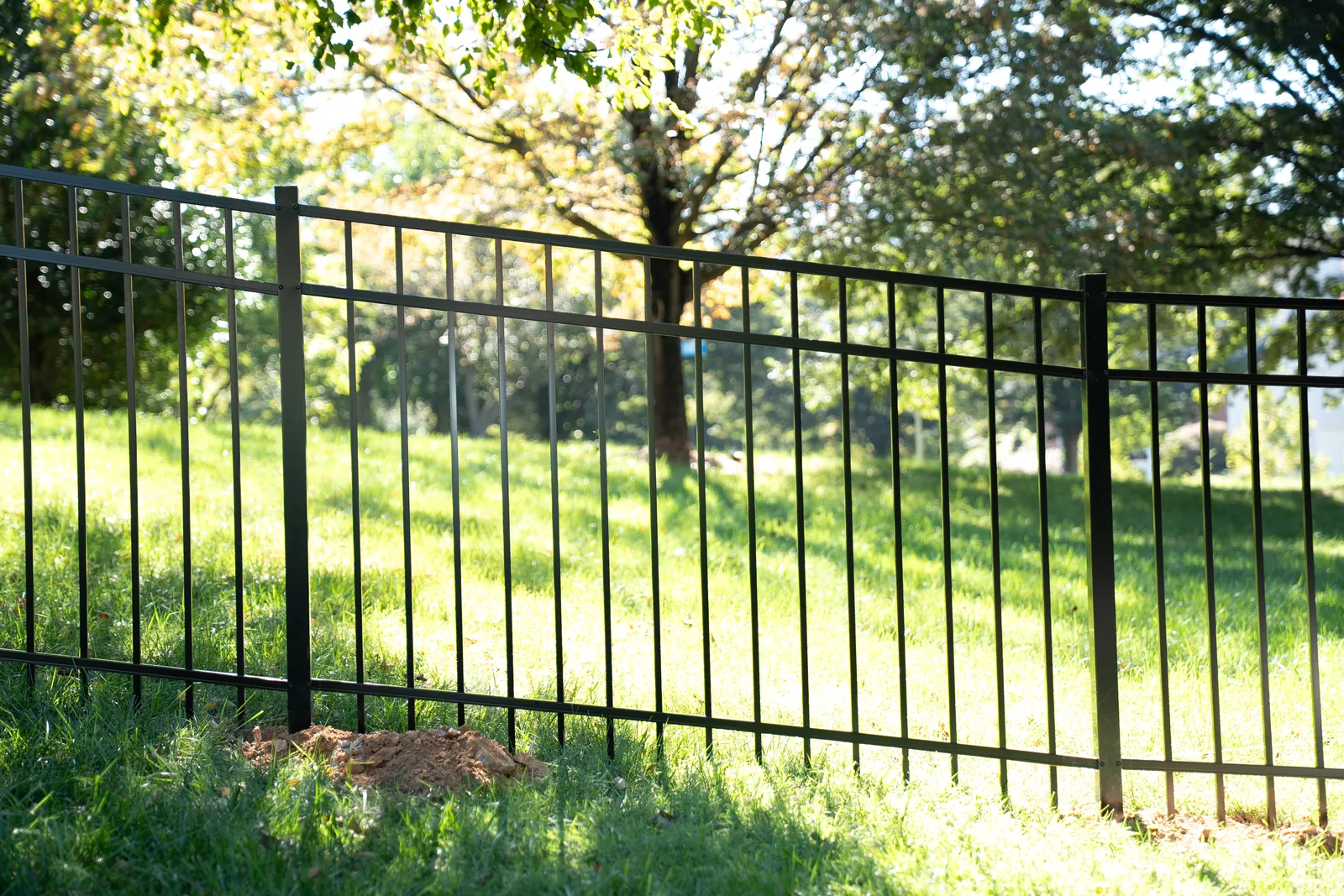
Aluminum and wood are the two fences we quote most in Northern Virginia backyards. Both are good buys. They just solve different problems, and the differences show up in three places: the price band, the lifespan, and how many weekends the fence asks of you after install day.
What do aluminum and wood cost per linear foot?
Here are the planning ranges we share on estimates. Wood privacy typically lands between $30 and $60 per linear foot installed. Aluminum open fence typically lands between $40 and $75 per linear foot installed. Style moves both numbers — a cap-and-trim wood build sits above a plain stockade, and a taller aluminum grade with finials sits above a straight-top run. Gates move them too: a double drive gate adds its own line to either material. Stretched over ten years, the gap narrows: the staining cycle wood asks for is real weekends and real money, and aluminum's higher first number largely buys that back. Your estimate confirms the number for your footage, and our fence cost guide explains what else moves it.
How long does each material last?
The planning figures we give customers: pressure-treated pine often serves 15 to 20 years. Cedar often reaches 20 to 25 with a regular staining cycle. Aluminum commonly serves 25 years or more, because there is little on it to fail — the finish is a coating, not a coat of stain. Treat those as planning figures, not promises; sun exposure, sprinkler spray, and ground contact shorten or stretch them.
What maintenance does each one need?
Wood asks for a staining cycle every few years, plus the occasional board swap where a rail cracks or a picket warps. Skip the cycle and the fence grays and shortens its own life — that is the trade for the lower upfront number. Sprinkler heads that soak the same rail every morning shorten it further; adjust the heads and the fence thanks you. Aluminum asks for a rinse when pollen season ends and a glance at the gate hardware once a year, and the material holds its joints because it does not move with humidity the way wood does. Neither material asks for much on install week — the difference shows up in year three. That is nearly the whole list, and it is why aluminum became the default around pools and along front walks in most of the neighborhoods we work.
Which yards suit aluminum?
Aluminum fits where you want the view kept and the boundary marked. Pools are the clearest case: barrier height, self-closing gates, and a finish that ignores splash. Open lawns and garden lines are the next — a black aluminum fence disappears against green and lets a slope carry it with racked panels. Front yards under HOA review often go aluminum too, because the open look reads as classic from the street. Vidal Sadaka's Google review sums up an aluminum project the way most do: "Ray and his team did a fantastic job installing our aluminum fence! They were communicative, responsive, and very helpful throughout the process."
When does wood make more sense?
Wood wins when the job is privacy. A 6-foot wood privacy fence blocks the neighbor's deck, cuts wind off an open lot, and gives a dog a solid boundary to lean against. For dogs that patrol a fence line, the solid face also ends the fence-fighting that open pickets invite across the neighborhood. It stains to match a deck or a shutter color, and no open fence can do its work. If the budget is the deciding factor, the lower wood band stretches further per foot — at the cost of the staining cycle. Our wood fence installation page shows the styles: shadowbox, board-on-board, stockade, and cap-and-trim.
Can you use both on one property?
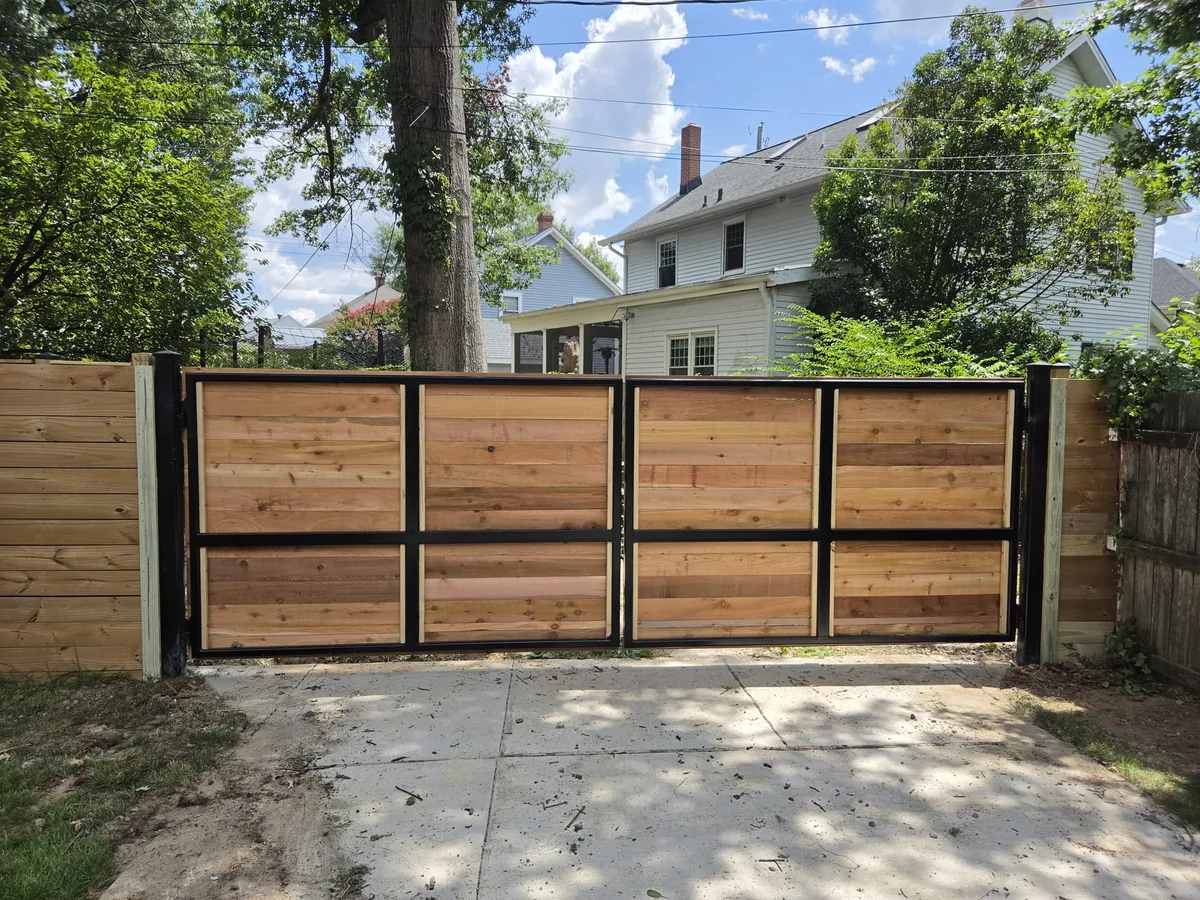
Often the honest answer to "which is right" is "both." Aluminum across the front where the street looks in, wood privacy behind where the family lives — that split is a common plan in Fairfax and Montgomery yards, and it lets each side of the lot get the material that fits it. See the aluminum fence installation page for profiles and pool-compatible styles, then call (888) 820-6099. The free on-site estimate is where the material choice gets made, with your yard under our feet.